
Medical Tourism Blog
Body Fat Grafting in Korea: Candidacy, Safety, Recovery, and Travel Planning

Table of contents
- Body Fat Grafting at a Glance
- What Is Body Fat Grafting?
- Who Is a Good Candidate for Body Fat Grafting?
- How Is Body Fat Grafting Performed?
- Why Visit Korea for Body Fat Grafting?
- Key Information for International Patients
- Which Are the Best Clinics in Korea for Body Fat Grafting?
- How Much Does Body Fat Grafting Cost in Korea?
- Body Fat Grafting From Start to Finish
- Alternatives to Body Fat Grafting
- How Can I Prepare for Body Fat Grafting?
- Aftercare Advice
Considering treatment in Korea? Everything you need to know e.g. — how to avoid scams, visas, interpreters, recovery tips — in our Medical Tourism Master Guide. Plan with confidence in minutes, not weeks!
Last updated: September 2026
Body Fat Grafting at a Glance
- What it does — Body fat grafting removes fat by liposuction, processes it, and reinjects small amounts to restore or add volume in areas such as the hips, buttocks, breasts, hands, scars, or contour depressions.
- Typical Korea cost — In South Korea, body fat grafting typically costs ₩5,000,000–₩16,000,000 (about US$3,700–$11,900), depending largely on donor-site liposuction extent, treatment areas, graft volume, anesthesia, and facility needs.
- Best candidates — Suitable candidates are medically fit, stable-weight adults with enough donor fat who want moderate, natural-tissue volume restoration and accept that not all transferred fat will survive.
- Recovery and results — Bruising, swelling, soreness, and small-incision drainage commonly last 1–3 weeks; desk work may be possible in 1–2 weeks, while strenuous exercise is usually delayed about 2–4 weeks. Final contour is best assessed around 6 months because fat resorption occurs over 3–6 months.
- Korea stay requirement — Plan to stay in Korea at least 10–14 days for wound checks, mobility review, and fitness-to-fly clearance; extensive liposuction, large-volume transfer, combined surgery, or buttock grafting may warrant 2–3 weeks.
- Buttock safety — Buttock fat grafting has the highest risk profile; require written confirmation of real-time ultrasound guidance and subcutaneous-only injection above the gluteal fascia to reduce the risk of fat embolism.
- Korea-specific planning — Korea’s international-patient infrastructure can support multilingual scheduling and short-term follow-up, but it does not prove superior outcomes; obtain an English operative report and arrange follow-up with a clinician at home before traveling.
What Is Body Fat Grafting?
Body fat grafting transfers fat from one area of your body to another to restore or add volume. It can address hollows, contour irregularities, scars, or modest volume loss or enhancement using your own tissue. It is a surgical procedure because it includes liposuction, fat preparation, and injection.
Who Is a Good Candidate for Body Fat Grafting?
- Stable-weight adults with adequate donor fat — Good candidates want localized volume restoration or moderate augmentation of the hips, buttocks, breasts, calves, hands, scars, or contour depressions and have enough fat in areas such as the abdomen, flanks, thighs, or back.
- Patients seeking a natural-tissue option — Autologous fat grafting uses the patient’s own tissue rather than an implant, but some resorption is expected and a large, guaranteed size increase is not realistic.
- People fit for liposuction and anesthesia — Candidates need health risks assessed for both donor-site liposuction and graft placement, including cardiac, lung, bleeding, clotting, and anesthesia risks.
- Patients able to follow recovery restrictions — Successful travel planning requires compression at donor sites, mobility guidance, recipient-area pressure restrictions, wound checks, delayed flying clearance, and arranged follow-up after returning home.
Body fat grafting is not a weight-loss procedure, and inadequate harvestable fat limits the volume that can be transferred safely. Uncontrolled diabetes, serious heart, lung, kidney, or liver disease, poorly controlled hypertension, bleeding disorders, active skin infection, pregnancy, and current nicotine exposure can make elective surgery unsuitable until addressed. Prior DVT or pulmonary embolism, thrombophilia, obesity, reduced mobility, or estrogen-containing therapy require a formal venous-thromboembolism prevention plan; long-distance travel adds clot risk. Breast grafting requires appropriate assessment of any unexplained breast mass or abnormal imaging, while buttock grafting requires confirmation of subcutaneous-only injection with real-time ultrasound guidance. The surgeon must assess scars, skin laxity, baseline asymmetry, previous liposuction, and the specific recipient area before agreeing on a safe target volume.
How Is Body Fat Grafting Performed?
Body fat grafting is tailored by donor site, recipient area, and intended volume rather than offered as one standardized consumer procedure. Ask the surgeon to explain the planned harvest, processing, injection plane, and why that approach suits the area being treated.
- Tumescent liposuction harvest — Tumescent fluid is commonly used before fat removal. Power-assisted, ultrasound-assisted, or laser-assisted liposuction can be selected in some cases; harvest extent affects donor-site soreness, swelling, contour risks, and the amount of usable fat.
- Fat processing — Decanting, washing or filtration, and centrifugation separate usable fat from blood, fluid, and free oil. A randomized study in post-mastectomy breast reconstruction found early retention differences between processing approaches, but this does not establish a best method for hips, buttocks, calves, scars, or cosmetic breast augmentation.
- Micro-aliquot placement — The surgeon places small parcels of fat through a cannula in multiple tunnels so cells have contact with blood-supplied tissue. Large central deposits are more vulnerable to poor survival and fat necrosis.
- Recipient-area planning — Scar release, hand restoration, hip-dip correction, breast contour grafting, and large-volume gluteal augmentation have different volume limits, positioning requirements, surveillance needs, and complication profiles.
- Gluteal safety technique — Buttock fat grafting is the highest-risk subtype. Require real-time ultrasound guidance and subcutaneous-only injection above the gluteal fascia. A 2026 systematic review of 38 studies and 22,151 patients found lower pooled complication rates with ultrasound guidance and the lowest rates with subcutaneous-only placement, although the evidence is largely observational.
- “Enriched” fat claims — PRP, stromal vascular fraction (SVF), and adipose-derived cell products should not be presented as a retention guarantee. A 2026 review of SVF-assisted grafting found higher average retention but extremely high study heterogeneity, differing results by body site, and a need for stronger standardized trials.
Why Visit Korea for Body Fat Grafting?
South Korea has an established cross-border medical-care environment that can make multilingual scheduling and short-term postoperative logistics more accessible for overseas visitors. Medical Korea provides a national international-patient platform, but this does not prove better graft survival, lower complication rates, or superior outcomes at an individual clinic. Evaluate the operating team and safety plan rather than choosing on destination alone.
- International-care infrastructure — National international-patient resources can help overseas visitors identify participating institutions and navigate cross-border care pathways.
- Written safety verification — Before booking, obtain confirmation of the named operating surgeon, anesthesia clinician, anesthesia monitoring, procedure setting, emergency equipment, hospital-transfer arrangements, after-hours contact, and in-country follow-up plan.
- Buttock-grafting documentation — For gluteal procedures, ask for written confirmation that every injection will be performed with real-time ultrasound and remain in the subcutaneous plane. A meta-analysis of ultrasound-guided series reported no deaths or fat-embolism events in included studies, but selected observational series do not make the procedure risk-free.
- Continuity of records — Request an English operative report before departure, including donor and recipient sites, harvested and injected volumes, processing method, injection plane, anesthesia, prescriptions, complications, and a 24-hour contact number.
- Evidence limitation — No credible comparative evidence shows that body fat grafting in Korea has better retention, fewer complications, or higher satisfaction than appropriately regulated care in other countries.
Key Information for International Patients
- Minimum stay — Plan to remain in Korea for at least 10–14 days after an uncomplicated procedure for wound checks, mobility review, donor-site assessment, and individualized fitness-to-fly clearance. Extensive liposuction, large-volume grafting, combined surgery, and gluteal grafting justify planning 2–3 weeks when feasible.
- Flight timing — Do not schedule an immediate long-haul flight. Recent surgery and prolonged travel increase venous-thromboembolism risk; flight clearance depends on surgical extent, mobility, complications, personal clot risk, and the operating surgeon’s assessment.
- Repeat treatment — Early fullness includes swelling. Some grafted fat is resorbed over 3–6 months, so assess the durable contour at about 6 months before planning an elective touch-up.
- Itinerary impact — Bruising, swelling, soreness, limited comfort, and small-incision drainage are common for 1–3 weeks. Desk work is often possible in 1–2 weeks, while strenuous exercise and heavy lifting are commonly deferred for about 2–4 weeks or until cleared.
- Positioning restrictions — Buttock grafting can require avoiding direct sitting or lying on the buttocks and using modified positioning or a support pillow for a surgeon-defined period. Breast grafting can require a surgical bra and restrictions on pressure and chest activity.
- Remote follow-up — Arrange a clinician at home before travelling. Send the English operative report and medication list to that clinician, and use local emergency services rather than waiting for a remote response when urgent symptoms occur.
Travel note: Bring a companion or arrange an approved postoperative carer after sedation or general anesthesia. Book flexible flights and accommodation with elevator access or minimal stairs; early recovery is not suitable for intensive sightseeing.
Which Are the Best Clinics in Korea for Body Fat Grafting?
Listed below are some of the best clinics in Korea for body fat grafting.
1. Lydian Plastic Surgery Clinic
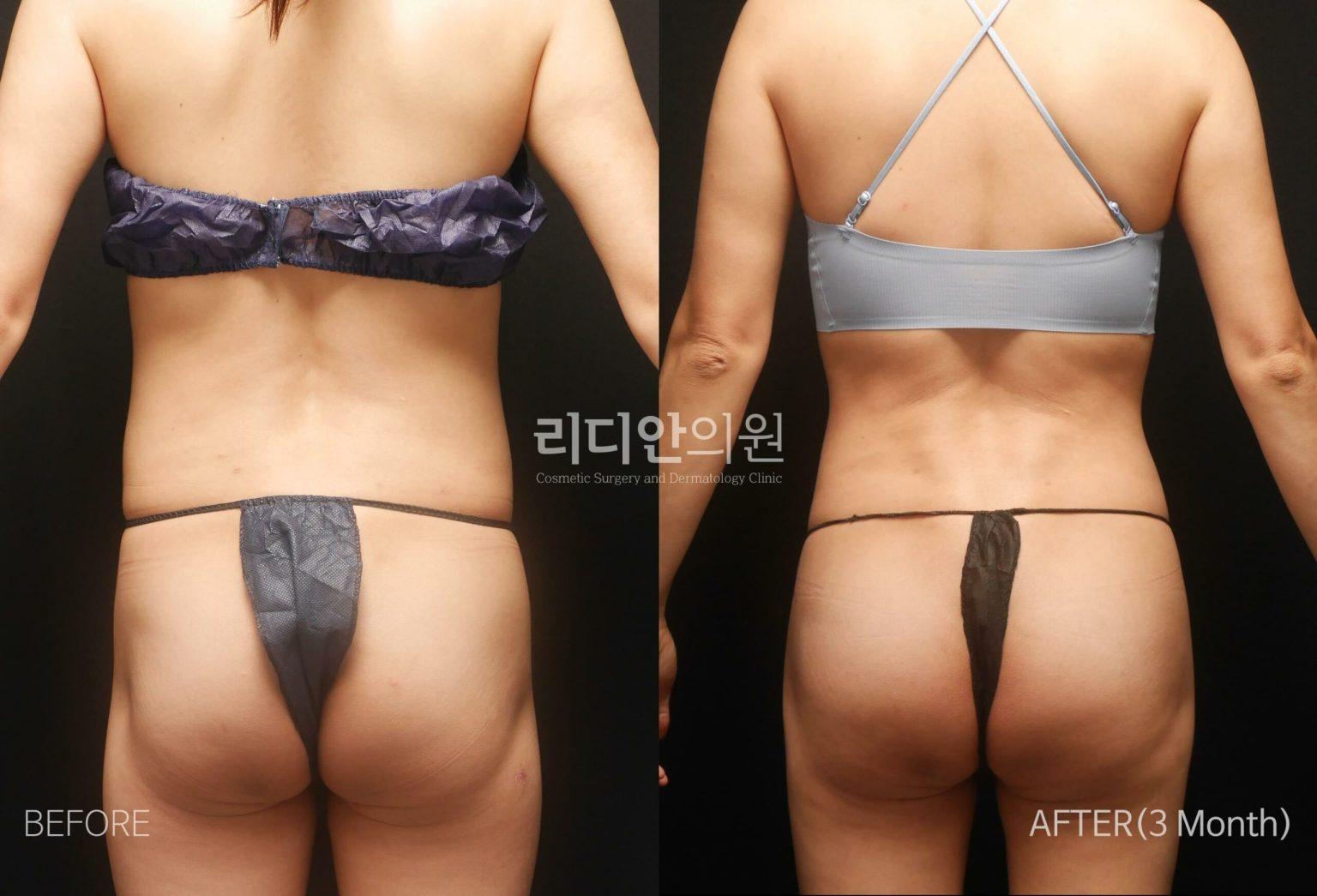
For body fat grafting, you can expect a stem cell–enriched approach in which harvested fat is processed with concentrated stem cells before transfer to areas such as the face, breasts, or buttocks. Lydian describes using 4°C centrifugation for stem cell extraction and an Edinizer device to create more uniform fat particles, with the aim of supporting smooth contours and graft retention.
- URL: Lydian Plastic Surgery Clinic Website
- Location: Gangnam-gu, Seoul
- Procedure approach:
- Stem cell fat grafting combines fat harvesting through liposuction, stem cell concentration, and reinjection for volume enhancement.
- The clinic states that its 4°C centrifugation process is used for stem cell extraction and concentration.
- An Edinizer device is used to standardize fat-particle size, intended to help reduce uneven surface contours and enable denser graft placement.
- Surgical environment and aftercare:
- Stem cell separation and concentration are performed in double-door sealed cleanrooms described as Ministry of Health and Welfare approved, with Clean Class 10,000 air quality and HEPA filtration.
- A four-step aftercare program addresses swelling reduction, irregularity correction, skin-elasticity recovery, and residual-fat contouring.
- Surgeon and related services:
- Dr. An is described as having more than two decades of body-sculpting experience, serving as Director of the 5D Liposculpture Academy and training physicians in high-definition body sculpting and liposuction devices.
- Related options listed include liposuction, 5D liposculpture, Brazilian butt lift, full-face fat grafting, and tummy tuck surgery.
- Body design is customized around your body shape, proportions, and curves.
2. THEPLUS Plastic Surgery
For fat-based facial volume restoration, you can expect face fat grafting that transfers your own fat to areas that appear hollow or flattened, with the goal of restoring fullness and softening facial contours. THEPLUS pairs this offering with a practice focus on personalized aesthetic care, specialized surgical expertise, and research.
- URL: THEPLUS Plastic Surgery Website
- Location: Gangnam-gu, Seoul
- Fat grafting and related care:
- Face fat grafting is offered to restore volume in hollow or flattened facial areas using your own transferred fat.
- The clinic also lists stem cell treatment within its broader aesthetic and post-procedure care offerings.
- Other facial options include facelift, thread lift, full face contouring, cheekbone surgery, square jaw surgery, chin surgery, and facial implants.
- Surgical team:
- Dr. Kim is a board-certified plastic surgeon whose research on 3D implants has received awards; he also leads annual educational sessions for other plastic surgeons.
- Dr. Jeong is identified as President of the Korean Society of Plastic Surgeons and regularly participates in professional conferences and educational sessions.
- Dr. Lee is a board-certified plastic surgeon specializing in breast augmentation and previously worked as a surgery specialist at Seoul National University Hospital.
3. Seojin Plastic Surgery Clinic
For body fat grafting focused on the hip-dip area, you can expect a procedure intended to create a smoother hip contour, supported by liposuction as part of the clinic’s body-contouring services. Seojin’s one-doctor model means Dr. Lee Hyungmin provides end-to-end care tailored to your goals.
- URL: Seojin Plastic Surgery Clinic Website
- Location: Gangnam-gu, Seoul
- Procedure options:
- Hip dip fat grafting is offered to add volume and create a smoother contour in the hip-dip area.
- Liposuction is also available for surgical removal of localized fat as part of body contouring.
- Hybrid breast implant surgery combines implants with fat grafting for a more natural-looking result.
- Personalized care:
- As a one-doctor clinic, Dr. Lee Hyungmin provides comprehensive care from consultation through treatment.
- Dr. Lee is described as having more than 16 years of experience and as being recognized among the 100 Good Doctors in Korea.
- The clinic uses 3D imaging and high-definition endoscopy in its broader cosmetic-surgery services.
How Much Does Body Fat Grafting Cost in Korea?
Body Fat Grafting in South Korea is supplied at ₩5,000,000–₩16,000,000 (approximately US$3,700–US$11,900). Individual quotes vary because the procedure combines donor-site liposuction, fat processing, and reinjection, with the operative plan determined by the recipient area and planned treatment extent.
| Procedure Price | Korean Won (₩) | USD ($) |
|---|---|---|
| Low Price | ₩5,000,000 | $3,700 |
| High Price | ₩16,000,000 | $11,900 |
Exchange rate as of 2026-09-06: 1 KRW = 0.000741 USD.
What Affects the Price?
- Recipient area and graft volume — A small scar or localized contour depression requires a different volume and injection pattern than hip-dip correction, breast grafting, or large-volume buttock augmentation. Larger or multiple recipient areas require more harvested fat, more processing, and longer, meticulous placement of small fat parcels.
- Extent of donor-site liposuction — Harvesting from one donor area versus the abdomen, flanks, thighs, back, or several areas changes the liposuction work, treated surface area, cannula time, and compression and recovery needs. Adequate donor fat also limits how much graft material can be obtained safely in one session.
- Anesthesia and facility requirements — Limited treatment may use local anesthesia with sedation, while extensive liposuction, larger-volume grafting, or combined surgery may require general anesthesia. General anesthesia requires anesthesia personnel, monitoring, operating-room resources, and, in selected extensive cases, overnight observation.
- Gluteal safety technique — Buttock fat grafting should use real-time ultrasound guidance and subcutaneous-only injection above the gluteal fascia. This requires ultrasound equipment and procedure-specific imaging during placement, adding safety-focused clinical resources beyond standard fat injection.
Cost tip: Request an itemized quote stating what is included, particularly the planned donor and recipient areas, liposuction and fat processing, anesthesia, facility or observation use, compression garments, medicines, and scheduled follow-up.
The US$3,700–US$11,900 conversion is approximate, based on an exchange rate of 0.000741 on 2026-09-06. Check the exchange rate again when budgeting.
Body Fat Grafting From Start to Finish
- Remote consultation and records — Several weeks before travel, submit requested photographs, medical history, medication and supplement lists, previous operative records, allergies, weight history, clot history, nicotine use, and relevant breast imaging. Confirm whether English or virtual consultations are available.
- Goal and safety planning — Discuss the intended donor and recipient areas, realistic volume limits, expected resorption, scars, anesthesia, staging, compression, recipient-area pressure restrictions, complication management, and travel timing. For buttock grafting, confirm ultrasound-guided subcutaneous-only placement in writing.
- Arrival assessment — Meet the actual operating surgeon in Korea for examination, photographs, markings, review of asymmetry and scars, and confirmation that adequate donor fat is available. The surgeon determines whether the requested result is safe and anatomically achievable.
- Testing and anesthesia review — Complete surgeon-directed blood tests, medical clearance, and anesthesia assessment when indicated by the planned procedure and health history. Disclose sleep apnea, prior anesthesia problems, hormones, anticoagulants, diabetes medicines, and any history of clots.
- Surgery day — Limited grafting can use local anesthesia with sedation; extensive liposuction, large-volume transfer, or combined operations can require general anesthesia. Fat is harvested by liposuction, processed, then reinjected in small parcels. Operating time depends on the donor-site extent, graft volume, recipient area, and combined procedures.
- Discharge and first night — Many cases are outpatient, while extensive surgery or higher-risk cases can require overnight observation. Leave with a responsible adult after sedation or general anesthesia, written English instructions, prescriptions, compression guidance, and a 24-hour contact.
- In-country reviews — Attend scheduled wound and swelling checks before flying. The surgeon reviews pain control, drainage, mobility, donor-site compression, recipient-site protection, and fitness to travel.
- Recovery at home — Continue local follow-up with the clinician arranged before travel. Share the operative report and report urgent symptoms locally without delay; remote messaging is not a substitute for emergency assessment.
Alternatives to Body Fat Grafting
Non-surgical options avoid liposuction and anesthesia but are generally temporary or volume-limited. Surgical alternatives can provide larger or more predictable volume, but introduce different long-term risks. A staged fat-transfer plan is often safer than attempting excessive harvest or injection in one operation.
Body Fillers
- Best for — Selected small contour depressions or patients seeking a less invasive, adjustable approach.
- Tradeoff — Body fillers and hip-dip filler are temporary and volume-limited, with vascular, inflammatory, infection, and product-related risks.
Implants
- Best for — People seeking larger or more predictable buttock or breast volume than available donor fat can provide.
- Tradeoff — Buttock implants and breast implants avoid dependence on fat survival but carry implant-specific risks, including infection, malposition, capsular contracture, rupture, and future replacement or removal.
Liposuction Alone
- Best for — Patients whose main goal is reducing or reshaping a donor area rather than adding volume elsewhere.
- Tradeoff — Abdominal liposuction or thigh liposuction can refine contours but cannot correct a hollow, hip dip, or volume deficit at another site.
Staged Fat Grafting
- Best for — Patients with limited donor fat, large desired volume changes, or an anatomy that makes aggressive single-session injection inappropriate.
- Tradeoff — Two smaller operations add recovery and travel commitments, but can be more realistic than overharvesting or overfilling in one session.
How Can I Prepare for Body Fat Grafting?
- Medical disclosure — Provide a complete list of prescription medicines, over-the-counter drugs, vitamins, herbal products, hormones, injectable treatments, allergies, prior operations, sleep apnea, and clotting history. Include recreational substances and alcohol use.
- Blood-thinning medicines and supplements — Follow the surgeon’s specific plan for aspirin, NSAIDs, vitamin E, fish oil, and herbal supplements that affect bleeding or anesthesia. Do not stop prescribed anticoagulants, antiplatelets, diabetes medicines, blood-pressure medicines, or hormones without coordination between the prescribing clinician and surgeon.
- Nicotine cessation — Stop cigarettes, vaping products, heated tobacco, nicotine pouches, gum, patches, and other nicotine products for the interval required by the surgical team. Do not assume nicotine replacement is permitted.
- Fasting — Follow the anesthesia team’s fasting instructions exactly. Generic online fasting rules do not replace the plan for the anesthetic being used.
- Skin and infection control — Report rashes, dermatitis, open wounds, acne infections, or illness at donor or recipient areas before travelling. Do not shave, wax, tan, or apply unapproved topical products to treatment areas contrary to clinic instructions.
- Weight and alcohol — Avoid major weight change before surgery. Avoid alcohol as directed before anesthesia and throughout the early recovery period.
- Travel logistics — Arrange discharge transport, nearby accommodation, loose clothing, easy-on footwear, and a responsible adult for the first night when sedation or general anesthesia is used. Pack requested compression garments and all records for follow-up.
Travel note: Keep the first 10–14 days free of long excursions, spa visits, swimming, sauna use, and fixed non-refundable flights.
Confirm all clinic-specific medication, fasting, garment, nicotine-testing, companion, and travel requirements with the treating doctor; those individualized instructions take precedence over general guidance.
Aftercare Advice
Protect both the liposuction donor sites and the newly grafted area: early swelling and fullness are not the final contour.
- Compression and pressure — Wear donor-site compression only as prescribed. Do not apply direct pressure to the grafted area when the surgeon restricts it; buttock grafting often requires modified sitting and sleeping positions, while breast grafting can require a surgical bra.
- Walking and exercise — Take short walks when instructed to support circulation. Avoid strenuous exercise, heavy lifting, and vigorous training for about 2–4 weeks or until surgeon clearance; the restriction depends on liposuction extent, recipient site, healing, and combined surgery.
- Incision care — Keep small liposuction incisions clean and dry as directed. Take only prescribed or surgeon-approved pain medicines, antibiotics, and clot-prevention medicines. Avoid baths, swimming, saunas, and hot tubs until wounds are adequately healed and the surgeon permits them.
- Sun protection — Keep healing incisions and bruised areas out of direct sun. Once incisions are closed, use SPF 50 on exposed scars to reduce darkening.
- Warning signs — Contact the surgical team urgently for fever, spreading redness or warmth, foul drainage, incision separation, excessive bleeding, rapidly worsening swelling, uncontrolled pain, persistent vomiting, or sudden marked asymmetry. Seek emergency care immediately for chest pain, shortness of breath, fainting, coughing blood, rapid heartbeat, confusion, new one-sided leg pain or swelling, weakness, or visual symptoms.
- Results and review — Bruising, swelling, soreness, and temporary firmness commonly last 1–3 weeks. Expect natural fat resorption over 3–6 months; assess the stable result at about 6 months before considering a non-urgent revision.
Follow the treating doctor’s individualized instructions over general advice, and contact the clinic promptly when anything appears wrong.
Frequently Asked Questions
Related Blogs
Love Handle Liposuction in Korea: Methods, Recovery, Travel Planning, and Risks
Love handle liposuction removes localized flank fat through small incisions using cannula-based techniques, with candidacy based on stable weight, skin elasticity, health, and realistic contour goals. The article covers treatment options, Korea travel planning, a 7–10-day stay, recovery and flight precautions, aftercare, warning signs, and non-surgical or skin-removal alternatives.
Updated: Sep 15, 2026
Flank Liposuction in Korea: Methods, Recovery, Travel Planning, and Alternatives
Flank liposuction removes localized subcutaneous fat at the lateral waist and lower back through small incisions, using a technique and anesthesia plan selected for the individual treatment area. The article covers candidate screening, Korea travel planning, a 10–14 day minimum stay, recovery, aftercare, warning signs, and non-surgical or surgical alternatives.
Updated: Sep 15, 2026
Arm Liposuction in Korea: Candidacy, Methods, Recovery, Travel Planning and Alternatives
Arm liposuction uses small incisions, tumescent fluid, and cannula-based fat removal to contour localized upper-arm fullness in candidates with reasonably elastic skin. In Korea, prices are listed at ₩1,700,000–₩3,300,000 (about US$1,300–US$2,400); international patients should plan early follow-up, flexible travel, compression, and remote aftercare.
Updated: Sep 15, 2026
Diet Pills in Korea: Prescription Options, Safety, Travel and Follow-Up
Korean diet-pill consultations involve in-person assessment, indicated testing, prescription selection, medication teaching, and pharmacy collection, with 1–2 business days recommended. The article covers eligibility thresholds, available prescription medicines, travel documentation, injection timing, and home-country follow-up for chronic weight management.
Updated: Sep 14, 2026
Clinics offering Body Fat Grafting

THEPLUS Plastic Surgery Korea | Eye, Nose, Face & Body Surgery
Sinsa

Lydian Plastic Surgery Clinic in Korea: Superior Cosmetic Procedures by World-Renowned Expert Dr. An Kyung Chun
Apgujeong

Seojin Plastic Surgery Clinic Korea: Pioneering Advanced Cosmetic Procedures for Personalized Aesthetic Transformation
Apgujeong

Okay Plastic Surgery Clinic in Korea: Comprehensive Aesthetic Procedures with Sincerity and Care
Cheongdam