
Medical Tourism Blog
5D Liposculpture in Korea: Candidacy, Recovery, Risks and Travel Planning
Table of contents
- 5D Liposculpture at a Glance
- What Is 5D Liposculpture?
- Who Is a Good Candidate for 5D Liposculpture?
- How Is 5D Liposculpture Performed?
- Why Visit Korea for 5D Liposculpture?
- Key Information for International Patients
- Which Are the Best Clinics in Korea for 5D Liposculpture?
- 5D Liposculpture From Start to Finish
- Alternatives to 5D Liposculpture
- How Can I Prepare for 5D Liposculpture?
- Aftercare Advice
Considering treatment in Korea? Everything you need to know e.g. — how to avoid scams, visas, interpreters, recovery tips — in our Medical Tourism Master Guide. Plan with confidence in minutes, not weeks!
Last updated: September 2026
5D Liposculpture at a Glance
- What it does — 5D Liposculpture is a Korean provider-branded form of high-definition liposuction that selectively removes superficial and/or deep fat to emphasize existing muscle contours, such as abdominal etching, waist definition, or chest and flank shaping.
- Best candidates — It suits people at a stable weight with localized pinchable fat, elastic skin, and enough underlying muscle definition to reveal; it is not a weight-loss procedure, muscle-building treatment, or reliable solution for major loose skin or diastasis.
- Korea stay — International patients having multi-area treatment should plan to remain in Korea for 10–14 days for assessment, surgery, wound and contour checks, and individualized clearance to fly; flying is generally delayed at least 5–7 days after liposuction.
- Recovery timeline — The first 48–72 hours require rest, short assisted walks, and compression-garment care; desk work may be possible within several days to 1–2 weeks, while strenuous exercise and core training are usually restricted for about 4 weeks.
- When results show — Early swelling, bruising, numbness, firmness, and uneven contours can persist for weeks, so meaningful definition should not be judged before 3 months; skin contraction and contour refinement may continue for 3–6 months.
- Key limitation and risks — “5D” is not a standardized or proven superior technique, and aggressive superficial sculpting can cause contour irregularity, seroma, fibrosis, pigment changes, or skin injury; energy-assisted methods can also cause thermal burns.
- Korea-specific check — Korea’s foreign-patient institution registration and accreditation systems are useful safety and administrative checks, but they do not prove a surgeon’s high-definition liposuction outcomes; obtain the exact technique, devices, anesthesia plan, fat-transfer plan, and follow-up schedule in writing.
What Is 5D Liposculpture?
5D Liposculpture is a branded form of high-definition liposuction that selectively removes fat to emphasize natural body contours. It aims to create more visible definition in areas such as the abdomen, waist, chest, back, or arms rather than produce major weight loss. It is a surgical body-contouring procedure.
Who Is a Good Candidate for 5D Liposculpture?
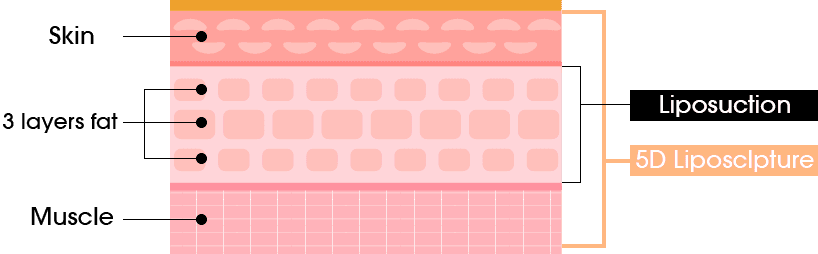
- Defined-contour goal — Good candidates want more visible abdominal, flank, chest, back, or arm definition rather than large-volume weight loss. 5D Liposculpture is a provider-branded version of high-definition liposuction (HDL), which selectively removes superficial and/or deep fat to reveal existing anatomy.
- Stable body weight — A stable weight, localized pinchable fat, and a commitment to maintain weight after surgery support a more durable contour. HDL does not treat obesity or build abdominal muscle.
- Elastic skin and suitable anatomy — Better candidates have skin that can retract after fat removal, limited loose skin, and—when abdominal etching is planned—enough underlying abdominal-muscle development for definition to show.
- Able to recover locally — International patients need time for early wound and contour checks, help getting back to accommodation after anesthesia, compression-garment care, and gentle walking before a long flight.
Pregnancy, breastfeeding, imminent pregnancy plans, uncontrolled diabetes, significant heart or lung disease, untreated hypertension, anemia, active infection, bleeding disorders, and impaired healing require deferral or specialist assessment. Nicotine smoking or vaping increases wound-healing and infection risk; a history of deep-vein thrombosis, pulmonary embolism, or thrombophilia requires an individualized clot-prevention plan. Marked skin excess, abdominal overhang, hernia, or rectus diastasis often makes liposuction alone a poor choice, while unmanaged body dysmorphic disorder, coercion, or expectations of a permanent “perfect” six-pack are important reasons not to proceed. Published HDL studies use inconsistent selection criteria, so there is no universal ideal BMI or candidate profile; a 2026 systematic review found substantial variation among studies.
How Is 5D Liposculpture Performed?
“5D Liposculpture” does not describe one standardized operation, device, or anesthetic plan. Ask the surgeon to specify the operative method, treatment zones, intended depth of fat removal, energy device if any, aspirate volume, and whether fat grafting is included.
- Anatomy-guided differential liposuction — The core HDL approach removes different amounts of deep and superficial subcutaneous fat around natural muscle borders. On the abdomen, this can create midline and semilunar shadows, often called abdominal etching or six-pack liposuction.
- Tumescent infiltration — Diluted anesthetic and epinephrine-containing fluid is infiltrated before suction to assist fat removal and reduce bleeding. It is a component of many liposuction operations, not a distinct 5D technique.
- Power-assisted liposuction — An oscillating cannula helps break up and remove fat. It is one reported HDL method and does not, by itself, guarantee a higher-definition result.
- Ultrasound- or laser-assisted liposuction — Energy can disrupt fat before aspiration. Some protocols use these devices, but they are not required for HDL and add device-specific risks, including thermal injury.
- Liposuction with fat grafting — Harvested fat can be placed into selected depressions to adjust three-dimensional contour. This adds separate donor- and recipient-site risks and must be specifically consented to. A review of male HDL studies found wide variation in devices, fat grafting, and aftercare protocols.
Why Visit Korea for 5D Liposculpture?
Korea is relevant principally because “5D Liposculpture” is marketed by Korean providers as a high-definition body-contouring concept. That terminology does not prove that a 5D-labelled procedure is safer, more precise, or superior to well-performed HDL elsewhere. Verify the actual surgical plan rather than choosing on the label alone.
- Foreign-patient registration check — Korea has a government registration system for institutions serving foreign patients. Medical Korea states that registered institutions must carry malpractice liability insurance.
- International-patient systems — The voluntary foreign-patient evaluation and accreditation framework assesses patient-safety and international-patient systems through on-site review, including areas such as medication, infection control, facilities, and safety management.
- What verification cannot establish — Registration and accreditation are useful administrative checks, not proof of an individual surgeon’s HDL results or a clinic’s complication rate. No independent evidence identified here validates 5D Liposculpture as a consistently defined technique or shows it outperforms other HDL approaches.
- Written disclosure matters — Before paying a deposit, obtain the operating surgeon’s specialty and licensure, anesthesia provider and monitoring plan, disclosed devices, exact zones, planned fat transfer, observation criteria, emergency-transfer arrangements, and scheduled postoperative reviews in writing.
Key Information for International Patients
- Minimum stay — Plan 10–14 days in Korea for multi-area high-definition liposuction. This allows for in-person assessment, surgery, the first postoperative reviews, wound checks, compression guidance, and an individualized decision about fitness to fly.
- Flight timing — The American Society of Plastic Surgeons suggests waiting at least 5–7 days before flying after body procedures such as liposuction, while stressing that surgery, long-haul travel, and immobility increase venous-thromboembolism risk. Extensive treatment, combined surgery, slow healing, or elevated clot risk justify a longer stay.
- Early recovery — Reserve the first 48–72 hours for rest, short assisted walks, medication, garment management, and the first review. Do not schedule shopping-heavy sightseeing, long transfers, swimming, saunas, alcohol-centered activities, or sun exposure.
- Work and exercise — Desk-based work can be possible after several days to 1–2 weeks, depending on the number of areas treated, discomfort, and prescription pain medicine. Defer strenuous exercise, core training, running, lifting, and contact sports for about 4 weeks or until surgeon clearance.
- Support after surgery — Arrange a responsible adult to take you to accommodation and remain available overnight after sedation or general anesthesia. ASPS medical-tourism guidance specifically advises transport and overnight assistance after liposuction.
- Home-country follow-up — Keep operative notes, anesthesia records, device details, prescriptions, and the surgeon’s contact route. Photo or video reviews support routine monitoring but cannot assess urgent complications; identify a clinician at home before travel.
Travel note: Book flexible return flights and accommodation close to the clinic. Do not carry luggage or take difficult public-transport transfers during the first postoperative week.
Which Are the Best Clinics in Korea for 5D Liposculpture?
Listed below are some of the best clinics in Korea for 5d liposculpture.
1. Lydian Plastic Surgery Clinic
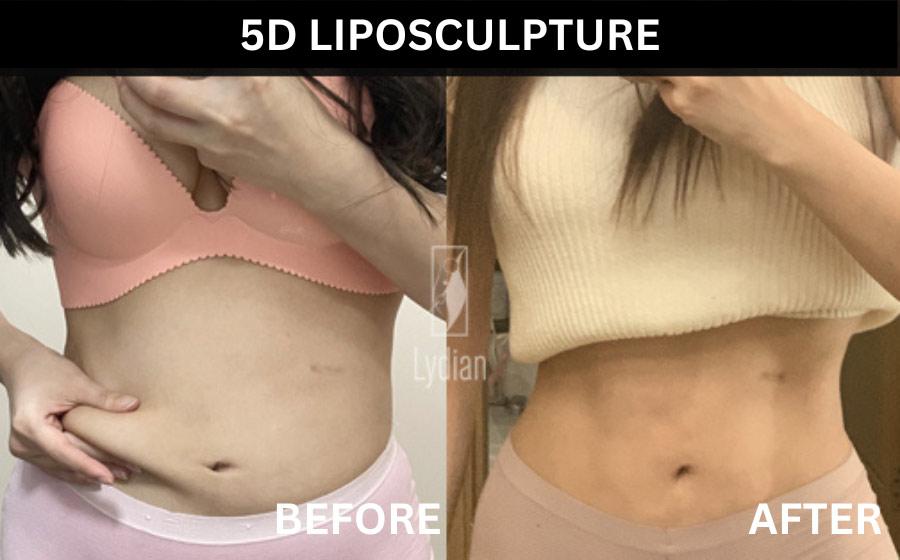
For 5D Liposculpture, you can pursue anatomy-based body contouring that addresses more than fat removal: Lydian describes evaluating five layers, including skin and muscle, to create defined yet natural-looking contours. Your plan is designed around your proportions, such as waist length, pelvis size, and chest circumference, rather than a standard fat-removal pattern.
- URL: Lydian Plastic Surgery Clinic Website
- Location: Gangnam-gu, Seoul
- Procedure approach:
- Abdominal sculpting may combine fat removal with contouring around the underlying musculature to create more defined lines.
- The clinic uses more than 30 custom-designed cannula types to accommodate differing body areas and body shapes.
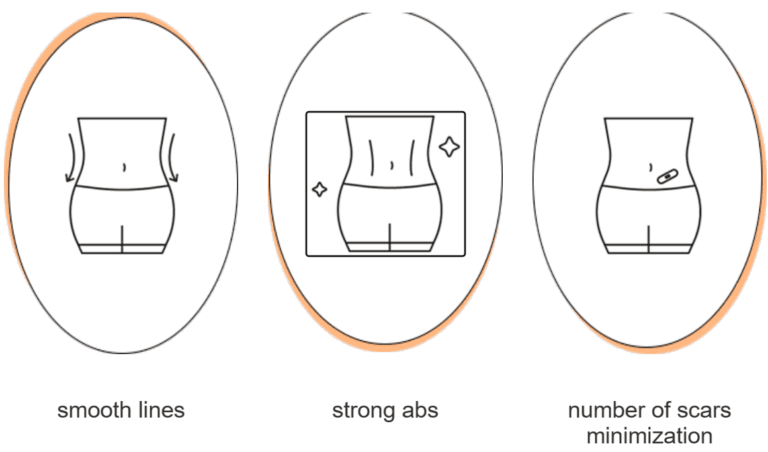
- It states that full abdomen, back, thigh, and knee liposuction can be performed through one to two strategically placed incisions in appropriate cases.
- Planning and follow-up:
- Quantificare 3D imaging is used for pre-procedure design and to document before-and-after results with 3D video.
- Aftercare is described as focusing on swelling reduction, irregularity correction, skin-elasticity recovery, and residual-fat contouring.
- The clinic also reports using devices intended to address stretch marks and skin laxity alongside liposuction.
- Physician background:
- Dr. An Kyung Chun is identified as director of the 5D Liposculpture Academy and as providing physician training in high-definition body sculpting and liposuction devices.
- The clinic describes Dr. An as having more than two decades of specialized body-sculpting experience.
- Related services: Services listed include targeted liposuction, tummy tuck surgery, fat grafting, Brazilian butt lift procedures, and facial procedures.
2. Slim Young Clinic
If you are exploring body contouring options alongside 5D Liposculpture, Slim Young Clinic offers targeted liposuction for areas including the abdomen, arms, thighs, calves, face, and male chest, as well as fat-transfer procedures that can use your own harvested fat for volume enhancement.
- URL: Slim Young Clinic Website
- Location: Jung-gu, Seoul
- Body contouring options:
- Listed liposuction areas include the arms, abdomen, thighs, calves, face, and gynecomastia treatment.
- The clinic also lists a one-day fat-extraction injection and a Dual Cut injection intended to target fat reduction and skin tightening.
- Medical PT programs are offered to complement surgical procedures and support fitness goals.
- Fat transfer:
- Fat transfer options include facial, breast, and hip-up procedures.
- Stem-cell fat transfer and PRP fat transfer are also listed.
- Other aesthetic services:
- Thread lifting and device-based lifting options are listed, including Shurink Universe, Oligio, InMode, and Ulthera.
- Botox, filler, and skin-booster treatments are available.
3. DR Plastic Surgery
For body sculpting in Korea, DR Plastic Surgery’s supplied information describes 3D liposculpture with liposuction to reduce localized fat and improve body contours, plus fat grafting to restore or add volume in areas such as the face, breasts, or buttocks. The provided context does not specifically describe a 5D Liposculpture protocol.
- URL: DR Plastic Surgery Website
- Location: Gangnam-gu, Seoul
- Body contouring services:
- Liposuction is listed for removing excess fat deposits and creating more defined, natural-looking contours.
- Fat grafting is listed for transferring fat from one area to another, including the face, breasts, and buttocks.
- Additional surgical services:
- The supplied information also lists facial contouring, facelift and neck lift procedures, primary and revision rhinoplasty, eyelid surgery, and breast surgery.
- Laser skin resurfacing, Botox, and fillers are listed among non-surgical aesthetic treatments.
5D Liposculpture From Start to Finish
- Virtual enquiry and records review — Send clear photographs, a complete medical history, allergies, medication and supplement lists, prior operative reports, nicotine use, and realistic contour goals. Ask whether liposuction alone is appropriate for skin laxity, abdominal overhang, or suspected diastasis.
- Pre-travel planning — Confirm whether English-language or interpreter-supported consultation is available. Obtain a written outline of zones, methods, anesthesia, estimated recovery stay, total fees, postoperative visits, compression garment, and emergency contact process; an online assessment is not medical clearance.
- In-person consultation in Korea — The surgeon examines fat distribution, skin elasticity, stretch marks, scars, hernias, prior liposuction, abdominal-wall laxity, and muscle definition. Standardized photographs, body imaging, and standing surgical markings help plan the contour.
- Medical and anesthesia assessment — Testing depends on age, health history, procedure extent, and anesthetic plan. It can include CBC or hemoglobin, glucose or chemistry testing, pregnancy testing where relevant, ECG, and further medical review. Disclose clotting history, GLP-1 medication, hormones, nicotine, recreational drugs, and previous anesthesia problems.
- Surgery — After the agreed anesthesia and sterile preparation, the surgeon makes small cannula-access incisions, infiltrates tumescent fluid when used, aspirates fat with the disclosed technique, and refines selected anatomical borders. Procedure length and observation needs depend on the number of zones, aspirate volume, concurrent procedures, anesthesia, and medical risk; a meta-analysis reported averages of 235 minutes and 4,268.8 mL aspirate, but these are not personal safety targets.
- Recovery-room observation and discharge — Staff monitor recovery from anesthesia, pain, nausea, mobility, and wound drainage. Leave only when the clinical team considers discharge appropriate, with prescriptions, written incision care, garment instructions, a walking plan, and confirmed review dates.
- Early in-country follow-up — Attend all scheduled reviews. Bruising, swelling, numbness, firmness, fluid leakage from access sites, and uneven early contours are common; the team assesses wounds, compression fit, pain control, and possible fluid collection or infection.
- Flight clearance and remote follow-up — Obtain individualized clearance before flying. Continue scheduled remote photo or video reviews after returning home, but seek local urgent care for chest pain, shortness of breath, one-sided leg symptoms, fever, or rapidly worsening swelling rather than relying on remote messaging.
Alternatives to 5D Liposculpture
The right alternative depends on whether the main problem is localized fat, loose skin, abdominal-wall separation, or a preference to avoid surgery. Non-surgical options avoid incisions and anesthesia but generally produce smaller, gradual changes and do not reliably recreate surgical abdominal etching.
Conventional Liposuction
- Best for — Localized abdominal or multi-area fat reduction when etched muscle definition is not the priority.
- Tradeoff — It can simplify the contouring goal, but does not correct loose skin or diastasis. See abdominal liposuction or full-body liposuction.
Tummy Tuck
- Best for — Significant loose skin, lower-abdominal overhang, or a need for skin excision and abdominal-wall tightening.
- Tradeoff — It leaves a longer scar and has a more demanding recovery than liposuction. See tummy tuck.
Diastasis Recti Repair
- Best for — Confirmed separation of the rectus abdominal muscles causing a bulge or weak abdominal-wall contour.
- Tradeoff — It treats the muscle layer, not superficial fat. It is often considered with abdominoplasty rather than as a substitute for weight management. See diastasis recti repair.
Radiofrequency-Assisted Contouring
- Best for — Selected patients seeking fat reduction with a potential skin-tightening component.
- Tradeoff — Results and risks are device- and operator-specific, and heat-based treatment can cause thermal injury. See BodyTite.
Non-Surgical Body Contouring
- Best for — People unwilling or medically unsuitable for surgery who accept a more modest change without surgical etching.
- Tradeoff — Cryolipolysis, fat-dissolving injections, and electromagnetic muscle stimulation have different indications and do not replace liposuction for substantial fat removal. See CoolSculpting, fat-dissolving injection, or Emsculpt.
How Can I Prepare for 5D Liposculpture?
- Disclose all medicines — Give the surgeon and anesthesia team a complete list of anticoagulants, antiplatelets, diabetes medicines, GLP-1 medicines, antihypertensives, hormones, corticosteroids, isotretinoin, vitamins, herbal products, and supplements. Do not stop prescribed medication unless the prescribing clinician and surgical/anesthesia team direct it.
- Stop nicotine as instructed — Stop cigarettes, vaping, nicotine pouches, patches, and gum on the surgeon’s schedule and remain nicotine-free through healing. Nicotine reduces blood flow and increases infection and wound-healing risk.
- Avoid alcohol and disclose substances — Avoid alcohol for the period directed before surgery and throughout opioid or sedative use. Report cannabis, stimulants, and other recreational-drug use because they affect anesthesia, heart rate, blood pressure, and clotting risk.
- Follow fasting instructions exactly — For sedation or general anesthesia, follow the anesthesiologist’s written food and drink cut-off times. Do not assume a standard fasting schedule applies to your case.
- Prepare the treatment area — Avoid tanning, sunburn, waxing, shaving-related cuts, and new rashes near operative zones. Report any skin infection, fever, cough, or new illness before surgery.
- Organize recovery logistics — Arrive early enough to recover from jet lag, dehydration, and prolonged sitting. Reserve nearby accommodation with elevator access and a private bathroom; arrange a companion, safe transport, and easy meals.
- Protect the itinerary — Do not schedule swimming, hot baths, saunas, strenuous sightseeing, sunbathing, or major tourist transfers during the recovery period. ASPS guidance for cosmetic-surgery travelers specifically cautions against sun exposure, alcohol, swimming, extensive tours, and exercise after surgery.
Travel note: Buy flexible flights and travel insurance that does not exclude postoperative complications. Carry enough regular prescription medicine for the full trip, plus extra for delays.
Confirm the treating surgeon’s and anesthesiologist’s individualized medication, fasting, nicotine, testing, compression, and travel requirements; these instructions take precedence over general guidance.
Aftercare Advice
Protect healing tissue, prevent immobility, and treat new systemic symptoms as urgent rather than as routine postoperative discomfort.
- Wear compression correctly — Use the surgeon-prescribed compression garment for the stated schedule. Contact the clinic promptly if it causes severe pain, numb or discolored skin, or rolls into a pressure line; garment duration depends on treatment depth, body area, skin quality, and the surgeon’s protocol.
- Walk, hydrate, and avoid strain — Take short, frequent walks once cleared and avoid prolonged sitting, especially before a long flight. Avoid heavy lifting, strenuous exercise, core training, running, and contact sports for about 4 weeks or until cleared.
- Keep incisions protected — Follow the written dressing and shower instructions. Do not soak in baths, pools, hot tubs, or ocean water until all access wounds have closed and the surgeon approves; avoid direct sun on healing scars and use SPF 50 once the skin is closed and sun protection is permitted.
- Expect swelling before judging the contour — Bruising, swelling, soreness, numbness, firmness, fluid leakage, and asymmetric-looking early contours can last for weeks. Assess meaningful definition no earlier than 3 months; skin contraction and refinement can continue for 3–6 months.
- Know the warning signs — Seek urgent in-person care for chest pain, shortness of breath, coughing blood, fainting, one-sided leg swelling or pain, rapidly worsening pain or swelling, excessive bleeding, fever, spreading redness, foul drainage, black or gray skin, uncontrolled vomiting, confusion, or allergic-reaction symptoms. HDL literature reports minor complications such as hyperpigmentation, seroma, and temporary fibrosis, while serious complications are less common but possible; a 2023 systematic review found heterogeneous reporting across studies.
- Attend reviews and retain records — Complete in-country wound and contour checks before flying, then send photographs only through the clinic’s secure follow-up route. Keep a home clinician and urgent-care plan available because remote review cannot diagnose all complications.
Follow the treating doctor’s instructions over general advice, and contact the clinic immediately when pain, swelling, drainage, skin color, or breathing symptoms appear abnormal.
Frequently Asked Questions
Related Blogs
Global Umbilicoplasty Pricing: How Korea’s Top Clinics Stack Up Against US, Turkey, and Mexico
Discover why Korea is becoming a sought-after destination for affordable belly button surgery, offering cutting-edge techniques and experienced surgeons. Explore the costs, benefits, and considerations involved in undergoing this cosmetic procedure in a country known for its advanced medical services.
Updated: Oct 21, 2026
Global Cost Perspective: Fat Dissolving Laser Treatment Costs in Korea vs. USA, Mexico, Turkey, and Thailand
Discover the cost and benefits of fat dissolving laser treatments in Korea, where cutting-edge technology meets affordability. Explore how this non-invasive procedure can help you achieve your body goals without breaking the bank.
Updated: Oct 21, 2026
A World of Difference: Comparing Body Fat Dissolving Laser Costs in Korea, USA, Mexico, Turkey, and Thailand
Discover the latest insights on the cost of body fat dissolving laser treatments in Korea, known for their advanced technology and competitive pricing. Explore how these innovative procedures provide an effective solution for those seeking to achieve their desired body contour.
Updated: Oct 21, 2026
Discover CoolSculpting Cost: Korea vs USA, Mexico, Turkey, and More – Why Korea Could Be Your Best Choice
Discover the latest insights on the cost of CoolSculpting in Korea, where advanced cosmetic treatments offer competitive prices. Explore factors influencing pricing and why Korea is becoming a popular destination for non-invasive fat reduction procedures.
Updated: Oct 21, 2026
Clinics offering 5D Liposculpture

Lydian Plastic Surgery Clinic in Korea: Superior Cosmetic Procedures by World-Renowned Expert Dr. An Kyung Chun
Apgujeong

DR Plastic Surgery Korea: Comprehensive Aesthetic Procedures & Specialized Plastic Surgery in Apgujeong
Apgujeong

UK Plastic Surgery Clinic in Korea: Unparalleled Beauty Enhancement and Confidence Boosting Procedures
Centum

Slim Young Clinic: Leading Body Shaping and Aesthetic Services in Korea
Myeongdong