
Medical Tourism Blog
Thread Lift in Korea: Types, Recovery, Risks, and Travel Planning
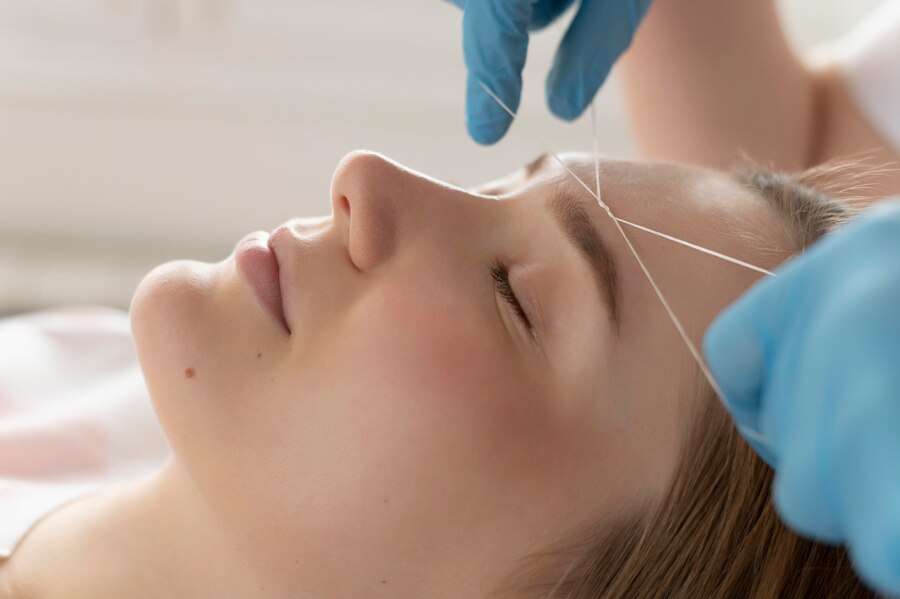
Table of contents
- Thread Lift at a Glance
- What Is a Thread Lift?
- Who Is a Good Candidate for a Thread Lift?
- What Are the Different Types of Thread Lift?
- Why Visit Korea for a Thread Lift?
- Key Information for International Patients
- Which Are the Best Clinics in Korea for Thread Lift In?
- Thread Lift From Start to Finish
- Alternatives to a Thread Lift
- How Can I Prepare for a Thread Lift?
- Aftercare Advice
Considering treatment in Korea? Everything you need to know e.g. — how to avoid scams, visas, interpreters, recovery tips — in our Medical Tourism Master Guide. Plan with confidence in minutes, not weeks!
Last updated: September 2026
Thread Lift at a Glance
- What it does — A thread lift is an outpatient, minimally invasive treatment that places absorbable barbed, cogged, or cone sutures under the skin to subtly reposition mild cheek, jowl, jawline, or selected neck laxity; it does not remove excess skin.
- Best candidates — It is best suited to early-to-moderate facial laxity with enough soft tissue for thread engagement and realistic expectations for a modest, temporary lift rather than a dramatic surgical result.
- Recovery timeline — Treatment commonly takes 30–60 minutes, quiet desk work may be possible in 1–3 days, and bruising, swelling, tightness, dimpling, or temporary asymmetry can remain noticeable for 5–14 days.
- When results settle — The mechanical lift may be visible immediately, but the early result is more meaningfully assessed at 2–6 weeks; collagen-remodeling changes can continue for about 2–3 months, while longevity varies from months to years.
- Korea travel plan — Plan to stay in Korea for 5–7 days and attend an in-person review before departure; there is no universal evidence-based flying ban, but long-haul travel should wait for clinician clearance if symptoms worsen or sedation was used.
- Important limitations and risks — Threads are not a reliable solution for heavy jowls, marked excess skin, advanced neck laxity, or a long-lasting dramatic lift, which usually favor facelift or neck-lift consultation; infection, extrusion, visible threads, persistent irregularity, and sensory changes are possible complications.
- Korea-specific choice — Korea has extensive international aesthetic-care infrastructure, but no evidence proves that Korean clinics, named thread techniques, brands, or higher thread counts are superior; request the operator’s specialty and the exact thread material, design, number, vectors, and complication plan.
What Is a Thread Lift?
A thread lift is a cosmetic treatment that uses absorbable sutures placed beneath the skin to gently reposition lax facial or neck tissue. It aims to improve early cheek descent, jowls, and jawline blurring for a subtle, temporary lifted appearance without removing excess skin. It is a minimally invasive procedure, typically performed on an outpatient basis with local anesthesia.
Who Is a Good Candidate for a Thread Lift?
- Early-to-moderate laxity — Good candidates have mild cheek descent, early jowls, jawline blurring, or selected neck laxity and want a subtle mechanical repositioning rather than skin removal.
- Realistic durability goals — A facial thread lift suits people who accept a temporary result, variable longevity, and the possibility of future maintenance treatment or surgery.
- Adequate tissue support — The clinician needs enough soft tissue for cogs, barbs, or cones to engage; facial anatomy, skin thickness, volume loss, and degree of descent determine whether threads can produce a balanced lift.
- Able to follow restrictions — Candidates can avoid facial pressure, strenuous activity, heat, and massage during healing and can attend an in-person review before leaving Korea.
Pregnancy and breastfeeding, active acne or skin infection near entry points, allergy to the planned thread or anesthetic, and uncontrolled bleeding or medical illness are reasons to defer treatment. Do not stop warfarin, apixaban, rivaroxaban, dabigatran, clopidogrel, aspirin, or other prescribed antithrombotic medicine without a plan approved by both the prescribing and procedural clinicians. Marked excess skin, heavy jowls, advanced neck laxity, and a desire for a dramatic long-lasting lift are poor indications for threads; a surgical facelift or neck lift is usually more appropriate. Age alone does not decide candidacy, although a meta-analysis found higher pooled dimpling and infection rates in patients over 50, an association that requires individualized assessment rather than an automatic exclusion.Evidence review
What Are the Different Types of Thread Lift?
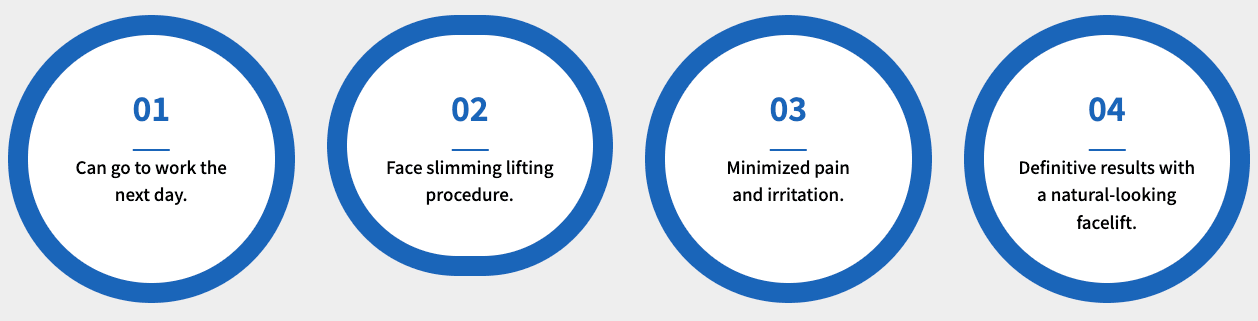
Thread lift describes several thread designs and absorbable materials. The planned area, degree of laxity, skin thickness, and whether the aim is tissue suspension or collagen stimulation should determine selection—not a brand name or thread count.
- Smooth monofilament threads — Fine PDO or similar threads intended mainly for localized collagen stimulation and textural support. They provide little meaningful mechanical lift.
- Barbed or cogged suspension threads — Unidirectional, bidirectional, multidirectional, cut-cog, molded-cog, and spiral designs grip soft tissue to reposition the cheek, jowl, jawline, or selected neck areas. These are the usual choice for a visible lifting effect.
- Cone-suspension threads — Absorbable sutures with molded cones that gather and suspend tissue, often used in midface or cheek lifting.
- PDO, PLLA, and PCL materials — Polydioxanone, poly-L-lactic acid, and polycaprolactone are common absorbable material families. A material’s persistence does not guarantee how long the visible lift lasts; a systematic review found differing adverse-event patterns but no universally superior material for aesthetic effectiveness.Systematic review
Why Visit Korea for a Thread Lift?
Korea is a major destination for international aesthetic care, with a large medical-tourism infrastructure and access to facial thread-lift treatments. This does not prove that Korean threads, clinics, named techniques, or higher thread counts produce better results for an individual. Choose based on the operator’s qualifications, anatomy-based plan, and complication support.
- International-care infrastructure — Seoul reported more than 1 million international medical tourists in 2024, reflecting the scale of services for overseas patients.Seoul’s 2024 medical-tourism report
- Pre-travel communication — Korea’s official Medical Korea platform is designed to connect international patients with medical institutions and related support information.Medical Korea international patient portal
- Treatment-plan transparency — Ask for the exact thread brand, material, number, length, design, insertion vectors, treatment plane, operator name and specialty, and the plan for managing infection, dimpling, extrusion, or asymmetry. Current evidence does not establish a country, city, brand, or marketing label as superior.Evidence limitations review
Key Information for International Patients
- Minimum stay — Plan 5–7 days in Korea, ideally with an in-person review before departure. The procedure is generally outpatient, but early assessment can identify worsening swelling, infection, dimpling, asymmetry, visible threads, or extrusion.
- Flight timing — There is no procedure-specific, evidence-based universal ban on flying after a facial thread lift. Do not take a long-haul flight with worsening symptoms, after unplanned sedation, or without explicit clearance from the treating clinician.
- Work and itinerary — Quiet desk work is often possible after 1–3 days, but bruising, tenderness, tightness, puckering, and temporary asymmetry commonly remain visible for 5–14 days. Avoid scheduling important photographs or strenuous sightseeing immediately after treatment.
- Activity restrictions — Defer vigorous exercise, heavy lifting, high-impact activity, forceful facial massage, sauna, steam rooms, hot yoga, and significant heat exposure for about 2 weeks or until cleared. Lower-face treatment can also temporarily limit gum chewing, wide mouth opening, and dental work.
- Remote follow-up — Arrange a named clinician at home before travel and obtain an English procedure summary, medication record, pre- and post-treatment photographs, and emergency contact details before leaving.
Travel note: Seek urgent assessment for fever, spreading redness or warmth, pus or foul drainage, escalating pain or swelling, skin blanching or darkening, new facial weakness, a visible or extruding thread, or trouble swallowing or breathing.
Which Are the Best Clinics in Korea for Thread Lift In?
Listed below are some of the best clinics in Korea for thread lift in.
1. PangPang Clinic
For a thread lift, you can consider a clinic that concentrates its practice and research on thread-based lifting, including customized thread selection and ultrasound-guided planning. Its Pink Lift system is described as a proprietary medical thread developed from thousands of lifting cases, while Chill-Lifting pairs the procedure with contact-free cooling anesthesia intended to make treatment and early recovery more comfortable.
- URL: PangPang Clinic Website
- Location: Gangnam-gu, Seoul
- Thread-lift approach:
- Pink Lift is designed for hold, natural-looking elevation, and durability; the clinic states that it holds FDA, CE, and KFDA certifications.
- Planning may include an ultrasonic visual check, pre-procedure design, and a doctor consultation tailored to your facial concerns.
- The clinic describes using 31 specialized functional threads, with thread types for lifting, support, tightening, and localized volume.
- Treatment details:
- Facial, neck, breast, buttock, and abdominal thread lifting is listed, with a typical treatment time of about 30 minutes to one hour.
- Listed anesthesia options include partial anesthesia, Airnox, and sleep anesthesia.
- The clinic estimates results may last about one year or longer, though your outcome and duration can vary.
- Research and comfort measures:
- The clinic reports collaboration with Seoul National University Bundang Hospital on techniques intended to support collagen regeneration and skin quality.
- Chill-Lifting uses contact-free cooling anesthesia; the clinic describes it as intended to reduce pain, swelling, and bruising and support a quicker recovery.
- A Thread Lifting Research Institute and participation in international conference lectures and presentations are listed as part of its thread-lifting focus.
- Related options:
- A revision center is available for concerns after a previous thread lift and may incorporate fillers, Botox, or lasers.
- Minute Lifting is listed as a 30-minute option with an immediate lifting effect and a stated maintenance range of six months to one year.
- PIM Injection combines Ultra Cell, thread lifting, and Botox to address fine wrinkles, volume, elasticity, and complexion.
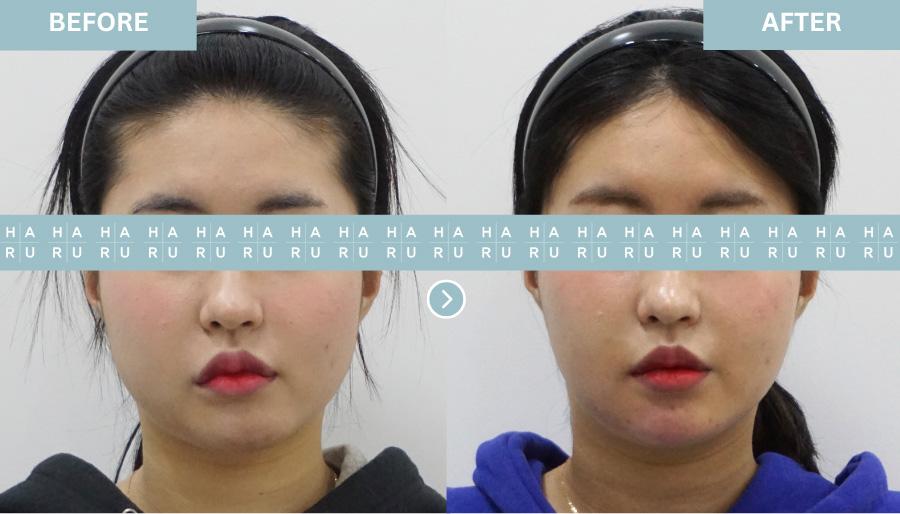
2. Haru Clinic
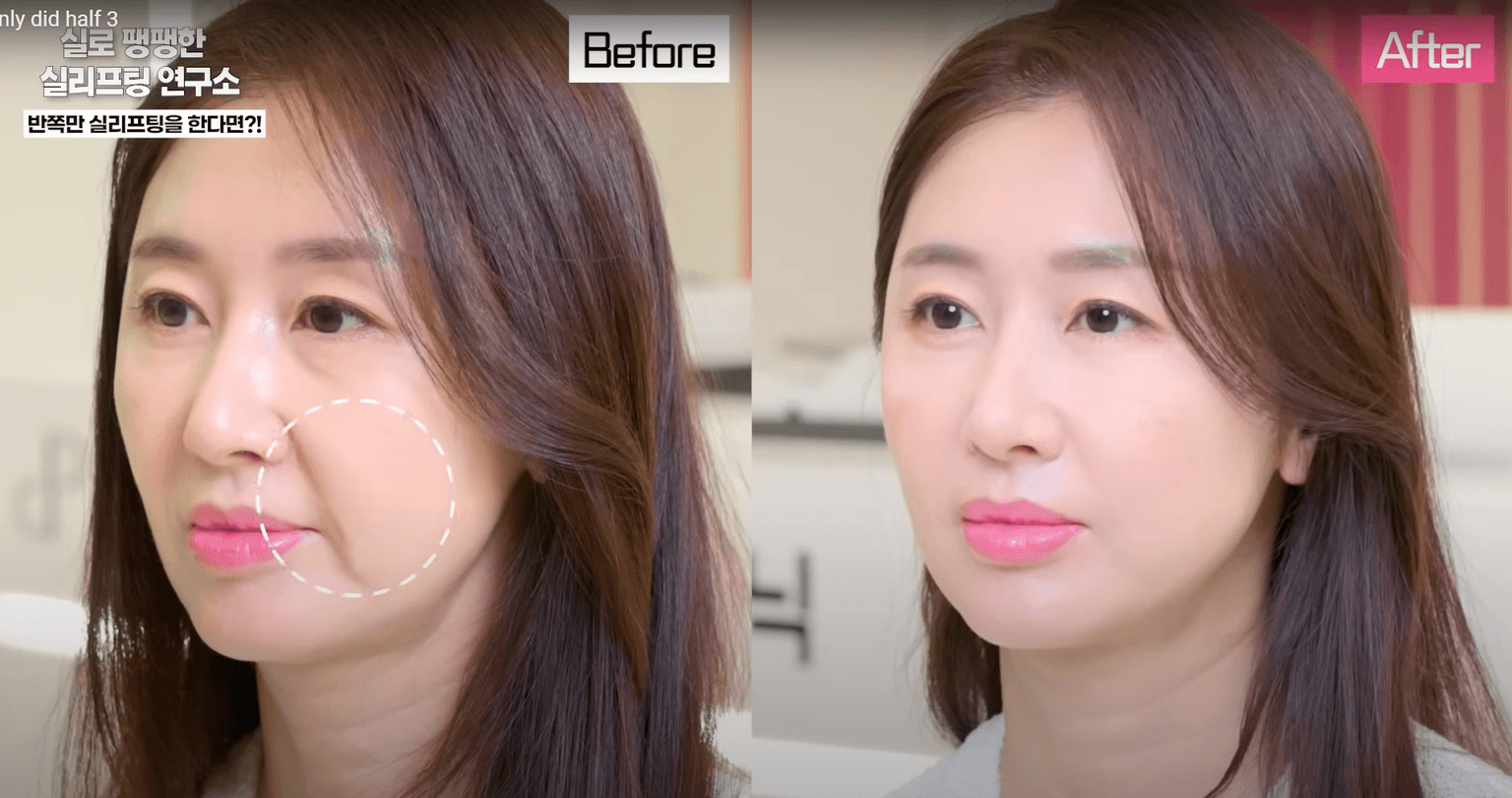
For a thread lift in Korea, you may consider an approach that uses the less-mobile area behind the ear as an anchoring point, with the aim of creating a stable lift while refining cheek and jawline contours. Haru describes designing the lift around your anatomy, including adjusting for volume loss beneath the cheekbones, and placing fixed points to avoid major nerves and blood vessels where possible.
- URL: Haru Clinic Website
- Location: Gangnam-gu, Seoul
- Thread-lift technique:
- Dissolvable barbed threads are used to elevate sagging cheeks and the jawline under local anesthesia.
- The clinic describes simultaneous pulling and pressing of the skin to produce lifting without enlarging the face.
- Thread lifting is presented as having short downtime and as stimulating collagen for firmer skin.
- Physician perspective:
- Dr. Jeong is listed as an official research physician at Merz and as teaching other doctors current filler techniques.
- The clinic describes a facial-design approach focused on balance, harmony, and a natural, refreshed result tailored to your features.
- Related facial options:
- Options listed alongside thread lifting include double-chin contouring, nose thread lifting, eyebrow lifting, collagen-tightening treatments, Botox, and fillers.
- If your concerns involve the neck or more pronounced laxity, a surgical facelift that repositions deep SMAS layers is also listed.
3. B.V Clinic
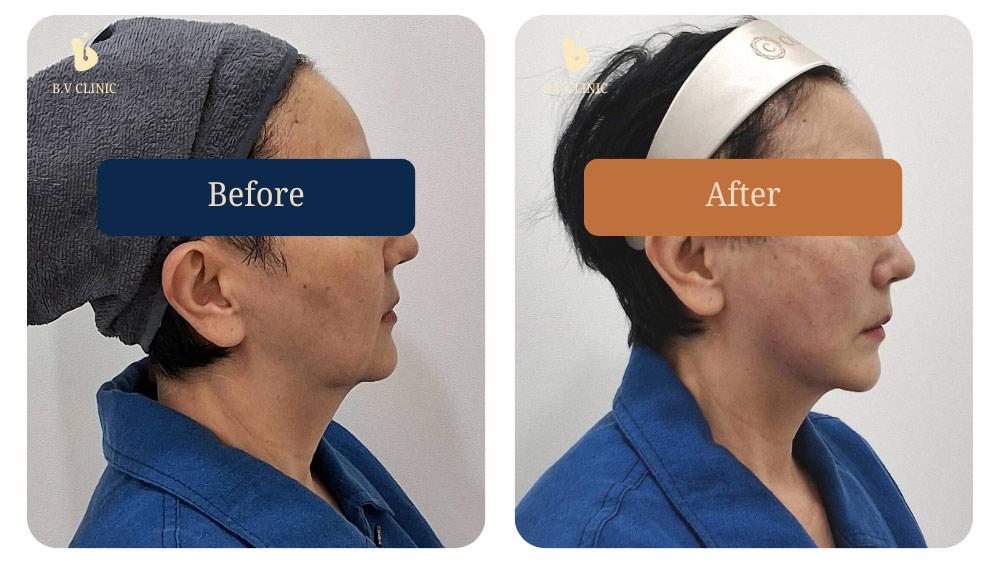
For a thread lift, you may consider a clinic where Dr. Suh is described as having more than 10 years focused exclusively on thread lifting and thousands of clinical cases. Its approach uses MINT and premium PDO barbed threads for anchoring and facial contour support, with the additional goal of stimulating collagen as your skin remodels.
- URL: B.V Clinic Website
- Location: Seoul
- Thread-lift options:
- 3D Thread Lifting is described as strategically placing threads to lift and firm sagging skin while enhancing natural facial contours.
- Full Face Lifting is listed for volume balance, forehead lines, nasolabial folds, and facial asymmetry, with an immediate lifting effect described.
- A non-surgical forehead wrinkle restoration option targets forehead wrinkles and sagging around the eyes with tailored threads.
- Threads and practitioner experience:
- MINT Threads are described as FDA and KFDA approved.
- Premium PDO barbed threads are intended to provide anchoring power and lift while supporting collagen production over time.
- Dr. Suh's listed experience is dedicated exclusively to thread lifting, with thousands of clinical cases.
- Aftercare and complementary treatments:
- Post-treatment care is listed as including skin-regeneration management, nutritional skincare products, and ultrasound-based treatment intended to help manage swelling and support elasticity.
- Skin-tightening options include Shurink HIFU, Potenza radiofrequency, and Thor radiofrequency treatments.
- Volume-lifting treatment is available for areas affected by volume and elasticity loss.
Thread Lift From Start to Finish
- Remote consultation — Send clear front, oblique, and side photographs when requested, describe goals and prior facial procedures, and confirm whether English-language or virtual consultation is available. Discuss whether the concern is laxity, volume loss, skin quality, or a combination.
- Medical screening and plan — The clinician reviews medicines, supplements, allergies, smoking or nicotine use, bleeding history, medical conditions, prior surgery, threads, fillers, biostimulators, and energy treatments. They assess facial movement, tissue thickness, laxity, asymmetry, and proposed vectors, then determine whether threads are appropriate.
- Travel coordination — Schedule treatment early enough for a review before departure. Confirm whether local anesthesia alone is planned or whether oral or IV sedation will be used, as sedation changes fasting, escort, and driving requirements.
- Marking and anesthesia — At the clinic, the treatment area is cleansed, photographed, and marked while sitting or standing. Local anesthetic is injected at planned entry points and along relevant paths.
- Thread placement — The clinician introduces absorbable threads through small needle or blunt-cannula entry points, commonly in a subcutaneous or supra-SMAS plane. Barbs, cogs, or cones are positioned to engage tissue, then adjusted for the planned lift and symmetry.
- Completion and discharge — Thread ends are trimmed, entry sites are checked, and written aftercare is provided. Treatment commonly takes about 30–60 minutes and is usually completed as an outpatient visit. Use an adult escort and do not drive if sedation was used.
- Early review and recovery — Mechanical repositioning can be visible immediately, but swelling, bruising, tenderness, tightness, dimpling, and temporary asymmetry make the first days unreliable for judging the outcome. Attend the planned in-person review before travel.
- Overseas follow-up — Share requested photographs with the treating clinic after returning home and keep the local clinician’s details available. Assess the settled early result at roughly 2–6 weeks; collagen-remodeling changes can continue for about 2–3 months.Recovery and outcome evidence
Alternatives to a Thread Lift
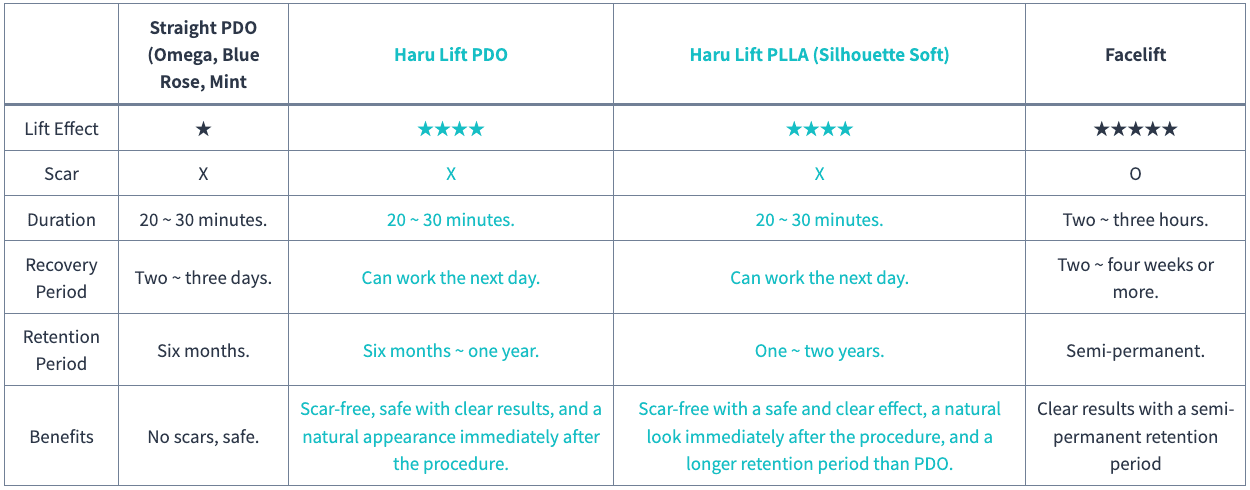
Threads offer modest, temporary repositioning without skin excision. Alternatives should match the main anatomical problem: energy devices for mild tightening, volumization for volume loss, or surgery for substantial laxity and a more durable change. Direct high-quality comparisons remain limited.Review of evidence gaps
Surgical Facelift
- Best fit — Substantial jowls, excess facial or neck skin, pronounced descent, or a goal for a more durable structural result.
- Tradeoff — Facelift surgery removes and repositions tissue more definitively but involves incisions, greater downtime, and surgical/anesthesia risks.
Energy-Based Tightening
- Best fit — Mild laxity and patients seeking gradual tightening without inserted threads or surgical incisions.
- Tradeoff — Ultherapy lifting and Thermage lifting do not remove excess skin or mechanically reposition descended tissue.
Facial Filler
- Best fit — Apparent sagging driven chiefly by loss of cheek, temple, chin, or jawline volume.
- Tradeoff — Facial filler restores selected volume but does not remove skin and carries its own important vascular and contour risks.
Facial Fat Grafting
- Best fit — Volume depletion in patients who prefer autologous fat and accept a surgical harvesting procedure.
- Tradeoff — Face fat grafting can improve volume but does not provide the skin excision or tissue repositioning of a facelift.
How Can I Prepare for a Thread Lift?
- Medication and supplement review — Disclose every prescription, over-the-counter medicine, injectable, vitamin, herb, and recreational substance well before treatment. Aspirin, NSAIDs, fish oil, vitamin E, ginkgo, garlic supplements, and similar products can increase bruising or bleeding; stop them only when the treating clinician approves a specific timeframe.
- Antithrombotic medicines — Never independently stop warfarin, apixaban, rivaroxaban, dabigatran, clopidogrel, aspirin, or other prescribed anticoagulant or antiplatelet medicine. Require agreement from the prescribing clinician and procedural clinician.
- Skin condition — Arrive without sunburn, active acne near entry points, dermatitis, cold sores, open wounds, or another facial infection. Report an outbreak or irritated skin promptly so treatment can be postponed if needed.
- Nicotine and alcohol — Stop smoking and nicotine when instructed, as nicotine-related vasoconstriction can impair healing. Avoid alcohol according to clinic instructions because it can worsen bruising and swelling.
- Fasting and sedation — Local-anesthetic-only treatment often does not require fasting. Follow the facility’s exact fasting instructions if oral or IV sedation is planned.
- Travel logistics — Book flexible flights, remain locally for 5–7 days, and avoid treatment on the final day of the trip. Reserve accommodation that allows an easy return to the clinic and arrange an adult companion for the first night when sedation is used.
Travel note: Bring a complete list of prior facial filler, biostimulator, thread, surgery, and energy-device treatments, including dates and treated areas.
Confirm the treating doctor’s individualized preparation requirements, which take precedence over general guidance.
Aftercare Advice
Protect the treated tissues from traction, pressure, heat, and infection while early swelling settles.
- Swelling and discomfort — Use cold compresses only as directed and take only clinician-approved pain medicine. Swelling, bruising, tenderness, tightness, dimpling, and temporary asymmetry are common during the first 5–14 days.
- Pressure and facial movement — Avoid rubbing, facial massage, aggressive skincare treatments, and pressure on treated areas. Sleep on the back with head elevation when instructed; lower-face treatment can require temporary limits on gum chewing, wide mouth opening, and dental work.
- Exercise and heat — Avoid strenuous exercise, heavy lifting, high-impact activity, sauna, steam rooms, hot yoga, and significant heat exposure for about 2 weeks or until the clinician clears them.
- Entry-site and sun care — Keep entry points clean and follow the clinic’s instructions on washing and topical products. Use broad-spectrum SPF 50 on healed exposed skin and avoid direct sun while bruising and inflammation resolve.
- Urgent warning signs — Contact the clinic immediately for escalating pain, increasing swelling, fever, spreading redness or warmth, drainage, marked asymmetry, skin blanching or darkening, new weakness, visible or extruding thread, or swallowing or breathing difficulty.
- Result timing — Do not judge the result immediately after treatment. Reassess at 2–6 weeks; collagen changes can continue for 2–3 months, while long-term durability remains variable and evidence is limited.Complication and durability evidence
Follow the treating doctor’s instructions over general advice and contact the clinic promptly when something appears wrong.
Frequently Asked Questions
Related Blogs
Abdominal Thread Lift in Korea: Candidacy, Evidence, Recovery, and Travel Planning
Abdominal thread lifts place absorbable threads in superficial abdominal tissue for subtle tightening, but methods, durability, and outcomes are not standardized. The article covers candidate screening, procedure planning, Korea travel and follow-up, preparation, aftercare warning signs, and alternatives for fat, excess skin, diastasis, or hernia.
Updated: Oct 13, 2026
Breast Thread Lift in Korea: Candidacy, Safety, Recovery, and Travel Planning
Breast thread lift uses absorbable threads placed through small entry points for modest contour improvement, but techniques, durability, and complication rates are not standardized. The article covers candidacy, preparation, travel planning for Korea, aftercare, warning signs, follow-up, and surgical alternatives for significant sagging.
Updated: Oct 13, 2026
Lip Thread Lift in Korea: Methods, Recovery, Risks and Travel Planning
Lip thread lifts use absorbable smooth or barbed threads to soften upper-lip lines or provide subtle traction, with suitability based on tissue quality, goals, and medical assessment. The article covers treatment planning, recovery, aftercare, risks, alternatives, and travel guidance for international patients in South Korea.
Updated: Oct 13, 2026
Filling Threads in Korea: Types, Recovery, Risks and Travel Planning
Filling threads are absorbable volumizing thread configurations placed under local anesthesia to soften minor static lines and localized hollows in appropriately assessed patients. The article covers candidate screening, device documentation, Korea travel planning, recovery, aftercare, complications, and alternatives such as filler, fat grafting, thread lifts, and facelift surgery.
Updated: Oct 12, 2026
Clinics offering Thread Lift
RINE Plastic Surgery Clinic | Facelift and Eye Rejuvenation Surgery
Nonhyeon

SH Clinic: Comprehensive Women's, Men's & Couples' Health Services in Korea
Sinsa

THEPLUS Plastic Surgery Korea | Eye, Nose, Face & Body Surgery
Sinsa

Haru Clinic Korea | Fully-Customized Full-Face Non-Surgical Rejuvenation With Threads, Botox & Fillers
Sinsa