
Medical Tourism Blog
Thigh Liposuction in Korea: Methods, Recovery, Travel Planning, and Risks
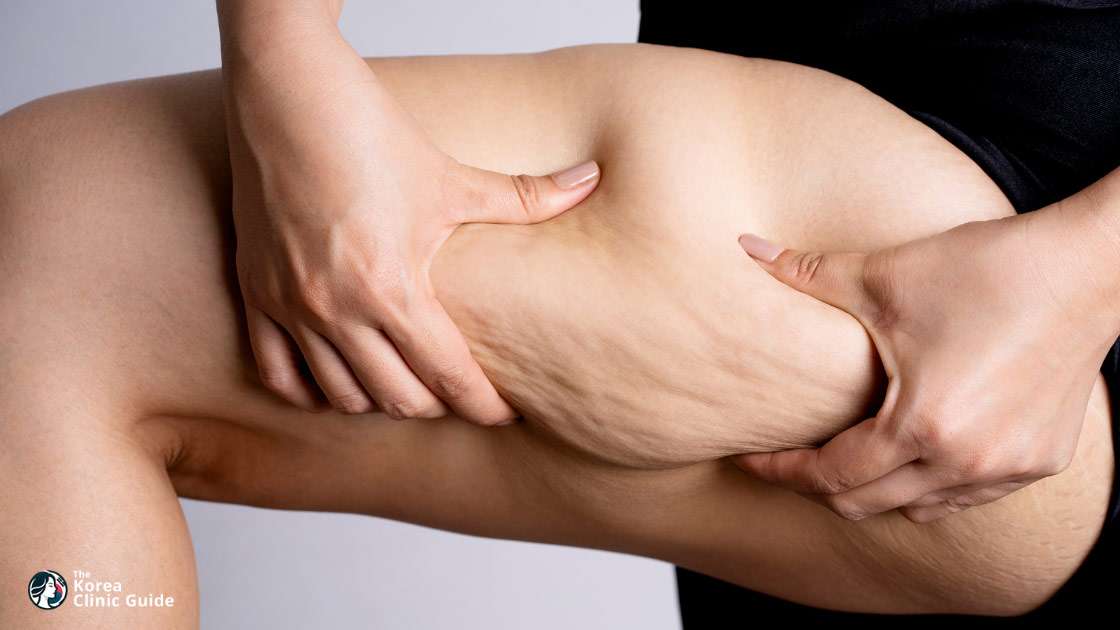
Table of contents
- Thigh Liposuction at a Glance
- What Is Thigh Liposuction?
- Who Is a Good Candidate for Thigh Liposuction?
- How Is Thigh Liposuction Performed?
- Why Visit Korea for Thigh Liposuction?
- Key Information for International Patients
- Which Are the Best Clinics in Korea for Thigh Liposuction?
- How Much Does Thigh Liposuction Cost in Korea?
- Thigh Liposuction From Start to Finish
- Alternatives to Thigh Liposuction
- How Can I Prepare for Thigh Liposuction?
- Aftercare Advice
Considering treatment in Korea? Everything you need to know e.g. — how to avoid scams, visas, interpreters, recovery tips — in our Medical Tourism Master Guide. Plan with confidence in minutes, not weeks!
Last updated: September 2026
Thigh Liposuction at a Glance
- What it does — Thigh liposuction surgically removes localized subcutaneous fat from areas such as the inner thighs, saddlebags, front or back thighs, and below the buttock crease to improve contour rather than cause major weight loss.
- Typical cost in Korea — Thigh liposuction in Korea is listed at approximately ₩4,000,000–₩9,000,000 (about US$3,000–$6,700), with pricing driven by treatment zones, removal extent, technique, anesthesia, and facility needs.
- Best candidates — The best fit is a medically prepared adult at a stable weight with pinchable localized fat, reasonable skin recoil, and specific contour goals; marked loose skin or cellulite usually will not improve reliably with liposuction alone.
- Recovery and results — Many people return to desk work within several days to 1 week, while strenuous lower-body exercise is commonly delayed 2–4 weeks; contour is more reliably assessed at 6–12 weeks and continues settling for up to 6 months.
- Key risk — Contour irregularity, including waviness, hollows, asymmetry, or residual fullness, is an important risk because excessive or overly superficial fat removal can disrupt the thigh’s smooth transition zones.
- Korea travel planning — International patients should plan to stay in Korea about 10–14 days after isolated thigh liposuction for postoperative checks and surgeon-directed fitness-to-fly clearance, since surgery and long-haul travel both increase clot risk.
- Korea-specific distinction — Korea offers established international-patient services and Medical Korea’s registered-hospital resources, but there is no high-quality evidence that thigh liposuction outcomes in Korea are better than elsewhere; surgeon, anesthesia, facility, and aftercare verification remain essential.
What Is Thigh Liposuction?
Thigh liposuction is a procedure that removes localized fat from selected areas of the thighs through small incisions. It aims to improve thigh shape and proportion for people with stubborn fullness, rather than produce major weight loss or correct loose skin. It is a surgical body-contouring procedure.
Who Is a Good Candidate for Thigh Liposuction?
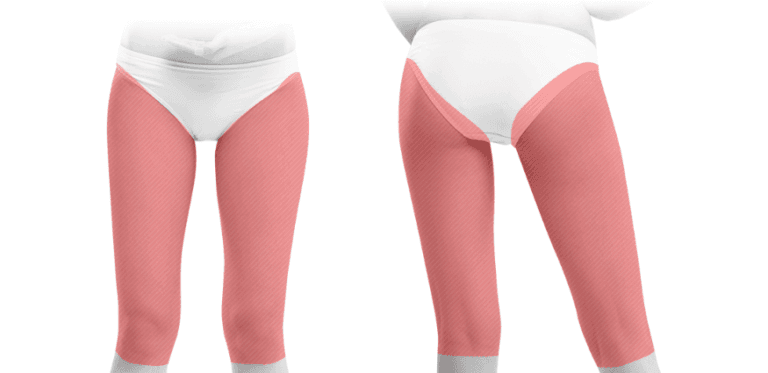
- Localized thigh fullness — Good candidates have stable weight and pinchable subcutaneous fat on the inner thighs, outer thighs (“saddlebags”), anterior thighs, posterior thighs, or below the buttock crease.
- Adequate skin recoil — Skin that can contract after fat removal is important for a smoother contour. Liposuction does not reliably correct significant laxity or cellulite.
- Specific contour goals — The procedure is intended to improve proportion and shape, not produce major weight loss or treat generalized obesity.
- Medically prepared adult — Candidates need to be fit for the planned anesthesia, able to walk soon after surgery, and able to follow compression, wound-care, and follow-up instructions.
Thigh liposuction is unsuitable during pregnancy and should be postponed for active skin or systemic infection, open wounds, uncontrolled dermatitis, or medical conditions that make surgery or anesthesia unsafe. Uncontrolled diabetes, anemia, poorly controlled hypertension, major heart, lung, kidney, or liver disease, and impaired healing require optimization first. A history of deep-vein thrombosis (DVT), pulmonary embolism, clotting disorder, major immobility, or several clot-risk factors requires an individualized prevention plan; relevant risks include hormonal medicines, recent pregnancy, cancer, obesity, age, and family history, as outlined by the CDC’s VTE risk guidance. Painful, easily bruised, symmetrical leg enlargement or unexplained one-sided swelling needs diagnostic assessment for lipedema, lymphedema, or venous disease rather than routine cosmetic liposuction.
How Is Thigh Liposuction Performed?
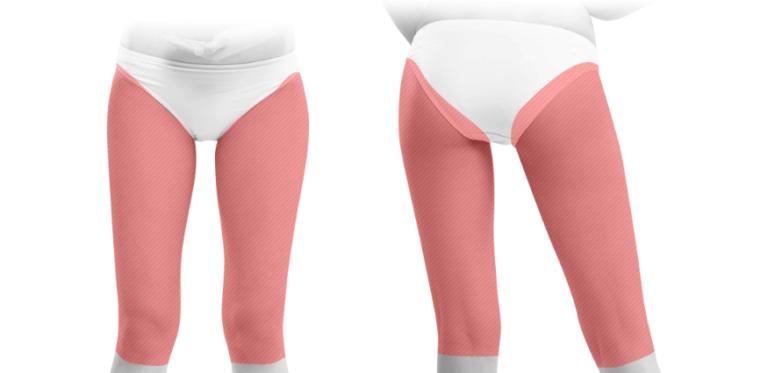
Thigh liposuction is tailored chiefly by treatment zone, planned removal volume, skin quality, and anesthesia requirements. Device choice is secondary to conservative fat removal and correct assessment of whether liposuction alone can meet the contour goal.
- Conventional suction-assisted liposuction (SAL) — After infiltration with tumescent fluid, the surgeon mechanically loosens and aspirates fat through a blunt cannula. Tumescent fluid commonly contains saline, local anesthetic, and epinephrine to reduce bleeding.
- Power-assisted liposuction (PAL) — An oscillating cannula assists fat removal and can be useful over broader or denser areas. It remains surgical liposuction with the same need to avoid excessive or overly superficial removal.
- Ultrasound-assisted liposuction (UAL/VASER) — Ultrasound energy disrupts fat before suction. It adds heat-related risks, including burns. A 2025 review of direct SAL-versus-UAL comparisons found only five studies and no convincing long-term evidence that UAL produces superior aesthetic outcomes or skin tightening.
- Laser- or radiofrequency-assisted liposuction — These energy-assisted approaches are sometimes promoted for tissue contraction, but they do not replace skin excision when substantial loose skin is present and introduce thermal-injury risk.
- Anesthesia setting — Limited treatment can sometimes be performed under tumescent local anesthesia with or without light sedation. Broader bilateral thigh contouring often needs deeper sedation or general anesthesia, based on operative extent, medical history, and the anesthesia team’s assessment.
- Treatment zones — Inner-thigh liposuction, outer-thigh/saddlebag liposuction, anterior thigh, posterior thigh, and the infragluteal region can be treated selectively. Combining every zone is not automatically appropriate because skin quality, lymphatic anatomy, and safe fat thickness differ across the thigh.
Why Visit Korea for Thigh Liposuction?
South Korea has an established infrastructure for international medical care, but treatment in Korea does not itself guarantee safer surgery or better thigh contours. The key decision remains the individual surgeon’s credentials, the facility, anesthesia coverage, emergency-transfer arrangements, and the plan for follow-up after departure.
- International-care infrastructure — Korea’s national Medical Korea platform provides information for overseas patients, and its registered-hospital system can help patients identify participating institutions.
- High international-patient volume — Seoul reported more than one million international medical tourists in 2024, supporting the availability of services designed around overseas scheduling and communication. This is not evidence of superior thigh-liposuction outcomes.
- Verification tools — Use the Medical Korea registered-system information as one part of due diligence. Also confirm who performs each operative step, whether an anesthesiologist or other qualified anesthesia provider is present as appropriate, and how an emergency transfer would be handled.
- Evidence limit — No high-quality comparative evidence shows that thigh liposuction in Korea has better complication, revision, satisfaction, or long-term contour outcomes than the same procedure elsewhere. Do not treat advertising, social-media results, or a device brand as proof of quality.
Key Information for International Patients
- Minimum stay — Plan to remain in Korea for about 10–14 days after isolated thigh liposuction, unless the operating surgeon gives a different, explicit fitness-to-fly decision after reviewing healing and clot risk.
- Flight timing — There is no universal evidence-based long-haul-flight interval specific to thigh liposuction. The CDC notes that surgery and prolonged travel both increase VTE risk; its specific 10-day recommendation applies to chest or abdominal surgery, not thigh liposuction.
- Before departure — Attend all Korea-based reviews for incision checks, drainage, swelling, mobility, compression, and clot-risk reassessment. Delay travel for bleeding, wound problems, severe swelling, limited walking ability, or other concerns identified by the surgeon.
- Activity and itinerary — Keep the first days low demand. Arrange private transport after surgery, avoid major sightseeing, and do not plan long shopping days, hiking, squatting-intensive activities, or nightlife around the procedure.
- Return-home records — Obtain an English operative report, anesthesia record, discharge summary, medication list, written aftercare instructions, and clinic emergency contacts. The CDC advises medical tourists to obtain records and disclose overseas treatment to later clinicians.
- Remote follow-up — Confirm how photographs, video reviews, urgent symptoms, prescriptions, and local in-person assessment will be handled once home. Messaging is not an adequate substitute for urgent examination.
Travel note: Book flexible return flights and accommodation close enough for postoperative visits. During travel, follow the surgeon’s clot-prevention plan; walk at intervals when cleared, perform ankle and calf movements while seated, and use compression stockings or anticoagulants only when prescribed.
Which Are the Best Clinics in Korea for Thigh Liposuction?
Listed below are some of the best clinics in Korea for thigh liposuction.
1. Lydian Plastic Surgery Clinic
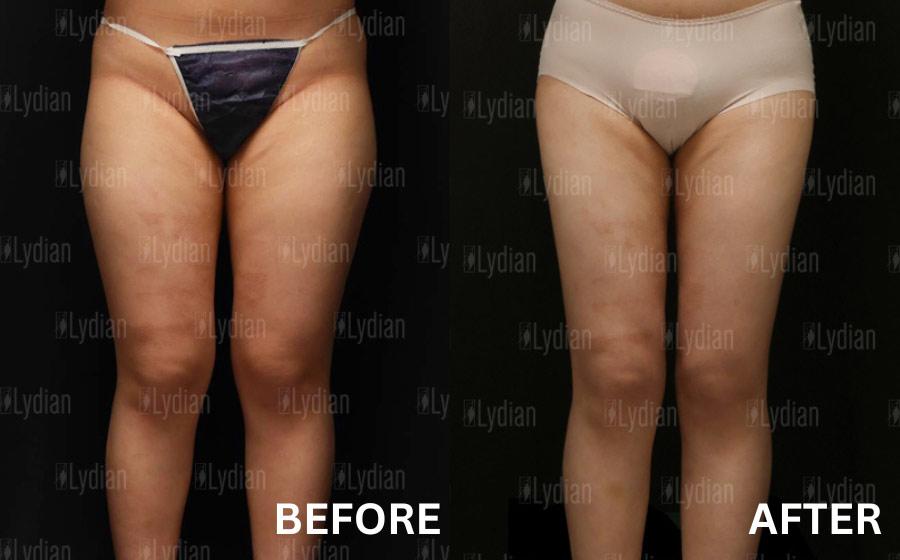
For thigh liposuction, you can expect an anatomy-based contouring plan using Lydian’s custom cannulas, including a 60 cm curved cannula designed to reach the cylindrical thigh area while avoiding additional knee incisions. The clinic describes using one to two small, discreetly placed access incisions and providing structured aftercare for swelling, contour irregularities, skin elasticity, and residual-fat refinement.
- URL: Lydian Plastic Surgery Clinic Website
- Location: Gangnam-gu, Seoul
- Procedure details:
- More than 30 custom-designed cannula types are available to match differences in body shape and treatment area.
- The curved thigh cannula is intended to contour the thigh and knee area without a knee incision.
- Quantificare 3D imaging is used for preoperative planning and to document results with 3D video.
- Lead surgeon:
- Dr. An is described as having more than two decades of body-sculpting experience.
- He is listed as Director of the 5D Liposculpture Academy and has responsibilities in physician training for high-definition body sculpting and liposuction devices.
- Additional notes:
- If stretch marks or skin laxity are concerns alongside fat reduction, the clinic reports having equipment intended to address both.
- Aftercare focuses on swelling reduction, lumpiness correction, skin-elasticity recovery, and residual-fat contouring.
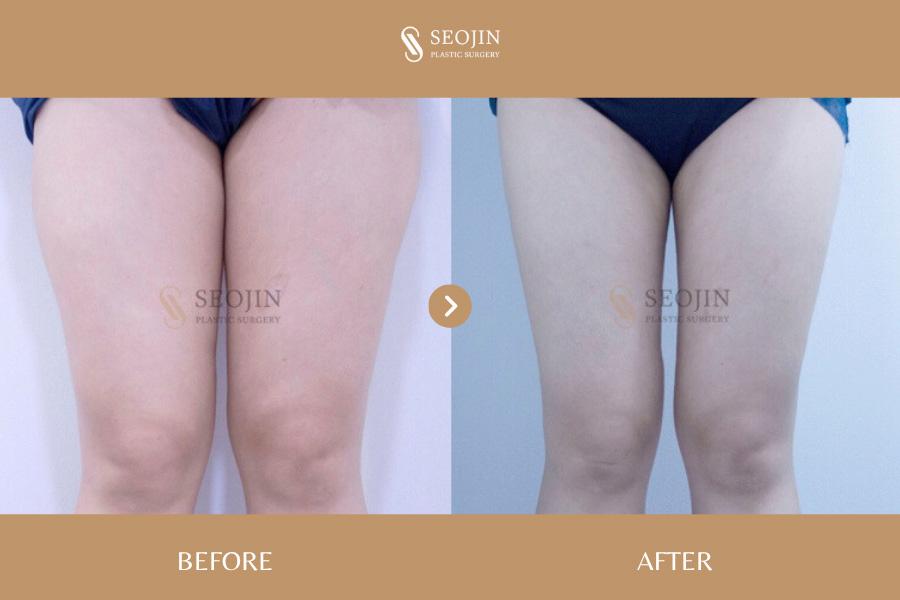
2. Seojin Plastic Surgery Clinic
For thigh liposuction at Seojin, you can expect a three-step approach that prepares and removes fat with a body- and volume-appropriate cannula, followed by manual syringe refinement of the remaining subcutaneous layer to support an even contour and smooth skin surface. If mild looseness is a concern, Velody2 lifting laser may be added to support skin firmness after liposuction.
- URL: Seojin Plastic Surgery Clinic Website
- Location: Gangnam-gu, Seoul
- Procedure details:
- Preparation is described as separating fat from blood vessels, nerves, and surrounding tissues before liquefaction and removal.
- The final manual refinement stage uses a small syringe to distribute the subcutaneous fat layer evenly and refine the shape.
- Velody Lifting with the Velody2 laser is offered as an adjunct when slight post-liposuction sagging is a concern.
- Lead surgeon:
- As a one-doctor clinic, Dr. Lee Hyungmin provides care from consultation through follow-up.
- Dr. Lee is described as having more than 16 years of experience and as having been recognized among Korea’s 100 Good Doctors.
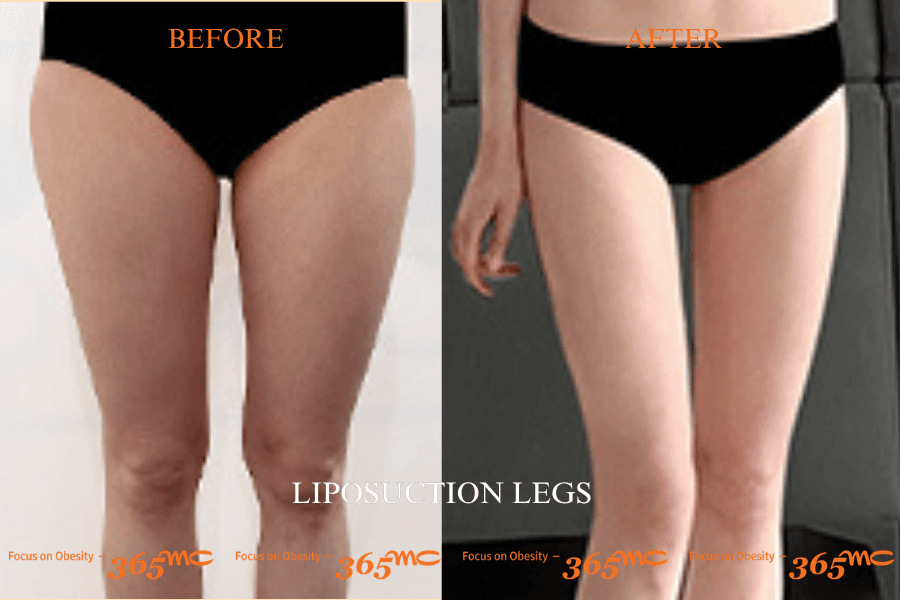
3. 365mc Hospital
For thigh liposuction, 365mc offers body-contouring care in a hospital setting, with individualized recovery support on the day of surgery and a structured seven-week postoperative program. Your follow-up plan may include hyperbaric oxygen chamber therapy and personalized dietary consultation to support recovery and maintenance of your contouring goals.
- URL: 365mc Hospital Website
- Location: Gangnam-gu, Seoul
- Procedure details:
- The clinic performs liposuction for the thighs as part of its dedicated body-contouring and fat-reduction practice.
- Its M.A.I.L. system is described as using motion capture and artificial intelligence to provide real-time surgical feedback.
- For more limited fat reduction needs, LAMS combines fat extraction with fat-dissolving injections under local anesthesia.
- Recovery and follow-up:
- You receive one-to-one intensive care in a dedicated Recovery Center on the day of surgery.
- A Care Team provides a structured seven-week postoperative program.
- Follow-up options include hyperbaric oxygen chamber therapy and dietary consultation tailored to your needs.
- Additional notes:
- 365mc reports Korean Health Ministry Seal recognition for its hospital-level standards.
- The clinic also offers nutrition counseling and a meal-diary app to support practical, individualized dietary management.
How Much Does Thigh Liposuction Cost in Korea?
Thigh liposuction is supplied at ₩4,000,000–₩9,000,000 (approximately US$3,000–$6,700). Individual quotes vary because the operative plan differs in the thigh zones treated, removal extent, technique, and anesthesia requirements.
| Procedure Price | Korean Won (₩) | USD ($) |
|---|---|---|
| Low Price | ₩4,000,000 | $3,000 |
| High Price | ₩9,000,000 | $6,700 |
Exchange rate as of 2026-09-06: 1 KRW = 0.000741 USD.
What Affects the Price?
- Treatment zones and extent of removal — Treating limited inner thighs requires less cannula work and operating time than broader bilateral contouring across medial, lateral “saddlebag,” anterior, posterior, or below-buttock-crease areas. More extensive removal also requires more infiltration fluid, consumables, and contour assessment to preserve smooth transitions.
- Liposuction method — Conventional suction-assisted liposuction, power-assisted liposuction (PAL), and ultrasound-assisted/VASER approaches use different equipment and procedural steps. Energy-assisted methods add device use and require heat-specific precautions, while PAL may be selected for broader or denser treatment areas.
- Anesthesia and facility setting — A limited thigh procedure may be suitable for tumescent local anesthesia with or without light sedation. Broader bilateral treatment may require deeper sedation or general anesthesia, increasing anesthesia-team involvement, monitoring, recovery resources, and facility use.
- Need for skin-excision surgery instead of liposuction alone — When substantial loose skin is the main concern, a thigh lift rather than liposuction alone may be needed to achieve meaningful tightening. Skin excision involves longer incisions, a different operation and recovery profile, and greater operative resources than fat removal alone.
Cost tip: Request an itemized quote stating what is included, particularly the planned thigh zones, liposuction method, anesthesia, facility and recovery use, compression garment, scheduled Korea-based follow-up, and any separately billed postoperative care or revisions.
The US$3,000–$6,700 conversion is approximate, based on the supplied exchange rate of 0.000741 on 2026-09-06. Check the exchange rate again when budgeting.
Thigh Liposuction From Start to Finish
- Remote inquiry and screening — Send the clinic a complete health history, current weight and weight stability, photographs if requested, medication and supplement list, allergies, nicotine use, previous surgery, clot history, hormone use, pregnancy possibility, and prior anesthesia problems. Confirm English consultation or interpreter arrangements.
- Virtual consultation — Discuss the desired inner, outer, anterior, posterior, or infragluteal thigh zones; expected improvement; scars; skin laxity; and whether liposuction, a thigh lift, or no surgery is more appropriate. Photographs help preliminary planning but cannot replace examination.
- In-person assessment in Korea — The surgeon examines skin recoil, cellulite, asymmetry, scars, fat distribution, mobility, venous concerns, and signs that could suggest lipedema or lymphedema. Complete consent only after receiving explanations in a language understood by the patient.
- Preoperative clearance — Complete a history and physical examination, with blood tests or other testing selected according to health status and anesthesia plan. The surgeon, anesthetist, and prescribing clinicians should coordinate any changes to anticoagulants, diabetes medicines, hormones, or GLP-1 medicines.
- Surgery day — The surgeon marks the thighs while standing, administers the planned local anesthesia, sedation, or general anesthesia, infiltrates tumescent fluid, and inserts cannulas through small incisions to remove fat in selected layers. Isolated thigh liposuction is commonly outpatient; duration depends on the zones and extent treated.
- Discharge and first night — Dressings and a compression garment are applied. Leave only after pain, nausea, bleeding, urination, walking ability, and anesthesia recovery are satisfactory. Arrange an adult companion and private transport; do not drive, drink alcohol, or stay alone after deeper sedation or general anesthesia.
- Early Korea-based review — Return for scheduled wound, drainage, garment, and mobility checks before any flight. Report rapidly increasing swelling, severe pain, fever, spreading redness, or one-sided calf symptoms immediately.
- Overseas follow-up — Send scheduled recovery photographs if requested and keep the clinic’s written records. Seek local urgent or emergency assessment for concerning symptoms rather than waiting for an online reply.
Alternatives to Thigh Liposuction
The best alternative depends on whether the main issue is excess fat, loose skin, or a small localized bulge. Surgical options generally create more substantial contour change but require incisions, anesthesia planning, and longer recovery; non-surgical options offer less downtime but are not equivalent to broad bilateral liposuction.
Thigh Lift
A thigh lift removes excess skin and can improve significant laxity or hanging tissue that liposuction alone cannot reliably tighten.
- Best suited for — Predominant loose skin, often after significant weight change or when skin recoil is poor.
- Tradeoff — More visible and longer scars, plus a different wound-healing and recovery profile than liposuction.
Cryolipolysis
CoolSculpting is a noninvasive cooling treatment for selected small fat bulges.
- Best suited for — People who want no incision or anesthesia and accept a more modest change.
- Tradeoff — It is not a substitute for one-session surgical volume reduction across extensive inner or outer thigh areas.
Fat-Dissolving Injections
Fat-dissolving injections can be considered for selected small areas when the product, indication, and anatomy are appropriate.
- Best suited for — Small, targeted deposits rather than broad thigh contouring.
- Tradeoff — Treatment often requires multiple sessions and does not provide the same control or volume reduction as surgical suction.
Energy-Based Fat Reduction
A body fat-dissolving laser is an energy-based approach for selected localized concerns.
- Best suited for — Patients seeking a less invasive option with conservative expectations.
- Tradeoff — It does not remove substantial bilateral thigh volume or correct marked skin laxity.
How Can I Prepare for Thigh Liposuction?
- Medication coordination — Provide every prescription medicine, over-the-counter medicine, supplement, hormone, and injectable weight-management medicine to the clinic well before travel. Do not independently stop anticoagulants, antiplatelet drugs, diabetes medicines, hormones, or GLP-1 medicines; follow one coordinated plan from the prescriber, surgeon, and anesthetist.
- Bleeding-risk products — Ask the surgical team about aspirin, ibuprofen, naproxen, vitamin E, fish oil, omega-3 products, herbal remedies, and other products that can affect bleeding. Follow the clinic’s specific stop and restart dates rather than using a generic schedule.
- Nicotine cessation — Stop smoking, vaping, nicotine pouches, and nicotine replacement for the surgeon’s required nicotine-free interval. Nicotine impairs wound healing and increases surgical risk.
- Medical disclosure — Report prior DVT/PE, clotting disorders, sleep apnea, heart or lung disease, diabetes, anemia, allergies, previous liposuction, anesthesia reactions, pregnancy possibility, and symptoms of painful or asymmetric leg swelling.
- Skin and sun care — Avoid tanning, sunburn, waxing, and skin injury on the thighs before surgery. Report rashes, folliculitis, cuts, or infection promptly because elective surgery may need to be delayed.
- Fasting and alcohol — Follow the anesthetist’s exact fasting instructions. Avoid alcohol for the period specified by the clinic, especially before anesthesia and while taking prescription pain medicine.
- Travel arrangements — Reserve flexible flights, accommodation suitable for rest and easy clinic access, an adult companion for the first night, and private transport after discharge. Pack loose clothing, flat shoes, and the prescribed compression garment if the clinic asks you to bring one.
Travel note: Do not schedule surgery at the end of a vacation. Preserve time for postoperative reviews and a delayed return flight if the surgeon does not clear travel.
Confirm the treating clinic’s individualized preparation requirements, which take precedence over general guidance.
Aftercare Advice
Protect healing first: early swelling, bruising, drainage, soreness with walking, firmness, and temporary numbness are common, but worsening symptoms require assessment rather than self-treatment.
- Walking and activity — Take short, frequent walks once cleared to avoid prolonged immobility. Return to desk-based work after several days to about one week when comfort permits; avoid running, cycling, squats, heavy lifting, and strenuous lower-body exercise for about 2–4 weeks or longer until the surgeon clears it.
- Compression and dressings — Wear, remove, wash, and replace the compression garment exactly as instructed. Compression is common after liposuction, but evidence does not establish one universal garment pressure, duration, or wear schedule for cosmetic thigh procedures.
- Incision care and heat — Keep small access incisions clean and dry according to the clinic’s instructions. Avoid baths, pools, hot tubs, saunas, and aggressive thigh massage until cleared; do not arrange lymphatic drainage to treat increasing pain, redness, or swelling without clinical assessment.
- Sun protection — Once incisions are closed, protect scars from sun exposure with clothing and broad-spectrum SPF 50 to reduce pigment change.
- Warning signs — Seek urgent in-person care for chest pain, shortness of breath, coughing blood, fainting, rapid heartbeat, new one-sided calf or thigh swelling, uncontrolled bleeding, rapidly expanding asymmetry, severe escalating pain, fever, spreading redness, pus-like drainage, blistering, or darkening skin.
- Result timing — Swelling can obscure the contour for weeks. Assess the shape more reliably at 6–12 weeks; residual swelling, scar maturation, and skin retraction can continue for up to 6 months. Do not pursue early revision for minor irregularity without the operating surgeon’s review.
Follow the treating doctor’s individualized instructions and contact the clinic promptly when anything appears wrong.
Frequently Asked Questions
Related Blogs
BodyTite in Korea: Candidacy, Recovery, Travel Planning, and Alternatives
BodyTite uses internal and external bipolar radiofrequency electrodes, often followed by liposuction, to treat localized fat and modest skin laxity in areas such as the abdomen, arms, thighs, flanks, back, knees, and male chest. The article covers candidacy, anesthesia, recovery, Korea travel planning, aftercare, warning signs, and alternatives including liposuction, Renuvion, tummy tuck, and arm
Updated: Sep 21, 2026
Inmode Body Laser Lifting in Korea: Devices, Results, Recovery and Travel Planning
InMode Body Laser Lifting refers to external RF treatments such as BodyFX, MiniFX, Plus, or Forma Plus that heat targeted areas without surgical fat removal, typically requiring weekly sessions over 6–8 weeks for gradual contour refinement. International patients can fit one external session into a 1–2-day Korea stay, but should confirm the exact handpiece, external-only treatment plan, contraindi
Updated: Sep 20, 2026
Arm Lift in Korea: Types, Recovery, Risks, and Travel Planning
Arm lift surgery removes excess upper-arm skin through limited, full, or extended incisions, with liposuction added selectively; candidates generally have stable weight, adequate nutrition, controlled health conditions, and acceptance of permanent scars. Practical guidance covers Korea provider and visa checks, a 10–14-day postoperative stay, travel planning, preparation, recovery restrictions, wo
Updated: Sep 20, 2026
Thigh Lift in Korea: Types, Recovery, Scars, Risks, and Travel Planning
Thigh lift surgery removes excess thigh skin through an incision pattern matched to localized or extensive laxity, with permanent scars and wound-care needs as key trade-offs. The article covers candidacy, procedure steps, recovery, complication warning signs, alternatives, and international travel planning including at least 14 days in Korea and surgeon clearance before long-haul flights.
Updated: Sep 20, 2026
Clinics offering Thigh Liposuction

365mc Hospital: Korea's Leading Liposuction and Body Contouring Clinic with Innovative AI Technologies and Comprehensive Patient Care
Gyodae

THEPLUS Plastic Surgery Korea | Eye, Nose, Face & Body Surgery
Sinsa

Lydian Plastic Surgery Clinic in Korea: Superior Cosmetic Procedures by World-Renowned Expert Dr. An Kyung Chun
Apgujeong

Seojin Plastic Surgery Clinic Korea: Pioneering Advanced Cosmetic Procedures for Personalized Aesthetic Transformation
Apgujeong