
Medical Tourism Blog
Full Body Liposuction in Korea: Safety Planning, Recovery, Travel, and Alternatives

Table of contents
- Full Body Liposuction at a Glance
- What Is Full-Body Liposuction?
- Who Is a Good Candidate for Full-Body Liposuction?
- How Is Full-Body Liposuction Performed?
- Why Visit Korea for Full-Body Liposuction?
- Key Information for International Patients
- Which Are the Best Clinics in Korea for Full Body Liposuction?
- How Much Does Full-Body Liposuction Cost in Korea?
- Full Body Liposuction From Start to Finish
- Alternatives to Full-Body Liposuction
- How Can I Prepare for Full-Body Liposuction?
- Aftercare Advice
Considering treatment in Korea? Everything you need to know e.g. — how to avoid scams, visas, interpreters, recovery tips — in our Medical Tourism Master Guide. Plan with confidence in minutes, not weeks!
Last updated: September 2026
Full Body Liposuction at a Glance
- What it treats — “Full-body” liposuction is a nonstandard term for contouring several selected areas of subcutaneous fat—often the abdomen, flanks, back, arms, or thighs—in one operation or planned stages; it is not a weight-loss treatment.
- Korea cost — In Korea, quoted pricing is about ₩27,000,000–₩31,000,000 (approximately US$20,000–$23,000), with the final cost driven by the areas treated, aspirate volume, anesthesia, monitoring, and whether surgery is staged.
- Best candidates — Suitable candidates are generally healthy adults at a stable weight with localized fat, realistic expectations, and adequate skin elasticity; liposuction does not correct visceral fat, cellulite, or substantial loose skin.
- Recovery and results — Drainage, bruising, soreness, and swelling are greatest during the first 48–72 hours; light activity may be possible in 1–2 weeks with clearance, while contour is assessed more reliably after 3–6 months.
- Korea stay requirement — Plan at least 10–14 days in Korea after an uncomplicated multi-area procedure, or preferably 14–21 days for large-volume treatment, general anesthesia, drains, overnight admission, circumferential areas, or a long-haul flight home.
- Key safety limit — More than 5,000 cc of total aspirate—fat, infiltrated fluid, and blood combined—is commonly considered large-volume liposuction and warrants careful planning for facility capability, fluid management, clot prevention, and postoperative monitoring.
- Korea-specific due diligence — Korea’s international-care infrastructure is not evidence of superior outcomes for extensive liposuction; independently verify the named surgeon, anesthesia clinician, facility registration, overnight or hospital-transfer plan, interpreter support, and direct postoperative contact route.
What Is Full-Body Liposuction?
Full-body liposuction is a nonstandard term for surgical removal of subcutaneous fat from several selected body areas in one session or planned stages. It aims to improve body contours in areas such as the abdomen, flanks, back, arms, or thighs, rather than treat obesity, visceral fat, cellulite, or major loose skin. It is a surgical body-contouring procedure.
Who Is a Good Candidate for Full-Body Liposuction?
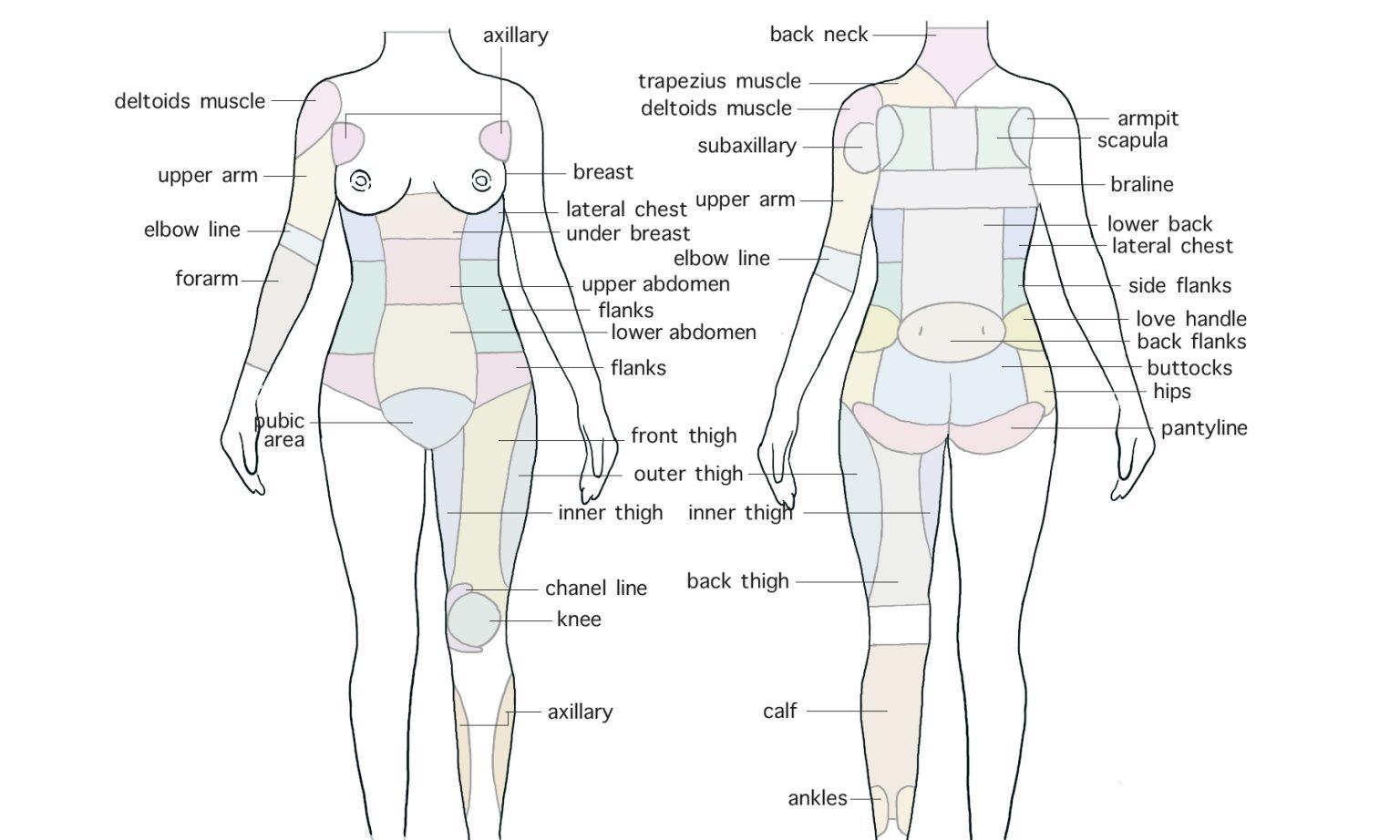
- Stable-weight adults with localized fat — Good candidates are adults in good general health who are at or near a stable weight and want contour improvement in selected areas of subcutaneous fat, such as the abdomen, flanks, back, arms, thighs, knees, calves, or chin.
- People with adequate skin recoil — Firmer skin is more likely to redrape after fat removal. The consultation should assess skin thickness, stretch marks, cellulite, scars, asymmetry, and existing laxity.
- Patients with focused priorities — A sensible multi-area plan identifies the highest-priority areas and accepts that other regions may be excluded or staged. “Full-body” is not a standardized medical operation and does not mean every body area should be treated.
- People prepared for surgical recovery — Candidates need time for early monitoring, compression garments, frequent walking, wound checks, and a 10–14-day stay in Korea after an uncomplicated operation.
Liposuction is not treatment for obesity, visceral abdominal fat, cellulite, or substantial loose skin. Defer elective surgery during pregnancy or breastfeeding and until medically appropriate weight stabilization. Active infection, open lesions, uncontrolled diabetes or major heart, lung, kidney, or liver disease, significant anemia, a bleeding disorder, or anticoagulant treatment that cannot be safely managed can make surgery unsuitable. A personal or strong family history of deep-vein thrombosis (DVT), pulmonary embolism, thrombophilia, nicotine exposure, poor skin elasticity, untreated body-image concerns, or minimal localized adiposity requires careful assessment; adolescents and younger patients need particular scrutiny because the expected benefit may not justify surgical risk. More aggressive fat removal does not repair poor skin recoil and can worsen looseness, rippling, and contour irregularity.
How Is Full-Body Liposuction Performed?
Tumescent infiltration is the foundation of most liposuction: the surgeon places a dilute fluid solution, commonly containing local anesthetic and epinephrine, into the fatty layer to aid aspiration and limit bleeding. Small incisions allow a cannula to remove fat and shape the selected areas. Technique choice should follow tissue characteristics, skin quality, planned areas, and surgeon experience—not a device label.
- Suction-assisted liposuction (SAL) — Conventional cannula suction is the reference approach for removing subcutaneous fat across selected areas.
- Power-assisted liposuction (PAL) — A vibrating cannula can reduce manual force for the surgeon, particularly in larger or fibrous areas. It does not make an extensive one-session plan inherently safer.
- Ultrasound-assisted liposuction (UAL/VASER) — Ultrasound energy disrupts fat before aspiration and is sometimes used in fibrous tissue. It adds a procedure-specific risk of thermal injury.
- Laser-assisted liposuction (LAL) — Laser energy disrupts fat before removal; heat-related injury remains a relevant risk.
- Water-assisted liposuction (WAL) — Pulsed fluid helps separate tissue during aspiration. It is a different mechanical approach rather than proof of better results for broad treatment.
- Radiofrequency-assisted liposuction — This can be selected where an energy-based skin-tightening effect is sought, but it introduces heat-related risks and does not replace skin-excision surgery for major laxity.
A review of liposuction technologies describes mechanical and energy-based approaches as having different trade-offs, rather than identifying one universally superior technique. Read the evidence review of liposuction methods.
Why Visit Korea for Full-Body Liposuction?
Korea has a substantial international medical-care infrastructure, and Seoul reported more than one million international medical tourists in 2024. That access does not prove that Korea produces superior safety, revision, or long-term aesthetic outcomes for extensive multi-area liposuction. For this operation, provider-level safeguards matter more than the country label.
- International-care infrastructure — Seoul’s reported 2024 international-patient volume reflects established demand for cross-border care, including aesthetic treatment. See Seoul’s 2024 international medical-tourism report.
- Official verification tools — Use the Korean government’s Medical Korea resources to check registered providers and available international-patient services rather than relying on brokers or social-media claims. Search the registered medical-institution system.
- Provider-specific planning — Confirm the individual operating surgeon, who administers anesthesia, facility licensing or accreditation, overnight-observation capacity, emergency transfer arrangements, interpreter support, and a written postoperative contact route.
- Evidence limitation — There is no high-quality comparative evidence showing Korea has better safety, aesthetic, revision, or patient-reported outcomes specifically for “full-body” or large-volume liposuction than other countries.
Key Information for International Patients
- Minimum stay — Plan at least 10–14 days in Korea after an uncomplicated multi-area operation. Prefer 14–21 days when the plan includes a large aspirate volume, circumferential areas, general anesthesia, drains, overnight admission, or a long-haul return flight.
- Flight timing — Do not treat a generic minimum flying interval as clearance for a long-haul flight after extensive surgery. The operating surgeon and anesthesia team must assess mobility, wound status, fluid balance, drain needs, and individual clot risk before authorizing travel.
- Early itinerary limits — Expect the most drainage, bruising, soreness, and swelling during the first 48–72 hours. Avoid strenuous sightseeing, long independent journeys, heavy luggage, and prolonged sitting; take frequent short walks instead.
- Monitoring and admission — Multi-area treatment can require several hours of recovery monitoring or an overnight stay, depending on aspirate volume, operating time, anesthesia, medical history, and early recovery findings. More than 5,000 cc of total aspirate is commonly treated as large-volume liposuction in ASPS safety guidance; total aspirate includes fat, infiltrated fluid, and blood. Review the ASPS safety advisory.
- Records for home care — Before departure, obtain English copies of the operative report, treatment areas and aspirate-volume record, anesthesia record, medication list, garment and wound instructions, and direct clinical contact details.
- Remote follow-up — Arrange secure photo or video reviews around 1–2 weeks and then approximately 1, 3, and 6 months, adjusted for symptoms and the surgeon’s protocol. Identify a clinician at home who can assess urgent concerns.
Travel note: A small 2026 retrospective study of patients presenting with complications after aesthetic medical tourism linked stays of five days or less with greater need for inpatient admission and IV antibiotics. It does not measure the overall complication rate, but it supports allowing adequate local recovery and review before leaving Korea. Read the study.
Which Are the Best Clinics in Korea for Full Body Liposuction?
Listed below are some of the best clinics in Korea for full body liposuction.
1. Lydian Plastic Surgery Clinic
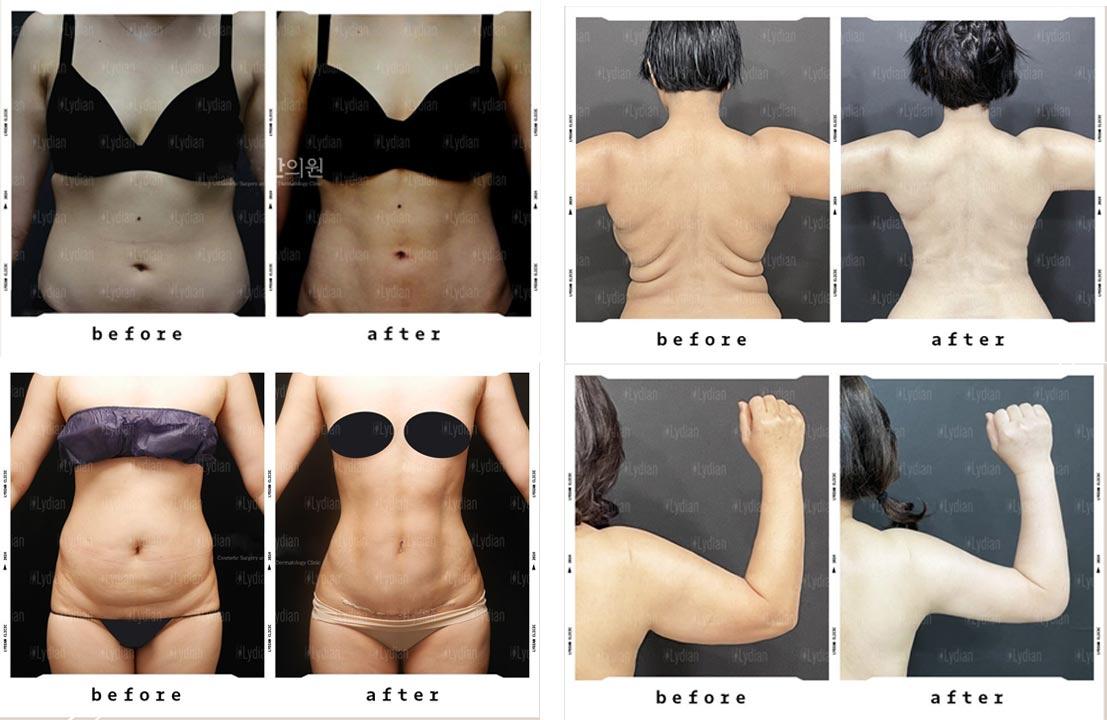
You may consider Lydian Plastic Surgery Clinic for full body liposuction if you want anatomy-based contour planning across areas such as the abdomen, back, thighs, and knees while aiming to limit access points. The clinic describes using more than 30 custom cannula types to match body shape and treatment area, with 1–2 strategically concealed incisions in some cases, plus 3D imaging and structured contour-focused aftercare.
- URL: Lydian Plastic Surgery Clinic Website
- Location: Gangnam-gu, Seoul
- Procedure approach:
- Body design is individualized around factors such as waist length, pelvic size, chest circumference, proportions, and curves rather than using a one-size-fits-all fat-removal plan.
- The clinic offers 5D liposculpture/high-definition liposuction as a body-sculpting option.
- Custom cannulas are intended to address differing body contours and volumes across multiple areas.
- Planning and aftercare:
- Quantificare 3D imaging is used for detailed preoperative design and to document three-dimensional before-and-after results.
- Aftercare addresses swelling, contour irregularities, skin-elasticity recovery, and residual-fat contouring.
- The clinic reports having devices intended to address stretch marks and skin laxity alongside liposuction.
- Surgeon and related services:
- Dr. An Kyung Chun is identified as the clinic’s liposculpture specialist and Director of the 5D Liposculpture Academy.
- The clinic also lists tummy tuck surgery, fat grafting, Brazilian butt lift procedures, face lifting, and stem-cell-related aesthetic services.
2. Seojin Plastic Surgery Clinic
You can expect a three-step approach to full body liposuction at Seojin Plastic Surgery Clinic: preparation intended to separate and liquefy fat, cannula selection based on your body type and fat volume, and manual syringe refinement of the subcutaneous layer for smoother contouring. If mild skin laxity is a concern, the clinic also describes pairing liposuction with Velody2 lifting laser treatment to support skin firmness.
- URL: Seojin Plastic Surgery Clinic Website
- Location: Gangnam-gu, Seoul
- Procedure details:
- The final manual-refinement stage is intended to promote even fat distribution, refined shaping, and a smooth skin surface.
- Velody2 lifting laser may be added when slight sagging is expected after liposuction.
- Lead surgeon:
- Dr. Lee Hyungmin provides end-to-end care as part of the clinic’s one-doctor model.
- The clinic states that Dr. Lee has more than 16 years of experience and was recognized among Korea’s 100 Good Doctors.
- Related body services:
- Hip-dip fat grafting is listed for contour enhancement in that area.
- The clinic also provides breast procedures, hair transplantation, scalp micropigmentation, and selected dermatology treatments.
3. 365mc Hospital
You may want to consider 365mc Hospital for full body liposuction if you value a clinic dedicated to body contouring and fat reduction, with hospital-level surgical care, personalized Recovery Center support on the day of surgery, and a structured seven-week postoperative program. Its approach combines multi-area liposuction planning with recovery treatments and dietary counseling intended to support healing and longer-term weight management.
- URL: 365mc Hospital Website
- Location: Gangnam-gu, Seoul
- Procedure and technology:
- Liposuction is offered for areas including the abdomen, back, chest, hips, neck, thighs, and arms.
- The clinic describes its M.A.I.L. system as using motion capture and artificial-intelligence-assisted real-time surgical feedback.
- LAMS is a separate local-anesthetic, minimally invasive option that combines fat extraction and fat-dissolving injections for more targeted reduction.
- Recovery support:
- You receive 1:1 intensive care at a dedicated Recovery Center on the day of surgery.
- The seven-week post-op program includes support such as hyperbaric oxygen chamber therapy and personalized dietary consultations.
- The clinic also describes tailored nutrition guidance and a meal-diary app to help adapt eating plans to your lifestyle and habits.
- Clinic focus:
- 365mc focuses solely on obesity treatment, body contouring, and fat reduction.
- The clinic states that it has more than 20 years of experience, 18 clinics in Korea, and 22 main doctors.
- Its hospital-level liposuction program is described as carrying recognition from the Korean Health Ministry Seal.
How Much Does Full-Body Liposuction Cost in Korea?
Full-Body Liposuction is priced at ₩27,000,000–₩31,000,000 (approximately US$20,000–US$23,000). Individual quotes vary because “full-body” is not a standardized operation: the surgical plan may cover different selected areas in one operation or in stages.
| Procedure Price | Korean Won (₩) | USD ($) |
|---|---|---|
| Low Price | ₩27,000,000 | $20,000 |
| High Price | ₩31,000,000 | $23,000 |
Exchange rate as of 2026-09-06: 1 KRW = 0.000741 USD.
What Affects the Price?
- Number and distribution of treated areas — A plan limited to selected regions such as the abdomen, flanks, and back uses less cannula work and operating time than circumferential treatment that also includes arms, thighs, knees, calves, or chin/neck. More regions require additional positioning, infiltration, aspiration, contour assessment, and wound care.
- Aspirate volume and whether surgery is staged — A larger planned total aspirate increases fluid-management, blood-loss, anesthesia, and postoperative-monitoring requirements. When the scope is too broad for a prudent single session, staging divides treatment into separate operations and recovery periods, adding operative and facility resources.
- Anesthesia and monitored recovery setting — General anesthesia, several hours of postoperative observation, or overnight admission requires anesthesia personnel, recovery monitoring, and facility capacity beyond a shorter outpatient plan. These requirements become more relevant for extensive multi-area treatment, long operative duration, or higher aspirate volume.
- Technique and energy-based adjuncts — The plan may use conventional suction-assisted liposuction or add PAL, VASER/UAL, laser-assisted, water-assisted, or radiofrequency-assisted methods for particular tissue characteristics or areas. Energy-based approaches require specialized equipment and consumables and introduce technique-specific heat-management requirements.
Cost tip: Request an itemized quote stating what is included, particularly the defined treatment areas, anesthesia, facility and recovery monitoring, any overnight admission, garments, medications, scheduled follow-up, and the policy for staged treatment or revision.
The US$20,000–US$23,000 conversion is approximate, based on the exchange rate dated 2026-09-06. Check the exchange rate again when budgeting.
Full Body Liposuction From Start to Finish
- Remote screening and English-language communication — Send standardized photographs, height and weight history, priority areas, complete medical and surgical history, allergies, previous anesthesia issues, medication and supplement list, nicotine status, and prior operative reports. An English-speaking coordinator, interpreter, or virtual consultation can clarify logistics, but the surgical plan remains provisional until an in-person examination.
- In-person examination and testing — The surgeon assesses subcutaneous versus visceral fat, skin laxity, scars, hernia risk, asymmetry, vital signs, and venous-thromboembolism risk. Testing can include a CBC or hemoglobin level and other studies based on medical history and anesthesia plan; pregnancy testing is used when relevant.
- Final safety plan and consent — Confirm each treatment area, its priority, whether surgery should be staged, estimated aspirate, expected operating time, incision placement, anesthesia, observation or admission plan, clot-prevention measures, and discharge criteria. Ask for the names and roles of the operating surgeon and anesthesia clinician.
- Anesthesia and tumescent infiltration — Extensive multi-area liposuction often uses general anesthesia or another anesthetic plan selected by the anesthesia team. The surgeon infiltrates tumescent solution into planned areas before using cannulas to remove fat.
- Fat removal and contouring — The surgeon performs SAL, PAL, VASER/UAL, laser-assisted, water-assisted, or radiofrequency-assisted liposuction according to the agreed plan. Broad treatment can take several hours; the surgical scope should not be expanded simply to treat more areas during one anesthetic.
- Recovery and discharge — Expect fluid leakage from incision sites, compression garments, soreness, swelling, bruising, and temporary numbness. Extensive cases need several hours of monitored recovery or overnight observation when volume, procedure length, anesthesia, comorbidities, or recovery findings warrant it. A responsible adult should escort outpatient patients and stay the first night.
- Early postoperative checks in Korea — Attend scheduled reviews for wounds, drainage, garment fit, walking, swelling, seroma, and drain removal where applicable. Light, non-strenuous activity or desk work can be possible in about 1–2 weeks only after surgeon clearance.
- Travel handoff and remote follow-up — Obtain English records before travel, confirm the flight decision with the clinical team, and maintain a direct route to the operating clinic. Remote follow-up commonly continues at 1–2 weeks, then about 1, 3, and 6 months.
Alternatives to Full-Body Liposuction
The most relevant alternative is often reducing the surgical scope rather than choosing a different device. Surgery removes more fat in one treatment but brings anesthesia, wound, clot, and travel-recovery demands; non-surgical contouring creates more modest localized change and generally requires repeated sessions.
Staged Liposuction
- What it changes — Separates priority regions into two or more operations instead of treating broad areas in one session.
- Tradeoff — Reduces physiologic burden per operation and can allow better reassessment of contour, but requires additional anesthesia exposure, recovery periods, visits, and travel planning.
Area-Specific Liposuction
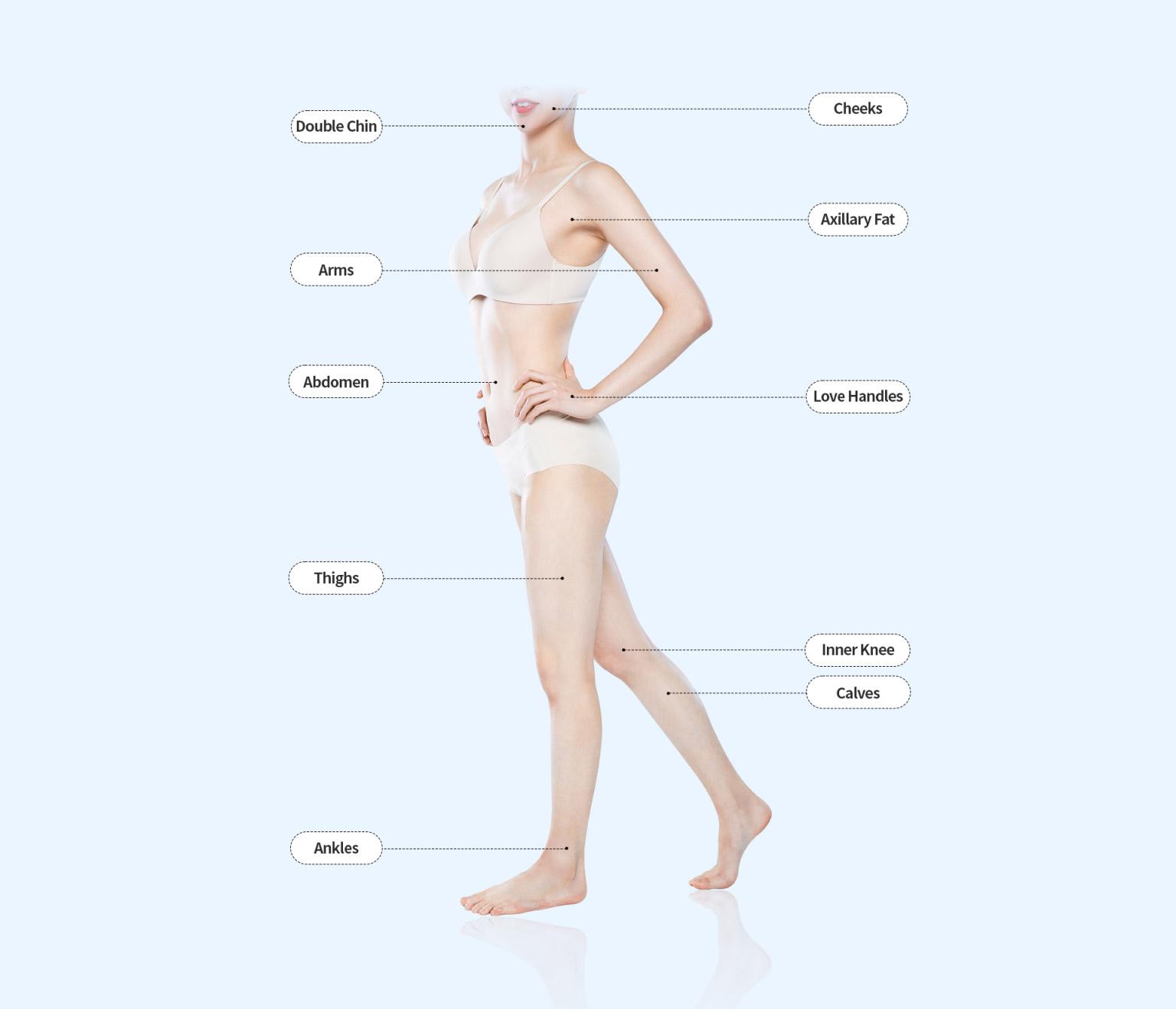
- What it changes — Focuses on the region with the greatest impact, such as the abdomen, flanks, back, arms, thighs, calves, or knees.
- Tradeoff — Limits operative scope and recovery demands but does not create a whole-torso or multi-limb contour change. Consider abdominal liposuction, arm liposuction, or thigh liposuction when one area is the clear priority.
Tummy Tuck or Body Lift
- What it changes — Excisional surgery removes excess skin and can repair abdominal muscle separation when appropriate.
- Tradeoff — It creates longer scars and a more demanding recovery, but is often more suitable than aggressive liposuction when loose skin is the main issue. See tummy tuck.
Non-Surgical Fat Reduction
- What it changes — Cryolipolysis and selected energy-based body-contouring treatments target smaller localized deposits without surgical incisions.
- Tradeoff — Results are more modest and often require multiple sessions; these treatments cannot reproduce surgical-volume fat removal. See CoolSculpting or body fat-dissolving laser.
Skin-Tightening Adjuncts
- What it changes — Radiofrequency-based options can be considered for selected mild skin laxity alongside limited fat reduction.
- Tradeoff — They do not replace an excisional lift for substantial excess skin. See BodyTite or Renuvion.
How Can I Prepare for Full-Body Liposuction?
- Disclose all medicines — Provide every prescription drug, over-the-counter medicine, injectable treatment, hormone, vitamin, herbal product, and supplement well before surgery. Anticoagulants, antiplatelets, NSAIDs, diabetes medicines, GLP-1 medicines, and hormone therapies need individualized perioperative planning.
- Do not stop prescribed treatment independently — The prescribing clinician, surgeon, and anesthesia team must decide whether and when to adjust anticoagulants, antiplatelets, hormones, diabetes medicines, or GLP-1 drugs.
- Stop nicotine for the required interval — Stop cigarettes, vaping, nicotine replacement, and other nicotine products for the surgeon-directed period because nicotine impairs blood flow and healing. State any relapse honestly; it changes the surgical decision.
- Follow fasting instructions exactly — Use the facility’s written rules for food, clear fluids, alcohol, and morning medicines. Generic online fasting advice does not replace anesthesia instructions.
- Protect treatment skin — Avoid sunburn, active rashes, open wounds, skin infection, waxing-related irritation, and other injury in planned areas before surgery.
- Arrange postoperative support — Book accessible accommodation near the facility, minimize stairs, and arrange a responsible adult to escort you after anesthesia and stay through the first night. Do not plan to manage heavy luggage or move hotels in the first days.
- Keep travel flexible — Book a return flight that can be moved if wound healing, drains, reduced mobility, swelling, or clot-risk assessment delays clearance.
Travel note: Pack loose front-opening clothing, slip-on shoes, prescribed compression garments if supplied in advance, and copies of your medication list. Do not assume airport assistance replaces the need to walk regularly after surgery.
Confirm the treating doctor’s individualized medication, nicotine, fasting, garment, companion, and flight requirements; these instructions take precedence over general guidance.
Aftercare Advice
Protect healing, maintain safe mobility, and judge contour only after swelling has had time to settle.
- Walk frequently, but do not exert yourself — Start short, regular walks on the day of surgery or the following day if cleared. Avoid prolonged bed rest, long periods seated without moving, strenuous exercise, heavy lifting, and strenuous sightseeing until the surgeon clears them.
- Wear garments as prescribed — Use compression garments and elastic stockings exactly as directed. They are often prescribed for several weeks, but duration and fit vary by surgeon and surgical scope; evidence for a single ideal compression regimen is heterogeneous.
- Care for incisions correctly — Expect temporary tumescent-fluid leakage, bruising, soreness, swelling, and numbness. Take only approved medicines, keep incisions clean and dry as instructed, and avoid baths, pools, hot tubs, sauna, and steam rooms until wounds are closed and cleared.
- Avoid alcohol and nicotine — Do not drink alcohol while taking opioid pain medicine or sedatives. Remain nicotine-free for the surgeon-directed healing interval.
- Protect scars from sun — Once incisions are fully closed and the surgeon permits topical care, protect exposed scars from ultraviolet exposure with clothing and broad-spectrum SPF 50 sunscreen.
- Know urgent warning signs — Seek urgent in-person care for chest pain, shortness of breath, fainting, coughing blood, a painful or swollen one-sided calf, uncontrolled bleeding, rapidly worsening pain or swelling, fever or chills, spreading redness, pus or foul drainage, dark or gray skin, persistent vomiting, confusion, markedly reduced urination, or signs of an allergic reaction.
- Allow time for the result — Swelling improves progressively over weeks. Assess contour more reliably at about 3–6 months, not in the first weeks. Removed fat cells do not regenerate, but remaining cells enlarge with weight gain; stable weight supports the result.
Follow the treating doctor’s instructions over general advice, attend every planned review, and contact the clinic promptly when healing appears abnormal.
Frequently Asked Questions
Related Blogs
Love Handle Liposuction in Korea: Methods, Recovery, Travel Planning, and Risks
Love handle liposuction removes localized flank fat through small incisions using cannula-based techniques, with candidacy based on stable weight, skin elasticity, health, and realistic contour goals. The article covers treatment options, Korea travel planning, a 7–10-day stay, recovery and flight precautions, aftercare, warning signs, and non-surgical or skin-removal alternatives.
Updated: Sep 15, 2026
Flank Liposuction in Korea: Methods, Recovery, Travel Planning, and Alternatives
Flank liposuction removes localized subcutaneous fat at the lateral waist and lower back through small incisions, using a technique and anesthesia plan selected for the individual treatment area. The article covers candidate screening, Korea travel planning, a 10–14 day minimum stay, recovery, aftercare, warning signs, and non-surgical or surgical alternatives.
Updated: Sep 15, 2026
Arm Liposuction in Korea: Candidacy, Methods, Recovery, Travel Planning and Alternatives
Arm liposuction uses small incisions, tumescent fluid, and cannula-based fat removal to contour localized upper-arm fullness in candidates with reasonably elastic skin. In Korea, prices are listed at ₩1,700,000–₩3,300,000 (about US$1,300–US$2,400); international patients should plan early follow-up, flexible travel, compression, and remote aftercare.
Updated: Sep 15, 2026
Diet Pills in Korea: Prescription Options, Safety, Travel and Follow-Up
Korean diet-pill consultations involve in-person assessment, indicated testing, prescription selection, medication teaching, and pharmacy collection, with 1–2 business days recommended. The article covers eligibility thresholds, available prescription medicines, travel documentation, injection timing, and home-country follow-up for chronic weight management.
Updated: Sep 14, 2026
Clinics offering Full Body Liposuction

365mc Hospital: Korea's Leading Liposuction and Body Contouring Clinic with Innovative AI Technologies and Comprehensive Patient Care
Gyodae

THEPLUS Plastic Surgery Korea | Eye, Nose, Face & Body Surgery
Sinsa

Lydian Plastic Surgery Clinic in Korea: Superior Cosmetic Procedures by World-Renowned Expert Dr. An Kyung Chun
Apgujeong

Seojin Plastic Surgery Clinic Korea: Pioneering Advanced Cosmetic Procedures for Personalized Aesthetic Transformation
Apgujeong