
Medical Tourism Blog
Breast Surgery in Korea: Types, Recovery, Travel Planning, and Safety
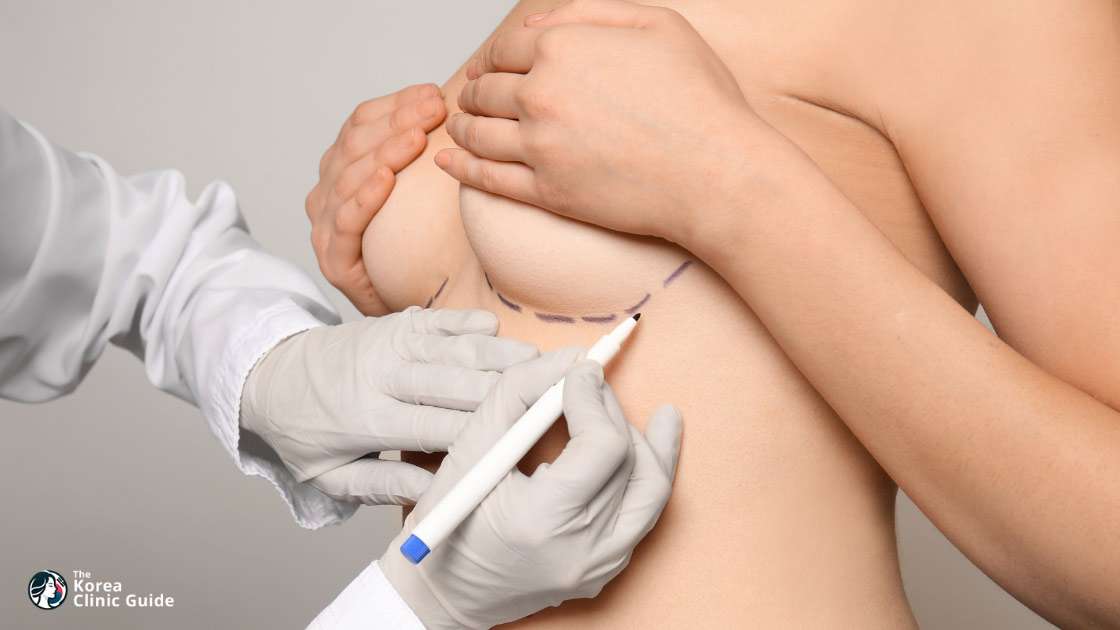
Table of contents
- Breast Surgery at a Glance
- What Is Breast Surgery?
- Who Is a Good Candidate for Breast Surgery?
- What Are the Different Types of Breast Surgery?
- Why Visit Korea for Breast Surgery?
- Key Information for International Patients
- Which Are the Best Clinics in Korea for Breast Surgery?
- Breast Surgery From Start to Finish
- Alternatives to Breast Surgery
- How Can I Prepare for Breast Surgery?
- Aftercare Advice
Considering treatment in Korea? Everything you need to know e.g. — how to avoid scams, visas, interpreters, recovery tips — in our Medical Tourism Master Guide. Plan with confidence in minutes, not weeks!
Last updated: September 2026
Breast Surgery at a Glance
- Not one operation — Breast surgery includes augmentation or fat grafting for volume, a lift for drooping, reduction for excess size and symptoms, implant revision or removal, reconstruction, and gender-affirming chest procedures; the right choice depends on the specific goal and anatomy.
- Recovery varies widely — Augmentation discomfort often improves within days, but swelling and settling take weeks; after a lift or reduction, nonphysical work may resume around weeks 2–3, activity increases around weeks 4–5, and unrestricted exercise usually requires review near week 6.
- Allow 10–14 days in Korea — For an uncomplicated outpatient cosmetic procedure, plan at least 10–14 days in Korea for early checks and individualized flight clearance; major revisions, reductions, reconstruction, and flap surgery require a substantially longer stay.
- Implants need lifelong follow-up — Breast implants are not lifetime devices and can rupture, harden, shift, or require revision; FDA labeling advises silicone-implant ultrasound or MRI at 5–6 years, then every 2–3 years to screen for silent rupture.
- Healing and clot risks matter — Nicotine impairs blood flow and wound healing, while recent chest surgery plus long-haul travel raises clot risk; active infection, unexplained breast findings, uncontrolled medical conditions, and some cancer-treatment situations need resolution or specialist clearance first.
- Korea requires continuity planning — Korea has a foreign-patient regulatory and consent framework, but visitors should independently verify the surgeon, anesthesia and emergency-transfer plan, and obtain English operative, implant, medication, and discharge records for home-country care.
What Is Breast Surgery?
Breast surgery is a group of operations that changes breast or chest size, shape, position, or reconstruction. It can address cosmetic goals, physical discomfort from large breasts, implant concerns, breast loss or difference, and gender-affirming chest goals. Breast surgery is surgical, with the exact operation selected according to the person’s needs and desired outcome.
Who Is a Good Candidate for Breast Surgery?
- Cosmetic volume or shape goals — Medically stable adults seeking added volume, correction of asymmetry, a lift for drooping breasts, reduction, or a planned implant revision can be assessed for the appropriate operation.
- Physical symptoms from large breasts — Reduction mammaplasty can be considered when breast size contributes to neck, shoulder, or back discomfort, bra-strap grooves, under-breast irritation, or activity restriction.
- Reconstruction needs — People undergoing or recovering from mastectomy, trauma, or congenital breast difference need a reconstruction plan coordinated with breast and oncology teams.
- Gender-affirming chest goals — Chest masculinization, breast augmentation, or other gender-affirming breast procedures require individualized assessment of anatomy, medical history, and long-term support.
- Commitment to follow-up — Suitable candidates can stop nicotine as required, arrange a responsible adult after anesthesia, follow lifting restrictions, and establish postoperative care at home.
Elective surgery is generally deferred during pregnancy and until breastfeeding and post-pregnancy volume changes have stabilized. Active infection, open skin lesions, an unexplained breast mass or abnormal imaging finding, uncontrolled diabetes, major cardiopulmonary disease, bleeding disorders, active cancer treatment, and significant immunosuppression require treatment or specialist clearance first. Nicotine products impair blood flow and wound healing; surgeons commonly require cessation under a defined protocol. Planned pregnancy, major weight change, insufficient flap donor tissue, prior scars, radiation, and the ability to preserve nipple ducts or sensation all affect the operation offered. Discuss breastfeeding directly: pooled evidence finds no statistically significant overall reduction in breastfeeding success after augmentation, while reduction has lower, technique-dependent success and preservation of subareolar tissue appears important in the available evidence.
What Are the Different Types of Breast Surgery?
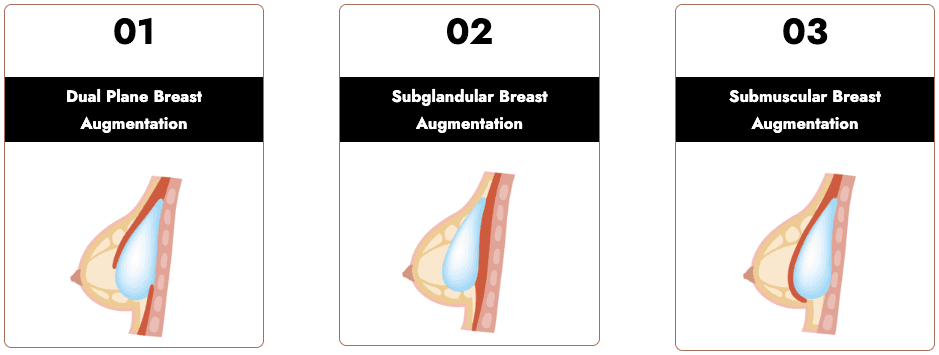
Breast surgery is not one operation. The right choice follows the primary goal—more volume, less volume, lifted shape, implant-problem treatment, reconstruction, or gender affirmation—and the available skin, breast tissue, and donor tissue.
- Augmentation with implants — Saline or silicone-gel implants add volume. Size, profile, shape, incision, placement plane, and shell surface affect scar location, implant coverage, palpability, rippling, animation deformity, and revision planning. See breast augmentation.
- Fat grafting — Fat is harvested by liposuction and transferred to the breast for selected patients seeking a more modest volume increase without an implant. Retention is variable, and some patients need staged treatment. See breast fat grafting.
- Mastopexy (breast lift) — A lift removes excess skin and reshapes or elevates breast tissue and the nipple–areola complex. It improves ptosis but does not reliably create substantial new volume; some patients combine it with an implant or fat grafting. See breast lift.
- Reduction mammaplasty — Reduction removes breast tissue, fat, and skin while lifting and reshaping the breast. Periareolar, vertical, and inverted-T patterns produce different scar and reshaping trade-offs. See breast reduction.
- Revision or explantation — Implant removal, replacement, pocket revision, correction of malposition, or treatment of capsular contracture is selected according to the implant, capsule, symptoms, tissue quality, and desired final volume. Capsulectomy is not automatically required with every explant. See revision breast surgery and capsular contracture treatment.
- Reconstruction — Reconstruction can be immediate or delayed, implant-based with a direct implant or tissue expander, autologous tissue-based, or combined. Radiation, chemotherapy timing, cancer treatment, donor-site suitability, and body habitus guide the decision; free-flap options such as DIEP reconstruction require microsurgery.
- Chest and gender-affirming operations — This includes gynecomastia surgery, chest masculinization, and breast augmentation for feminization. The skin envelope, nipple position, glandular tissue, hormone use, and chest-wall anatomy determine the technique. See gynecomastia surgery, top surgery, and transgender breast implants.
Why Visit Korea for Breast Surgery?
Korea has a legal framework for foreign-patient care and written consent, which can support organized treatment for visitors. These safeguards do not replace direct verification of the individual surgeon, anesthesia team, emergency-transfer process, and follow-up plan. Current research does not establish that breast surgery outcomes in Korea are superior to those in other countries.
- Foreign-patient framework — Korea regulates institutions serving overseas patients under its Medical Service Act framework. Confirm that the specific facility is legally registered and obtain consent documents in a language understood before paying or traveling.
- Implant surveillance context — Korean researchers have reported a pilot Breast Implant Registry and short-term observational implant-safety cohorts. These are useful for surveillance, but the registry-related evidence is not an international comparison and cannot demonstrate destination-wide superiority.
- Structured record needs — For implant, revision, and reconstruction surgery, request an English operative report, implant manufacturer and device details, discharge summary, medicines list, and imaging or pathology records. These documents are essential for future care outside Korea.
- Evidence limitation — Published medical-tourism complication literature often describes patients who present after complications and lacks equivalent local-surgery comparison groups. It cannot provide a reliable national complication rate or identify the safest facility, as explained in a review of the evidence limitations.
Key Information for International Patients
- Minimum stay — Remain in Korea for at least 10–14 days after an uncomplicated outpatient cosmetic operation for early reviews, wound or drain assessment when needed, and individualized clearance to fly. Reductions, extensive revisions, implant complications, mastectomy, reconstruction, and free-flap surgery require a substantially longer stay set by the operating team.
- Flight timing — The CDC advises delaying air travel for 10–14 days after major surgery, particularly chest surgery. Long-haul travel plus recent surgery increases clot concern; obesity, estrogen exposure, cancer, pregnancy or recent pregnancy, prior clots, thrombophilia, age, and restricted mobility require individualized assessment under CDC travel guidance.
- Early itinerary limits — Plan no strenuous sightseeing, heavy luggage handling, hotel moves, driving, or upper-body activity during the first postoperative days. Reduction, lift, reconstruction, and flap surgery impose more extensive restrictions than a straightforward augmentation.
- Companion and accommodation — Arrange nearby accommodation, reliable transport, and a responsible adult to escort after anesthesia or sedation and remain available overnight. Do not plan to recover alone after major breast surgery.
- Remote follow-up — Before booking, confirm who answers urgent messages after return home, how photos or video reviews are handled, and who will manage complications locally. Establish a home-country clinician before traveling when possible.
- Long-term implant care — Implants are not lifetime devices. Continue routine breast screening, tell mammography staff about implants, retain the device card, and arrange ongoing home-country follow-up. FDA labeling recommends ultrasound or MRI for silicone-gel implant rupture screening at 5–6 years, then every 2–3 years; MRI is appropriate for symptoms or equivocal ultrasound under FDA recommendations.
Travel note: Keep flights flexible. Fitness to fly follows the actual operation, wound condition, drain status, mobility, and personal clot risk—not a pre-booked departure date.
Which Are the Best Clinics in Korea for Breast Surgery?
Listed below are some of the best clinics in Korea for breast surgery.
1. Seojin Plastic Surgery Clinic
You may consider Seojin Plastic Surgery Clinic for breast surgery if you want implant planning tailored to your chest anatomy, with 3D modeling and implant trial-bra options before surgery. Dr. Lee Hyungmin provides end-to-end care in a one-doctor setting, and the clinic offers augmentation, hybrid implant-and-fat-grafting approaches, lifting and reduction procedures, nipple surgery, gynecomastia surgery, and transgender breast implants.
- URL: Seojin Plastic Surgery Clinic Website
- Location: Gangnam-gu, Seoul
- Augmentation planning and technique:
- 3D breast implant modeling is used to visualize potential outcomes across implant brands and types.
- A complimentary implant trial-bra service lets you assess fit and design before surgery.
- The microscale dual-plane approach is customized to your ribcage, breast tissue, and chest anatomy.
- 3D spatial dissection is described as creating a smooth implant pocket and minimizing postoperative swelling.
- An intraoperative sizer is used to assess breast symmetry, shape, and size before the final implant is placed.
- Hybrid and sagging-correction options:
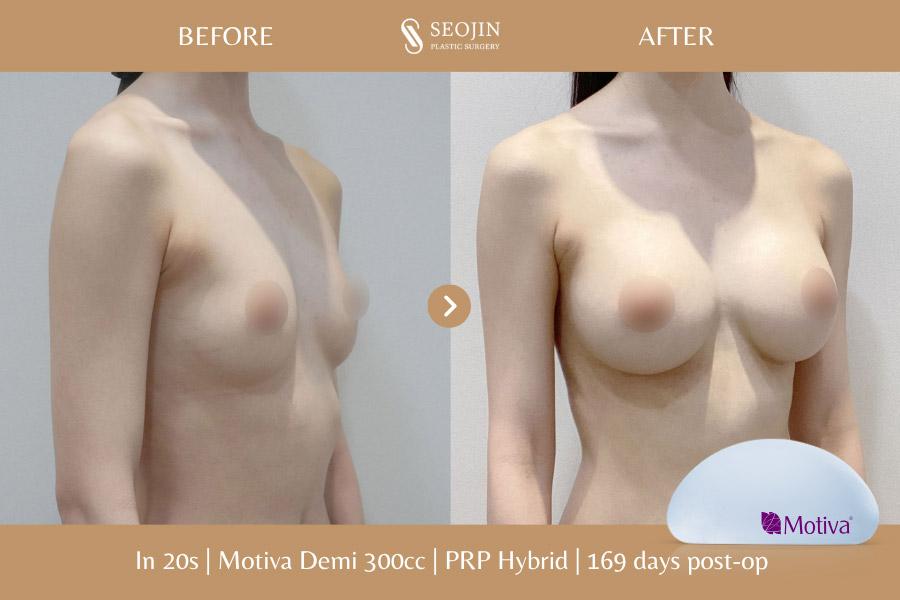
- Hybrid augmentation combines implants with fat grafting to add softness and refine shape; fat may be harvested from the abdomen or thighs.
- PRP may be used with breast fat grafting to support graft survival and reduce the possibility of inflammation.
- For selected sagging concerns, the clinic describes using specialized implants, including Mentor Boost, to improve contour without the scars associated with traditional breast-lift surgery.
- Surgeon and scope of care:
- Dr. Lee Hyungmin is described as having more than 16 years of experience and as a 2022 Top 100 Good Doctors in Korea honoree.
- The clinic reports more than 2,300 breast surgeries performed and participation in Motiva and Mentor academic conferences.
- Available breast procedures include augmentation, breast lift, breast reduction, nipple or areola surgery, gynecomastia surgery, and breast implant procedures for transgender individuals.
2. THEPLUS Plastic Surgery
You can expect breast augmentation, lift, or reduction planning with Dr. Lee, a board-certified plastic surgeon whose background includes work as a surgery specialist at Seoul National University Hospital. THEPLUS tailors implant placement, incision, or lift technique to your anatomy, uses full-HD endoscopic visualization for augmentation, and provides structured postoperative monitoring and English-language support for international visitors.
- URL: THEPLUS Plastic Surgery Website
- Location: Gangnam-gu, Seoul
- Procedure details:
- Breast augmentation uses FDA-approved Motiva Ergonomix® implants, with implant placement and incision site selected for your body type under full-HD endoscopic visualization.
- Breast-lift planning uses a 3-D assessment of skin elasticity and breast shape to select a donut, lollipop, or anchor technique.
- Breast reduction uses a pedicle technique intended to preserve nipple sensation while removing excess volume.
- Breast surgeon:
- Dr. Lee is a board-certified plastic surgeon specializing in breast augmentation, breast lift, and breast reduction.
- Her experience includes a surgery-specialist position at Seoul National University Hospital and clinical training at Seoul Metropolitan Boramae Hospital.
- She is a member of the Korean Society of Plastic and Reconstructive Surgery and the Korean Society of Aesthetic Plastic Surgery.
- Aftercare and international support:
- The clinic describes advanced sterilization protocols, systematic postoperative monitoring, and an aftercare plan tailored to your healing pace.
- English-language support and dedicated translator assistance are available from consultation through recovery for international patients.
3. Okay Plastic Surgery Clinic
You may want to consider Okay Plastic Surgery Clinic if you are seeking breast reduction, lift, nipple correction, or augmentation care through a dedicated Breast Center, including complex severe-reduction cases. Dr. Cho is described as a breast-surgery specialist who has studied and published research in the field, while the clinic emphasizes individualized planning and comprehensive aftercare for natural, lasting results.
- URL: Okay Plastic Surgery Clinic Website
- Location: Gangnam-gu, Seoul
- Breast procedures:
- The specialized Breast Center offers breast reduction, breast lift for sagging concerns, and nipple correction.
- Breast augmentation options include implants or fat grafting.
- The clinic also lists treatment for inverted nipples and gynecomastia.
- Breast-surgery expertise:
- Dr. Cho is described as having ongoing study and published research in breast surgery.
- The clinic states that Dr. Cho performs severe breast-reduction cases requiring substantial reduction.
- Care considerations:
- The clinic emphasizes individualized treatment planning and comprehensive aftercare.
- A female plastic surgeon with extensive experience is included among the specialized professionals.
Breast Surgery From Start to Finish
- Remote inquiry and consultation — Send goal photographs only through the clinic’s secure channel, plus medical history, medication list, prior breast-operation reports, implant card, imaging, and oncology or radiation records when relevant. Confirm whether English consultation, interpreter support, and virtual review are available.
- Procedure selection and travel plan — The surgeon explains whether augmentation, fat grafting, lift, reduction, revision, explantation, gender-affirming surgery, or reconstruction matches the goal and anatomy. Agree on a stay long enough for in-person review and flight clearance.
- In-person examination — On arrival, the surgeon performs breast and chest-wall examination, measurements, skin-quality assessment, and review of asymmetry, scars, nipple position, breast symptoms, family history, and screening status. This visit can change the remote plan.
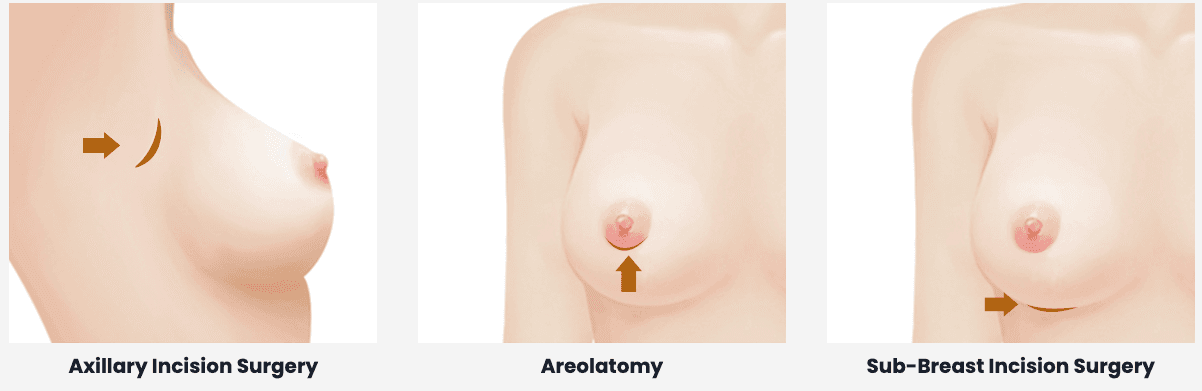
- Preoperative clearance and consent — Expect anesthesia review, pregnancy testing where applicable, and history-specific laboratory or imaging assessment. Discuss incision and scar pattern, implant or flap choices, breastfeeding and sensory implications, risks, expected recovery, revision policy, and emergency contact arrangements before signing consent.
- Anesthesia and operation — Most breast operations use general anesthesia. The surgeon marks the breasts while standing, makes the planned incisions, performs the selected reshaping, implant, fat-transfer, removal, revision, or reconstruction technique, and applies dressings and a support garment. Duration depends heavily on the operation; a free-flap reconstruction is far longer and more complex than an outpatient augmentation.
- Recovery and discharge — Staff monitor pain, nausea, bleeding, breathing, and circulation after anesthesia. Some procedures are outpatient; reconstruction and flap surgery often require hospital admission. Leave only with an escort, medication instructions, emergency contacts, and drain-care teaching if drains are used.
- Korea-based postoperative reviews — Attend all scheduled checks for dressings, incisions, drains, swelling, and early complications. The surgeon determines when to shower, drive, lift, exercise, and fly.
- Home-country follow-up — Obtain English discharge and operative records before departure. Send requested photographs, attend remote reviews, and seek local urgent care immediately for warning signs rather than waiting for an online reply.
Alternatives to Breast Surgery
The best alternative depends on the goal. Non-surgical options cannot remove substantial skin, correct marked ptosis, reduce large breasts, reconstruct a post-mastectomy breast, or solve many implant complications; surgery gives more structural change but brings scars, anesthesia, recovery, and revision risk.
Breast Augmentation
- Best for — Added implant-based volume when there is adequate skin and soft-tissue coverage.
- Trade-off — Implants provide more predictable volume than fat grafting but require long-term monitoring and can rupture, harden, shift, or need removal or revision. See breast augmentation.
Breast Fat Grafting
- Best for — Selected patients seeking a modest volume increase, contour refinement, or adjunct to reconstruction without an implant.
- Trade-off — Results depend on retained transferred fat and can require staged sessions; it does not reliably replace the volume achievable with implants. See breast fat grafting.
Breast Lift
- Best for — Ptosis with sufficient existing volume.
- Trade-off — A lift reshapes and elevates but does not reliably add upper-pole fullness or substantial volume. See breast lift.
Breast Reduction
- Best for — Excess volume with physical symptoms or a desire for a smaller, lifted breast.
- Trade-off — Reduction can relieve size-related symptoms but involves scars and carries risks to nipple sensation and breastfeeding capacity. See breast reduction.
Implant Revision or Explantation
- Best for — Capsular contracture, rupture, malposition, persistent symptoms requiring assessment, or a decision to stop having implants.
- Trade-off — Removal alone can leave loose skin or reduced volume; a lift, fat grafting, replacement, or pocket revision may be considered separately. See revision breast surgery.
How Can I Prepare for Breast Surgery?
- Send records early — Provide prior operative reports, implant device card, mammograms or other breast imaging, medication list, allergies, clot history, and cancer, chemotherapy, or radiation records before travel.
- Disclose every medicine — Report anticoagulants, antiplatelets, diabetes medicines, GLP-1 weight-loss injections, hormone therapy, prescriptions, over-the-counter drugs, herbs, supplements, nicotine products, and recreational substances. Do not independently stop any medicine; the surgeon, anesthesiologist, and prescribing clinician must set the hold plan.
- Stop nicotine on schedule — Cigarettes, vaping, nicotine replacement, and other nicotine exposure compromise healing. Follow the operating team’s required cessation interval and testing policy.
- Complete required assessment — Resolve infections, open skin lesions, unexplained breast symptoms, or abnormal imaging before elective surgery. Attend the requested in-person examination, anesthesia review, tests, and pregnancy testing where applicable.
- Follow fasting instructions exactly — The anesthesia team will give a procedure-specific fasting window for food, clear liquids, and medicines. Do not assume a standard rule applies.
- Prepare recovery logistics — Book accommodation near the facility, arrange local transport and an adult escort, bring front-opening tops and prescribed support garments, and avoid carrying luggage.
- Protect the treatment area — Avoid sunburn, new chest tattoos or piercings, and skin irritation near planned incisions. Tell the team about rashes, acne, wounds, or illness before surgery.
- Keep departure flexible — Do not book a non-changeable flight at the 10–14-day mark; the surgeon must clear travel based on recovery and clot risk.
Travel note: The CDC advises discussing medical-tourism risks and continuity of care before departure; use its medical tourism guidance as a travel-health baseline, not as a substitute for surgical clearance.
Confirm the clinic’s exact medication, fasting, alcohol, testing, drain, garment, and travel requirements; the treating doctor’s individualized instructions take precedence.
Aftercare Advice
Protect the incisions and reconstructed or reshaped tissues during the early healing phase; pushing through pain or swelling can compromise recovery.
- Move carefully, not intensely — Take short, frequent walks to reduce immobility, but do not lift, push, pull, perform upper-body exercise, or carry luggage until the surgeon clears it. Reduction and lift patients often need substantial limits in week 1, return to nonphysical work around weeks 2–3, gradual activity in weeks 4–5, and review before unrestricted activity around week 6.
- Wear and manage dressings correctly — Use the surgeon-approved support bra or elastic band as directed. Keep dressings dry, record drain output when drains are present, and do not remove dressings or apply creams, silicone, or scar products unless instructed.
- Avoid pressure, heat, and immersion — Do not sleep or lie in positions the team restricts, wear underwire bras, swim, use hot tubs or saunas, or expose healing scars to sun until cleared. Use SPF 50 on healed exposed scars to limit darkening.
- Do not drive or fly without clearance — Driving is unsafe while taking sedating pain medicine or when arm movement is restricted. Delay flights until the operating team confirms wound stability, mobility, and clot-risk management.
- Know urgent warning signs — Seek immediate assessment for rapidly enlarging or one-sided swelling, escalating pain, heavy bleeding, spreading redness or warmth, pus or foul drainage, fever, wound separation, dark or dusky nipple or skin color, shortness of breath, chest pain, fainting, or one-sided leg pain or swelling. Implant patients also need assessment for persistent new swelling, a mass, hardening, pain, late asymmetry, or shape change; BIA-ALCL has been reported more often with textured implants.
- Allow time for the result — Acute discomfort after uncomplicated augmentation often improves over days, but swelling and settling continue for weeks. Scars mature for at least a year; do not judge final shape or symmetry in the first postoperative weeks.
Follow the treating doctor’s instructions over general advice, attend every review, and contact the clinic promptly when anything appears wrong.
Frequently Asked Questions
Related Blogs
Areola Tattoo in Korea: Types, Recovery, Travel Planning and Safety
Areola micropigmentation restores areolar color, borders, symmetry, or a 2D/3D visual nipple effect after stable reconstruction, surgery, trauma, or selected top surgery cases. The article covers candidacy, treatment steps, Korea travel planning, 10–14-day healing restrictions, aftercare, touch-up timing, risks, and alternatives.
Updated: Sep 15, 2026

Breast Reduction in Korea: Methods, Recovery, Travel Planning and Risks
Breast reduction removes breast tissue and excess skin under general anesthesia to reduce heaviness and reshape the breasts; pedicle and incision techniques depend on anatomy and reduction goals. In Korea, costs are ₩15,000,000–₩20,000,000, with international patients advised to stay at least 10–14 days for wound checks and surgeon-approved travel clearance.
Updated: Sep 14, 2026
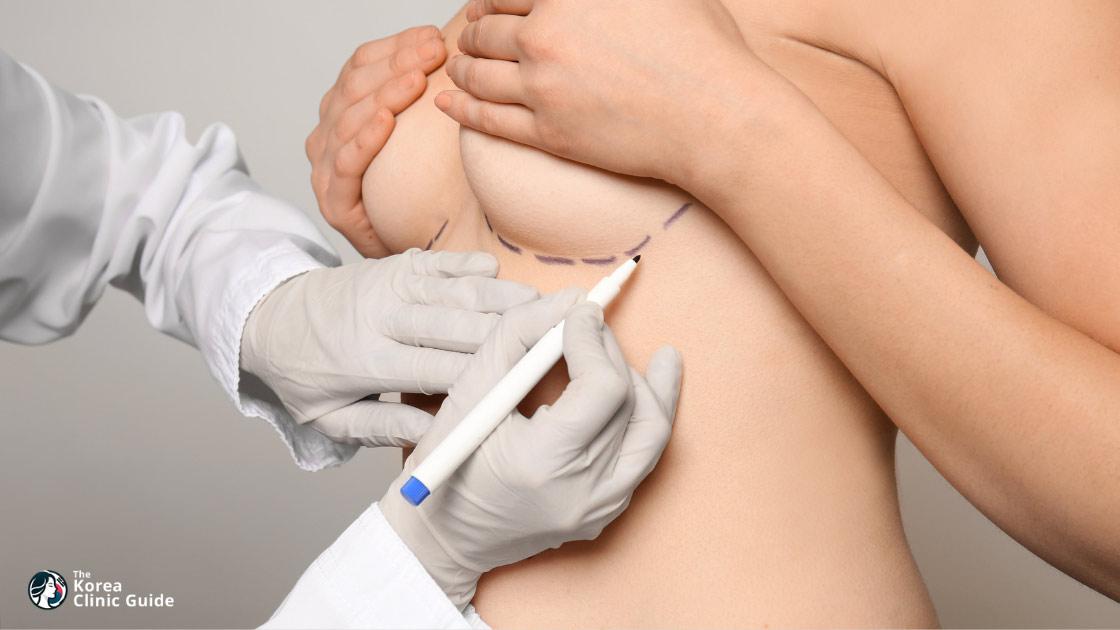
Breast Fat Grafting in Korea: Candidacy, Recovery, Results, and Travel Planning
Breast fat grafting uses liposuction to harvest and process fat, then injects small parcels into the breasts for modest volume, contour correction, or asymmetry treatment. In Korea, prices range from ₩5,000,000 to ₩16,000,000, with international patients advised to plan 7–10 days minimum for early follow-up and travel clearance.
Updated: Sep 11, 2026
Areola Surgery in Korea: Techniques, Recovery, Risks and Travel Planning
Areola surgery reduces or reshapes the areola through circumareolar or intra-areolar techniques, alone or with breast or chest surgery. In Korea, costs range from ₩2,500,000–₩7,000,000, with a 7–10 day stay and early wound review recommended for isolated procedures.
Updated: Sep 11, 2026
Clinics offering Breast Surgery

THEPLUS Plastic Surgery Korea | Eye, Nose, Face & Body Surgery
Sinsa

Seojin Plastic Surgery Clinic Korea: Pioneering Advanced Cosmetic Procedures for Personalized Aesthetic Transformation
Apgujeong

Okay Plastic Surgery Clinic in Korea: Comprehensive Aesthetic Procedures with Sincerity and Care
Cheongdam

Banobagi Plastic Surgery: A Pioneering and Trusted Plastic Surgery Clinic in Korea
Seolleung