
Medical Tourism Blog
Dimple Surgery in Korea: Types, Recovery, Risks, and Travel Planning
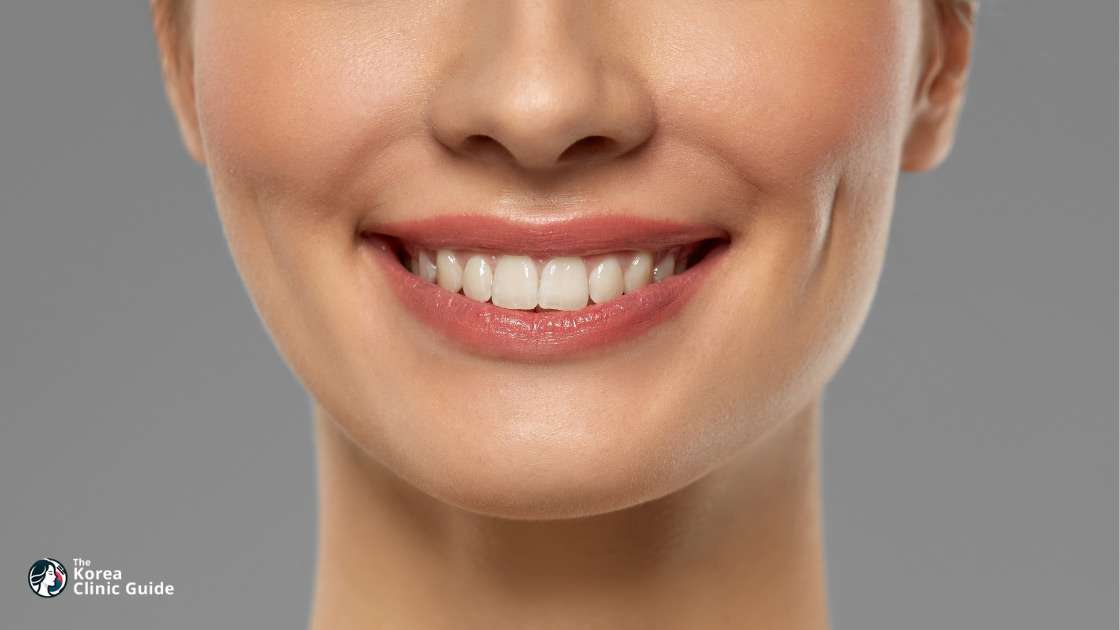
Table of contents
- Dimple Surgery at a Glance
- What Is Dimple Surgery?
- Who Is a Good Candidate for Dimple Surgery?
- What Are the Different Types of Dimple Surgery?
- Why Visit Korea for Dimple Surgery?
- Key Information for International Patients
- Which Are the Best Clinics in Korea for Dimple Surgery?
- Dimple Surgery From Start to Finish
- Alternatives to Dimple Surgery
- How Can I Prepare for Dimple Surgery?
- Aftercare Advice
Considering treatment in Korea? Everything you need to know e.g. — how to avoid scams, visas, interpreters, recovery tips — in our Medical Tourism Master Guide. Plan with confidence in minutes, not weeks!
Last updated: September 2026
Dimple Surgery at a Glance
- What it does — Dimple surgery, or dimpleplasty, creates a controlled attachment between cheek skin and underlying muscle—usually through a small incision inside the mouth—so an indentation appears with smiling.
- Best candidates — Suitable candidates are healthy adults with good oral hygiene, realistic expectations, a settled preference for dimple side and position, and access to postoperative follow-up; active oral or facial infection requires postponement.
- Recovery timeline — Swelling and tenderness are greatest in the first few days and resolved within 2 weeks in a 2,048-patient Korean series; puncture marks faded in about 8–12 weeks, while dynamic-looking dimples developed at 20–24 weeks.
- Results are not immediate — Early dimples may look overly deep, asymmetric, or visible even at rest, so the result should not be judged for several months as the skin-to-muscle attachment matures.
- Revision possibility — The facial change may be permanent, but reliable reversal is not guaranteed; in one Korean single-center series, 7.7% of patients had reoperation, mainly because the dimple was too faint or disappeared.
- Korea travel planning — Although it is commonly an outpatient procedure under local anesthetic, international patients should plan an in-person consultation, treatment, and review, with a conservative Korea stay of at least 7–10 days and ideally 10–14 days when possible.
- Korea-specific evidence — Korea is home to one of the largest published dimpleplasty series, involving 2,048 procedures, but this single-center retrospective dataset does not prove Korean surgeons or outcomes are superior to those elsewhere.
What Is Dimple Surgery?
Dimple surgery, or dimpleplasty, is a cosmetic procedure that creates a small facial indentation designed to appear with smiling. It addresses the aesthetic goal of having one or two cheek dimples and does not treat a medical or dental condition. It is a minimally invasive surgical procedure, usually performed through the inside of the mouth.
Who Is a Good Candidate for Dimple Surgery?
- Healthy, decided adults — Good candidates have stable aesthetic goals, realistic expectations, good oral hygiene, and a clear preference for unilateral or bilateral placement, position, size, and depth.
- Dynamic-dimple goals — Dimpleplasty suits people seeking an indentation that appears with smiling through a controlled attachment between the cheek skin and underlying muscle; it does not treat facial weakness, dental disease, or a medical condition.
- Patients able to attend follow-up — Plan for local postoperative review and remote contact after returning home, because early depth, symmetry, and infection require assessment.
Active oral, dental, facial-skin, or systemic infection requires deferral and treatment first. Uncontrolled bleeding disorders, anticoagulant or antiplatelet treatment without a documented perioperative plan, acute illness or fever, uncontrolled medical disease, local-anesthetic allergy, and pregnancy require individualized assessment and often postponement of elective surgery. Keloid tendency, unhealed facial injuries, significant scars near the intended site, and prior tumor-removal scars need careful surgical review. Dimple surgery creates a potentially permanent facial change: do not proceed when uncertain about the design or unable to accept a period of resting dimpling, asymmetry, or a possible revision; reliable reversal is not guaranteed.
What Are the Different Types of Dimple Surgery?
Dimple surgery is planned around the desired facial location and smile movement. Marking is done while smiling because a dimple’s position and apparent depth change with facial expression.
- Bilateral cheek dimples — Dimples are created on both cheeks for a paired smile effect. In the largest located Korean series, bilateral procedures accounted for 31.9% of cases.
- Unilateral cheek dimple — One cheek is treated, either to match a naturally occurring dimple on the other side or to create an intentionally asymmetric expression. Left-sided procedures represented 41.4% and right-sided procedures 26.3% in that series.
- Cheek-position design — The proposed point can sit higher or lower on the cheek and nearer to or farther from the mouth, but facial proportions, cheek volume, scars, and smile dynamics determine what is feasible.
- Mouth-corner dimple — A small indentation near the oral commissure, or mouth corner, is an alternative design but was uncommon in the Korean series.
- Chin dimple creation — Chin dimpling is anatomically distinct from cheek dimpleplasty and needs separate assessment and planning.
The distribution above comes from a 2,048-patient Korean retrospective series, not a universal preference or outcome standard.
Why Visit Korea for Dimple Surgery?
Korea is the setting for one of the largest published clinical dimpleplasty series. That provides useful procedure-specific data for counseling, but it does not prove that outcomes or surgeon expertise in Korea are superior to those elsewhere. Verify the named operating clinician, communication arrangements, emergency access, and follow-up plan before booking.
- Large published Korean dataset — A Daegu Catholic University Medical Center report described techniques and outcomes from 2,048 dimple procedures, including recovery observations and reoperation data.
- Relevant clinical outcome information — In that single-center series, swelling resolved within 2 weeks, small puncture marks faded at roughly 8–12 weeks, and dynamic-looking dimples were reported at 20–24 weeks.
- Evidence limitation — The same series recorded reoperation in 7.7% of patients, mainly for undercorrection or disappearance. This is a retrospective estimate from one center, shaped by its technique, case selection, follow-up, and revision threshold; it is not a universal revision rate.
- Need for informed technique discussion — Comparative evidence remains weak. A registered 20-participant randomized study completed in 2024 had no posted results or linked publication, so it cannot establish that suture, muscle-excision, or other methods are superior for durability, symmetry, or satisfaction.
These findings are reported in the Korean clinical series and the unreported randomized-study registry record.
Key Information for International Patients
- Minimum stay — Plan to remain in Korea for at least 7–10 days after an uncomplicated procedure when possible. A 10–14-day stay gives more time for an approximately two-week review, the period when infections appeared in the Korean series.
- Flight timing — No dimpleplasty-specific study defines a safe long-haul-flight interval. The 7–10-day planning interval is conservative and draws on broader facial-surgery travel guidance; do not fly while sedated, impaired by medication, unable to maintain oral intake, or experiencing worsening swelling, bleeding, fever, drainage, or facial weakness.
- Appointments and repeat care — Dimpleplasty is commonly an outpatient procedure under local anesthetic, but plan for an in-person design consultation, procedure appointment, and postoperative review. Revision is a separate procedure when a dimple fades, remains too deep, or is asymmetric.
- Itinerary impact — Initial swelling and tenderness are most noticeable during the first several days. Avoid scheduling demanding sightseeing, alcohol-focused events, strenuous activities, swimming, or a same-day international flight around treatment.
- Remote follow-up — Before departure, obtain an English operative note, anesthesia or sedation record where applicable, medication list, written aftercare plan, emergency contact route, and dated photo-follow-up instructions.
Travel note: The travel interval is not an evidence-based guarantee. Broader travel literature summarizes CDC advice to avoid air travel for 7–10 days after facial surgery, while no exact safe flight interval has been established for dimpleplasty). The operating surgeon’s assessment overrides a calendar-based plan.
Which Are the Best Clinics in Korea for Dimple Surgery?
Listed below are some of the best clinics in Korea for dimple surgery.
1. 111 Clinic
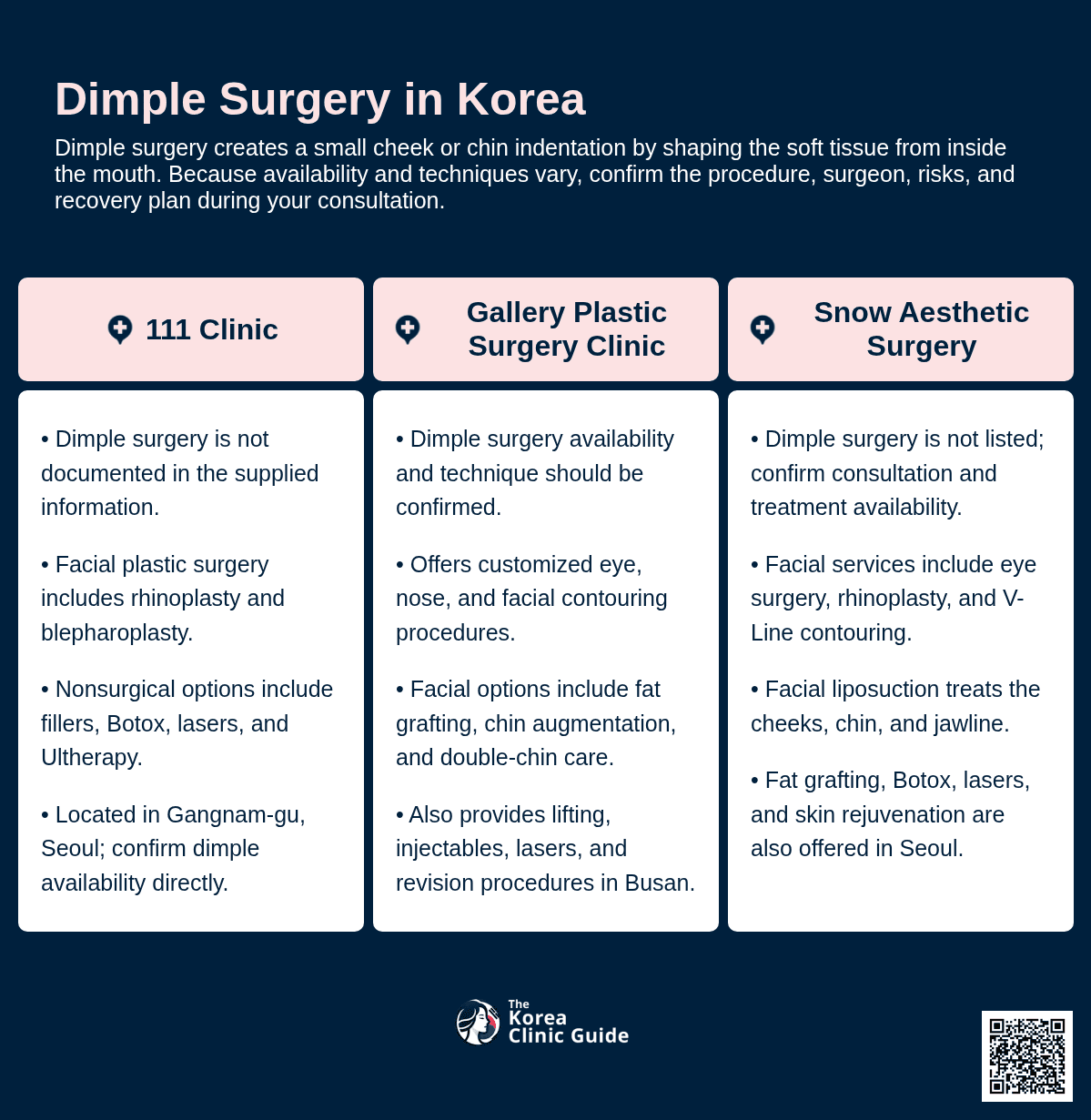
The available information for 111 Clinic does not list dimple surgery, so you should not assume a specific dimple-creation technique, surgeon, or recovery plan is offered. Its documented aesthetic services include facial plastic surgery and nonsurgical facial treatments, which may be relevant when discussing your overall facial goals.
- URL: 111 Clinic Website
- Location: Gangnam-gu, Seoul
- Documented facial services:
- Rhinoplasty and blepharoplasty are listed under plastic and reconstructive surgery.
- Dermal fillers, Botox, laser skin rejuvenation, and Ultherapy are listed among nonsurgical aesthetic options.
- Other care available: The clinic also lists health check-ups and CoolSculpting weight-management treatment.
2. Gallery Plastic Surgery Clinic
Gallery Plastic Surgery Clinic’s supplied information does not confirm dimple surgery, so you should seek clarification on whether it is available and what technique would be considered for you. The clinic does document a broad range of facial aesthetic options, including customized eye and nose procedures, facial contouring, and minimally invasive treatments.
- URL: Gallery Plastic Surgery Clinic Website
- Location: Busanjin-gu, Busan
- Facial surgical options:
- Custom rhinoplasty, no-implant rhinoplasty, and alar base reduction are listed.
- Custom eye surgery, eyelid correction, and eye-bag fat repositioning are listed.
- Facial contouring options include chin augmentation, double-chin treatment, and facial fat grafting.
- Lifting and nonsurgical care:
- Revision considerations: The clinic lists eyelid revision surgery and rhinoplasty revision surgery for concerns following prior procedures.
3. Snow Aesthetic Surgery
Snow Aesthetic Surgery’s provided information does not list dimple surgery, so you should confirm availability before expecting a dimple-specific consultation or treatment plan. Its documented facial offerings include eye surgery, rhinoplasty, facial liposuction, fat grafting, V-Line contouring, and anti-aging treatments.
- URL: Snow Aesthetic Surgery Website
- Location: Gangnam-gu, Seoul
- Facial aesthetic services:
- Eye surgery, including double-eyelid surgery and ptosis correction, is listed.
- Rhinoplasty is described as being tailored to facial features and may also address breathing concerns.
- Facial liposuction targets the cheeks, chin, and jawline, while facial fat grafting can restore volume to areas such as the cheeks and under-eyes.
- V-Line surgery is listed for jaw and chin contouring.
- Skin and injectable treatments:
- Anti-aging care includes injections, laser therapy, and skin rejuvenation treatments.
- Botox and laser skin resurfacing are listed for concerns such as wrinkles, acne scars, pigmentation, and fine lines.
Dimple Surgery From Start to Finish
- Remote inquiry and screening — Submit a health history, medication and allergy list, prior facial-procedure history, and standardized at-rest and smiling photographs through the clinic’s secure channel. Ask whether English consultation is available and whether sedation is proposed. Remote review cannot replace an in-person facial and oral examination.
- In-person consultation and design — The surgeon examines the cheeks at rest and during several smiles, checks oral and facial skin health, reviews scars and bleeding risk, and discusses unilateral versus bilateral placement. Use a mirror and smile-based markings to approve the intended position and initial depth.
- Medical and consent review — Disclose all prescription and non-prescription medicines, supplements, allergies, medical conditions, pregnancy status, smoking, and prior surgery. Confirm the planned technique, anesthesia, risks, revision policy, aftercare, local contact arrangements, and overseas follow-up plan.
- Anesthesia and preparation — Local anesthetic is commonly used. Follow fasting instructions exactly if sedation is planned; the requirements depend on the anesthesia plan.
- Dimple creation — A common intraoral technique uses a small incision in the buccal mucosa, inside the cheek. The surgeon passes a suture to create controlled fixation between the dermis and underlying cheek muscle, commonly the buccinator; suture tension influences early depth. Needle-based fixation, cross-stitch methods, selective muscle fenestration, and punch-excision approaches are also described.
- Immediate observation and discharge — The team observes recovery after the procedure and discharges stable local-anesthetic patients the same day. Arrange an escort and overnight support when sedation, anxiolytic medicine, or opioid pain medicine is used.
- Local recovery review — Attend the scheduled review before international departure. Contact the clinic promptly for escalating pain, increasing or one-sided swelling, fever, drainage, persistent bleeding, difficulty drinking, or new facial weakness.
- Overseas follow-up and maturation — Send dated photographs as instructed and retain the clinic’s direct contact details. Do not judge the result early: dimples can look excessively deep or visible at rest initially, while natural dynamic appearance in the Korean series developed at 20–24 weeks.
Alternatives to Dimple Surgery
Dimpleplasty is the only meaningful option in this group that aims to create a durable, dynamic skin-to-muscle indentation. Non-surgical options avoid an operation but do not reproduce a true smile dimple; volume treatments address a different goal and can be counterproductive when an indentation is desired.
No procedure or temporary cosmetic styling
- Temporary effect — Makeup contouring can imitate a dimple in photographs or for events without a scar, fixation, recovery period, or revision risk.
- Tradeoff — The result is not structural or durable and does not move as a real dimple during smiling.
Facial filler or fat grafting
- Different goal — Facial filler and face fat grafting restore or add volume in areas such as the cheeks, temples, or folds.
- Tradeoff — Neither reliably creates the controlled inward pull of a dimple. Added cheek volume can be unsuitable when the desired result is an indentation.
Facial contouring surgery
- Different anatomical target — Face contouring changes skeletal or soft-tissue facial proportions rather than creating a small expression-linked cheek indentation.
- Tradeoff — It is a substantially more invasive choice with a different recovery profile and should not be chosen solely to pursue a dimple effect.
How Can I Prepare for Dimple Surgery?
- Medical disclosure — Send the surgeon a complete list of prescription medicines, over-the-counter drugs, vitamins, herbal products, recreational substances, weight-loss drugs, and diabetes medicines. Include previous facial procedures, allergies, keloid history, bleeding problems, infections, and pregnancy status.
- Bleeding-risk medicines — Do not independently stop aspirin, clopidogrel, warfarin, apixaban, rivaroxaban, dabigatran, or other prescribed anticoagulant or antiplatelet medicines. Obtain a documented plan from both the prescribing clinician and surgeon. Ask specifically about supplements that affect bleeding.
- Fasting and regular medicines — Follow the clinic’s written fasting instructions exactly when sedation is planned. Confirm how to take blood-pressure, diabetes, and GLP-1 medicines rather than making independent changes.
- Oral and facial health — Report tooth pain, gum swelling, mouth ulcers, fever, acne lesions, open wounds, or facial infection before travel. Postpone treatment until active infection has been assessed and treated.
- Smoking and alcohol — Tell the clinic about nicotine use in any form and alcohol intake. Follow its cessation and alcohol restrictions, which depend on anesthesia, healing status, and prescribed medicines.
- Travel logistics — Book accommodation close enough for an unscheduled review, keep reliable phone and data access, and choose flexible return flights. Do not arrange a same-day international flight.
- Companion and transport — Arrange a responsible adult to escort and remain available overnight when sedation, anxiolytic medicine, or opioid pain medicine is used. Do not drive or travel alone while impaired.
Travel note: Build 7–10 days in Korea into an uncomplicated treatment plan and consider 10–14 days when possible. This is cautious travel planning, not a dimpleplasty-specific flight-safety standard.
Confirm every medicine, fasting, nicotine, transport, and follow-up requirement with the treating surgeon; individualized instructions take precedence over general guidance.
Aftercare Advice
Protect the intraoral repair, monitor for infection, and allow months—not days—for the dimple to mature.
- Food and hydration — Use smooth soft foods and maintain hydration if instructed. Avoid sharp or granular foods that can lodge in an intraoral incision.
- Pain and swelling — Use only surgeon-approved pain medicine. Apply intermittent external cold packs only as directed; initial swelling and tenderness are usually most noticeable in the first several days.
- Oral and wound care — Follow the prescribed oral-rinse, antibiotic, and suture-care plan exactly. Keep any external puncture site clean and avoid unapproved makeup, exfoliants, acids, retinoids, scar products, or direct facial pressure until the skin is closed and the surgeon approves.
- Activity and heat — Start with walking or light activity. Avoid strenuous exercise, heavy lifting, swimming, hot environments, and contact risk until cleared; technique and wound status determine the restriction period.
- Sun protection — Once an external puncture site is closed and the surgeon permits skincare, protect it from sun exposure and use broad-spectrum SPF 50 to limit pigment change.
- Urgent warning signs — Contact the operating clinic or local urgent care for rapidly worsening or one-sided swelling, severe or escalating pain, persistent bleeding, fever or chills, spreading redness, pus or foul drainage, inability to drink, shortness of breath, new facial weakness, or suspected allergy. Infections in the large Korean series appeared within 2 weeks and required incision and drainage.
- Result timeline — Swelling resolved within 2 weeks in that series, small puncture marks faded at about 8–12 weeks, and dynamic-looking dimples appeared at 20–24 weeks. Early resting dimpling, depth, or asymmetry is not the final result.
Follow the treating doctor’s written instructions over general advice, attend scheduled reviews, and contact the clinic promptly when anything appears wrong.
Frequently Asked Questions
Related Blogs
Effective Juvelook Volume Filler for Lip Wrinkles Treatment in Korea
Discover how Korea leads in treating lip wrinkles—or perioral rhytides—with advanced procedures like Juvelook Volume Filler. Combining hyaluronic acid and PDLLA, this innovative Korean treatment offers immediate hydration and long-term collagen stimulation, effectively reducing smoker's lines and lipstick lines. Experience enhanced skin firmness, natural lip rejuvenation, and lasting results over
Updated: Oct 4, 2026
Dehydrated Lips Treatment with Hydro Injection in Korea: Effective Solutions for Moisturizing and Rejuvenation
Discover the benefits of Hydro Injection in Korea, a leading solution for dehydrated lips caused by cheilitis and related conditions. This minimally invasive procedure uses hyaluronic acid-based treatments to deeply hydrate, smooth, and rejuvenate lips, addressing issues such as chapped lips and fine lines. Korea’s advanced clinics offer expert care, streamlined processes, and cost-effective optio
Updated: Oct 3, 2026
Allergic Pigmentation Treatment with Pico Toning in Korea: Effective Solutions for Clear Skin
Discover how Pico Toning laser treatment in Korea effectively addresses Post-Inflammatory Hyperpigmentation (PIH), also known as allergic pigmentation or post-inflammatory brown spots. This advanced skin pigmentation procedure uses ultra-short pulses to break down melanin, making Korea a top destination for safe, affordable, and expert care. Learn about the treatment process, benefits, costs, and
Updated: Oct 3, 2026
Sallow Complexion Solutions: Skin Whitening Injection Treatment in Korea for Radiant Skin
Discover how Korea leads in medical tourism for skin whitening and treatment of sallow complexion. This blog explores causes like anemia and vitamin deficiencies, details Korea’s innovative skin whitening injections—featuring glutathione, vitamin C, and tranexamic acid—outlining procedures, costs, and patient experiences. Learn how Korea’s advanced clinics offer safe, effective treatments to brigh
Updated: Oct 2, 2026
Clinics offering Dimple Surgery

THEPLUS Plastic Surgery Korea | Eye, Nose, Face & Body Surgery
Sinsa
Evita Clinic Korea: Body Contouring, Breast & Gender-Affirming Surgery in Seoul (Apgujeong)
Apgujeong

Be and Me Clinic Hongdae: Premier Destination for Beauty and Wellness Treatments in Seoul, Korea
Hongdae

Signal Plastic Surgery Clinic Korea: Leading Cosmetic & Reconstructive Procedures in Centum
Centum