
Medical Tourism Blog
CoreSculpt in Korea: Treatment Process, Safety, Recovery and Travel Planning
Table of contents
- CoreSculpt at a Glance
- What Is CoreSculpt?
- Who Is a Good Candidate for CoreSculpt?
- How Is CoreSculpt Performed?
- Why Visit Korea for CoreSculpt?
- Key Information for International Patients
- Which Are the Best Clinics in Korea for Coresculpt?
- CoreSculpt From Start to Finish
- Alternatives to CoreSculpt
- How Can I Prepare for CoreSculpt?
- Aftercare Advice
Considering treatment in Korea? Everything you need to know e.g. — how to avoid scams, visas, interpreters, recovery tips — in our Medical Tourism Master Guide. Plan with confidence in minutes, not weeks!
Last updated: September 2026
CoreSculpt at a Glance
- What it does — CoreSculpt MST-1002 is a noninvasive magnetic muscle-stimulation treatment for modest abdominal or gluteal strengthening, tightening, and contour goals; it is not liposuction, weight-loss treatment, or hernia repair.
- Session experience — Two coil probes are secured over the abdomen or glutes to produce rhythmic involuntary contractions. The device allows 0–60 minutes of treatment time; 30-minute sessions are common but are not a validated universal protocol.
- Recovery and travel — Standalone treatment uses no anesthesia, incisions, injections, or dressings, so normal walking, work, sightseeing, and flying are generally possible immediately if you feel well; temporary soreness, spasm, tendon or joint discomfort, and redness can occur.
- Course planning — No validated CoreSculpt series or maintenance schedule exists. Comparable HIFEM studies commonly used four sessions across 2–4 weeks, so one Korea visit may cover a session but not a complete course.
- Best candidates — Suitable candidates are adults at a stable weight with intact skin who want subtle, nonsurgical muscle conditioning and have realistic expectations; indirect evidence is stronger for the abdomen than for the buttocks or other body areas.
- Key safety screen — CoreSculpt should be avoided or deferred with pregnancy, implanted electronic devices or metallic medical implants, anticoagulant use, significant cardiac or clotting concerns, impaired sensation, or damaged or recently operated skin in the treatment area.
- Korea-specific check — K1MED is a Korean manufacturer, but CoreSculpt marketing does not guarantee the same device or protocol. Before booking, obtain the model plate, confirm standalone MST-1002 versus added radiofrequency, and request Korean authorization, consent, and contraindication documents in writing.
What Is CoreSculpt?
CoreSculpt is a noninvasive treatment that uses pulsed electromagnetic fields to trigger repeated muscle contractions in the abdomen or buttocks. It is intended for subtle muscle conditioning, tightening, and contour improvement rather than weight loss, major fat removal, or repair of abdominal problems. CoreSculpt is non-surgical, with no incisions, needles, or anesthesia for standalone treatment.
Who Is a Good Candidate for CoreSculpt?
- Abdominal conditioning goals — Suitable candidates are adults seeking a nonsurgical adjunct for subtle abdominal muscle conditioning, tightening, or contour improvement rather than major fat removal or weight loss.
- Gluteal muscle-conditioning goals — The K1MED CoreSculpt MST-1002 labeling includes gluteal as well as abdominal muscle strengthening and tightening; expectations should remain modest and based on a completed treatment series.
- Stable baseline — Weight stability, intact skin over the planned area, realistic expectations, and willingness to disclose every implant, medicine, and prior body procedure are important.
- Evidence-aware patients — The indirect evidence base is strongest for abdominal treatment. A critical review found substantially less research on buttocks, arms, calves, and thighs, with much of the overall literature rated low or very low quality.
CoreSculpt is unsuitable for people with pacemakers, defibrillators, neurostimulators, other implanted electronic equipment, or metallic medical implants unless the treating clinician confirms eligibility under applicable device labeling. Pregnancy is a contraindication; the available instructions also exclude breastfeeding and menstruation, so postpartum status requires individual medical review. Defer treatment for cancer, fever, active cardiac treatment, pulmonary dysfunction, bleeding or clotting concerns, anticoagulant use, impaired sensation such as diabetic peripheral neuropathy, or damaged, inflamed, infected, or recently operated skin in the treatment area. The instructions exclude patients younger than 13 and list older adults without defining a cutoff; do not use an arbitrary age threshold in place of clinical assessment. A painful bulge, progressive abdominal weakness, or suspected hernia needs medical assessment, not cosmetic muscle stimulation.
How Is CoreSculpt Performed?
CoreSculpt should mean a specific device and protocol, not a generic promise of electromagnetic body contouring. Confirm the model, target area, duration, intensity plan, and whether another energy treatment is being added.
- Standalone CoreSculpt MST-1002 — The identifiable K1MED body device uses two magnetic coil probes secured with belts or an optional support arm. Its published settings include 1–100 Hz pulse frequency, 0–60 minutes of programmed treatment time, 0–100% relative intensity, and a stated magnetic-field range of 0.70–2.50 T. The probes are positioned over, rather than directly against, the skin.
- Abdominal placement — This is the best-supported target area by indirect HIFEM research. The MST-1002 instructions identify abdominal muscle strengthening and tightening as an intended use.
- Gluteal placement — Gluteal muscle strengthening and tightening are also listed in the device instructions, but published electromagnetic-stimulation evidence is less robust than for the abdomen.
- Combined electromagnetic stimulation and radiofrequency — Some body-contouring systems add radiofrequency heat. This changes the mechanism, treatment sensations, and heat-related risk profile; results from combined HIFEM-plus-RF studies do not establish outcomes for standalone CoreSculpt.
- Not CoreSculpt body treatment — CoreSculpt-F is a separate K1MED facial magnetic-field device. It is not evidence for MST-1002 abdominal or gluteal treatment.
Why Visit Korea for CoreSculpt?
CoreSculpt is made by Korean company K1MED, but the device name alone does not confirm the equipment or protocol used at a particular clinic. Ask for model-specific documentation before paying a deposit. Korean clinics should also provide locally applicable authorization, consent, and contraindication information because an independently verified Korean MFDS record was not identified in the available research.
- Identifiable Korean-made body device — K1MED CoreSculpt MST-1002 is documented as an electromagnetic therapy stimulator with two coil probes, a fixing belt, and optional arm support. Its manual specifies abdominal and gluteal muscle strengthening/tightening indications and published operating ranges.
- Regulatory distinction — The FDA 510(k) record lists “Coresculpt & Magsculpt” from K1Med Co., Ltd. as a powered muscle stimulator for muscle conditioning, with a substantially equivalent decision on February 27, 2024. This is not FDA approval, does not establish weight-loss use, and does not validate every clinic’s cosmetic claims.
- Protocol transparency matters — There is no independently identified peer-reviewed body-contouring trial for MST-1002 and no validated universal CoreSculpt session schedule. Request the manufacturer, model plate photograph, body area, session length, intensity plan, and details of added modalities in writing.
- Do not transfer results between devices — Most published research concerns Emsculpt or Emsculpt NEO rather than CoreSculpt. Comparable HIFEM findings provide context only and cannot be presented as proof of CoreSculpt performance.
Key Information for International Patients
- Minimum stay — A single standalone, nonsedated session can fit into a short Korea visit. No recovery-room stay, incision care, or dressings are ordinarily required.
- Course planning — No validated CoreSculpt session count, interval, or maintenance plan has been identified. Comparable HIFEM research most often used four sessions over 2–4 weeks, with a 3–8-session range; this indirect evidence does not establish the correct MST-1002 schedule.
- Flying — No CoreSculpt-specific mandatory delay before commercial flying has been identified after an uncomplicated standalone session. Travel only when feeling well, and follow stricter restrictions when radiofrequency, injections, liposuction, or surgery are combined with treatment.
- Itinerary impact — Normal walking, work, and sightseeing are generally possible immediately. Temporary muscle pain, spasm, joint or tendon discomfort, and local redness are listed effects, so avoid scheduling an intense workout or physically demanding excursion immediately afterward.
- Remote follow-up — Before departure, obtain a record of the exact device/model, treated area, date, duration, available settings, adverse effects, and recommended review timing. Arrange follow-up photos and circumference measurements after the proposed series.
- Clinic communication — Confirm whether English consultation and written aftercare are available before travel. Send complete implant and medical information in advance; a remote screening call does not replace in-person assessment.
Travel note: A Korean trip can cover one session conveniently, but it may not cover a multi-session course. Plan repeat treatment at home only after confirming that the provider has an appropriate device and can use the Korean clinic’s treatment record.
Which Are the Best Clinics in Korea for Coresculpt?
Listed below are some of the best clinics in Korea for coresculpt.
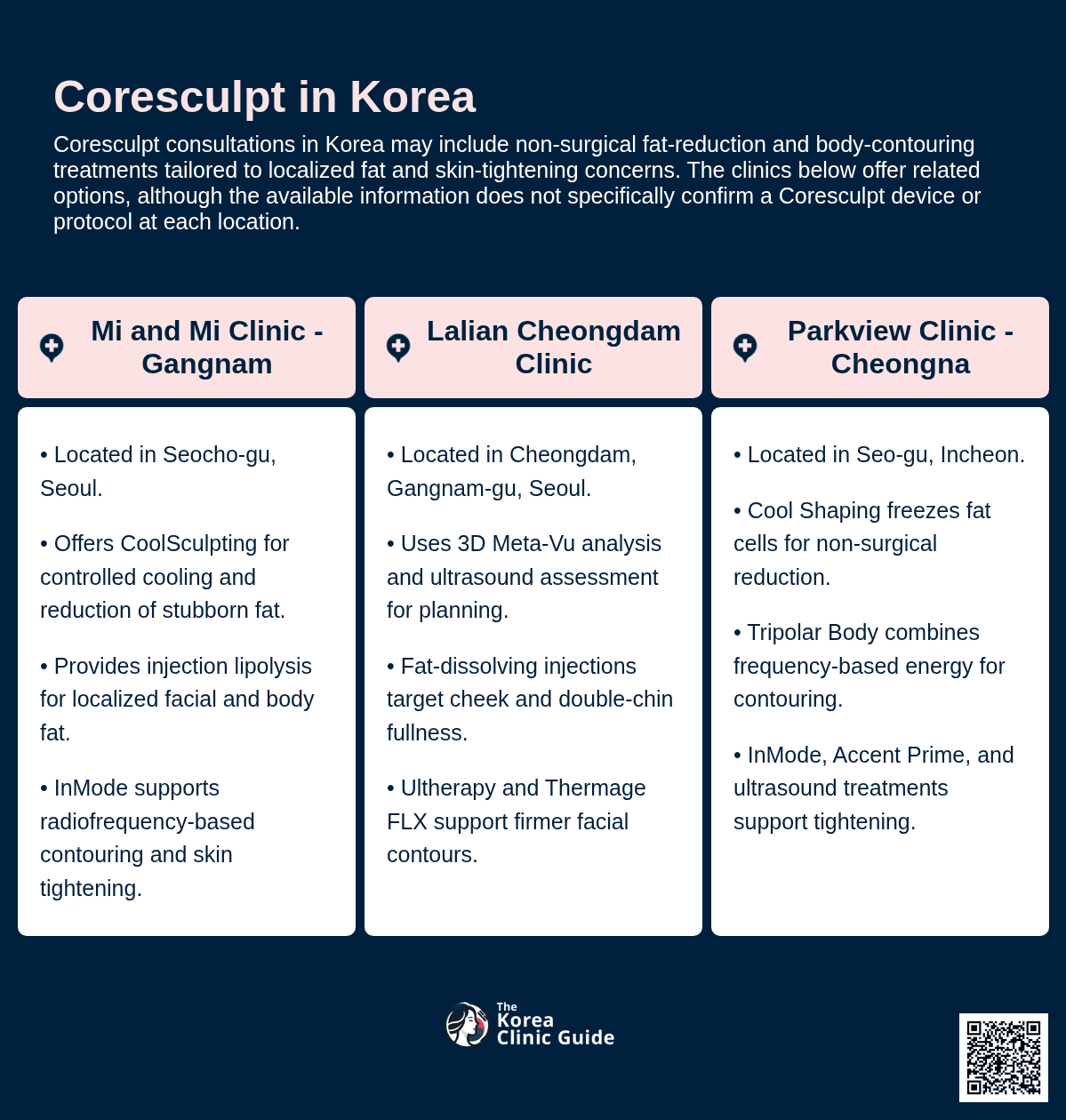
1. Mi and Mi Clinic - Gangnam
For body-contouring concerns related to Coresculpt, you can discuss non-surgical fat-reduction options at Mi & Mi Clinic - Gangnam, including CoolSculpting for controlled cooling of stubborn fat and injection lipolysis for localized fat deposits. The available clinic information does not specifically identify a Coresculpt device or protocol.
- URL: Mi and Mi Clinic - Gangnam Website
- Location: Seocho-gu, Seoul
- Body contouring options:
- CoolSculpting is described as a non-invasive treatment that uses controlled cooling to reduce stubborn fat, with treated fat cells processed by the body over time.
- Injection lipolysis is offered for localized fat deposits in the face and body that may be resistant to diet and exercise.
- InMode lifting is listed as a radiofrequency-based option for contouring and tightening of the face and body.
- Related aesthetic services: The clinic also lists thread lifting, Ulthera, Botox, dermal fillers, laser skin treatments, acne and scar care, pigmentation treatment, and laser hair removal.
2. Lalian Cheongdam Clinic
For a Coresculpt consultation, Lalian Cheongdam Clinic’s documented contouring approach centers on personalized facial design, with fat-dissolving injections for localized cheek or double-chin fullness and diagnostic assessment to help tailor treatment depth and planning. The provided information does not confirm that the clinic offers Coresculpt specifically.
- URL: Lalian Cheongdam Clinic Website
- Location: 2nd floor, Dosan-daero 59-gil, 9, Gangnam-gu, Seoul, South Korea
- Contour assessment and planning:
- 3D Meta-Vu skin analysis assesses concerns including pores, wrinkles, pigmentation, and skin tone to support treatment planning and tracking.
- Ultrasound examination is used to evaluate soft-tissue layers, including fat and muscle depth, so treatment approach and depth can be matched to your anatomy.
- Facial contouring options:
- Fat-dissolving injections are listed for localized facial fat, including cheek fullness and double-chin areas, with a focus on jawline refinement.
- Juvederm and Restylane fillers are used for structured volume support and contour balance in areas such as the cheeks, temples, chin, forehead, and nasolabial folds.
- Radiesse is listed as a biostimulatory filler for contour definition and collagen stimulation.
- Skin-tightening support:
3. Parkview Clinic - Cheongna
For body contouring related to Coresculpt, Parkview Clinic - Cheongna offers non-surgical options that include Cool Shaping to freeze fat cells and Tripolar Body, which combines high- and mid-frequency energy with low-power treatments in a personalized contouring plan. The clinic information does not specifically confirm a Coresculpt device or treatment protocol.
- URL: Parkview Clinic - Cheongna Website
- Location: Seo-gu, Incheon
- Body contouring options:
- Cool Shaping is described as a non-surgical fat-reduction treatment that freezes fat cells for removal.
- Tripolar Body combines high- and mid-frequency energy with low-power complex treatments for personalized body contouring.
- InMode is listed as combining radiofrequency and ultrasound energy for skin tightening and fat reduction.
- Related tightening treatments:
- Accent Prime is offered for skin tightening through frequency-based collagen stimulation.
- Ulthera and Shringk Universe are listed as ultrasound-based lifting treatments that promote collagen production.
- Other available care: The clinic lists pigment and resurfacing lasers, acne and acne-scar treatments, laser hair removal, hair and scalp care, nail-fungus laser treatment, and thyroid-scar treatment.
CoreSculpt From Start to Finish
- Initial inquiry and remote screening — Ask whether the clinic offers an English or virtual consultation. Send treatment goals, current photographs if requested, previous abdominal or body procedures, complete medication list, implant details, pregnancy possibility, and any history of hernia, neurologic symptoms, cardiac disease, clotting problems, or skin disease.
- Device and plan confirmation — Obtain the manufacturer, model, proposed body area, planned session duration, and whether treatment is standalone MST-1002 or combined with radiofrequency or another modality. Do not assume that services marketed as “CoreSculpt” are identical.
- In-person assessment — The clinician reviews medical and surgical history, medicines including anticoagulants, skin integrity, sensation, abdominal pain or bulging, and all implanted or retained metal/electronic devices. Standardized photographs and circumference measurements can document baseline appearance but do not independently prove muscle gain or fat loss.
- Pre-treatment set-up — No routine fasting, anesthesia, sedation, injections, or incisions are expected for standalone treatment. Remove jewelry and metal near the treatment field; keep phones, smartwatches, payment cards, and other magnetic or electronic items away from the operating device.
- Probe positioning and stimulation — The practitioner places and secures the two coil probes over the selected abdominal or gluteal area using belts or support equipment. Treatment starts at low intensity and is increased according to tolerance. Rhythmic involuntary muscle contractions are expected; report sharp pain, dizziness, palpitations, numbness, unusual weakness, or any concern about an implant immediately.
- Session completion and discharge — The programmable device time is 0–60 minutes. Thirty-minute sessions are common in marketing and comparable-device research, but this is not a validated universal CoreSculpt protocol. After a routine session, patients generally leave directly without a recovery-room stay.
- Immediate recovery and scheduling — Resume ordinary activity when comfortable. Review muscle soreness, redness, and the clinic’s proposed interval before scheduling further sessions; do not judge contour change after one treatment.
- Overseas follow-up — Complete agreed standardized photos and measurements after the series. Seek local in-person medical care for significant symptoms rather than relying solely on remote cosmetic follow-up.
Alternatives to CoreSculpt
The appropriate alternative depends on whether the main concern is muscle conditioning, localized fat, loose skin, abdominal-wall separation, or a combination. Noninvasive treatments involve less downtime but generally offer subtler changes; surgical options can address larger fat deposits, excess skin, or structural problems but involve anesthesia, wounds, and longer recovery.
Emsculpt
- Closest treatment category — Emsculpt is the closest noninvasive alternative for electromagnetic muscle-stimulation goals.
- Evidence tradeoff — Published HIFEM evidence is mainly associated with Emsculpt/Emsculpt NEO, rather than CoreSculpt, although systematic reviews still identify limited study quality and short follow-up in much of the literature.
CoolSculpting
- Primary goal — CoolSculpting uses cryolipolysis for localized subcutaneous-fat reduction, not muscle conditioning.
- Tradeoff — Consider it when pinchable fat is the concern; it will not strengthen abdominal or gluteal muscles and has a distinct adverse-effect profile.
Fat-Dissolving Treatments
- Primary goal — Fat-dissolving injections and fat-dissolving laser target localized fat rather than muscle.
- Tradeoff — Product authorization, technique, evidence, swelling, and complication risk vary considerably. Confirm the exact product and treatment plan.
Liposuction or BodyTite
- Primary goal — Abdominal liposuction provides more direct reduction of subcutaneous fat; BodyTite is a more invasive radiofrequency-assisted contouring option when fat reduction and tissue tightening are priorities.
- Tradeoff — Neither strengthens abdominal muscle. Both introduce procedural recovery and risks such as contour irregularity, fluid collections, and, for surgery, anesthesia and thromboembolic considerations.
Diastasis Repair or Tummy Tuck
- Primary goal — Diastasis recti repair or a tummy tuck can address meaningful abdominal-wall laxity, excess skin, substantial muscle separation, or selected hernia-related concerns.
- Tradeoff — These are surgical procedures with scars and substantial recovery, but cosmetic electromagnetic stimulation is not a substitute for assessment of a symptomatic bulge or clinically significant separation.
How Can I Prepare for CoreSculpt?
- Disclose implants early — Send implant cards, operative reports, and device information before booking when any pacemaker, ICD, neurostimulator, drug pump, implanted hearing device, metallic IUD, artificial joint, plate, screw, clip, coil, or retained metal is present. Do not assume a remote implant is irrelevant.
- Review medicines; do not stop them alone — Tell the clinician about anticoagulants, antiplatelets, diabetes medicines, seizure medicines, weight-loss medicines, supplements, and any treatment affecting bleeding, sensation, muscle function, or cardiac rhythm. Do not independently stop prescription medication; the clinician managing that medicine must direct any change.
- Screen for conditions requiring deferral — Report pregnancy, breastfeeding, menstruation, cancer, fever, cardiac or pulmonary disease, clotting history, active bleeding, neuropathy, allergies, and previous body surgery. Ask the treating clinician to apply the model-specific labeling to the individual situation.
- Protect the treatment area — Arrive with clean, intact abdominal or gluteal skin. Postpone treatment over wounds, burns, rash, eczema, infection, inflammation, allergy, or recently operated skin until medically assessed and healed.
- Plan food and transport simply — Routine fasting and a companion are not ordinarily needed because standalone CoreSculpt does not usually use sedation. Eat and hydrate normally unless the clinic gives different instructions.
- Remove metal and protect electronics — Take off jewelry and metal near the body area. Keep phones, watches, payment cards, tablets, USB drives, and other magnetically sensitive items away while the machine operates.
- Keep travel flexible for combination care — A standalone session rarely requires itinerary changes, but book flexible flights and accommodation when combining treatment with radiofrequency, injections, or surgery.
Travel note: Send medical information before purchasing non-refundable flights. A last-minute exclusion because of an implant or medical history is safer than proceeding without complete screening.
Confirm the treating clinic’s individualized requirements, which take precedence over general guidance.
Aftercare Advice
Treat post-session soreness as a signal to reduce load on the stimulated muscles, not as proof that the treatment has worked.
- Activity — Resume normal daily activity and travel when feeling well. Reduce strenuous exercise involving the treated muscle group until soreness or spasm is mild and comfortable.
- Expected short-term effects — Temporary muscle pain, spasm, joint or tendon discomfort, and localized redness are listed in the device instructions. Record symptoms and tell the clinic if they are more than mild, worsening, or persistent.
- Skin and garments — Standalone treatment does not ordinarily require wound care, antibiotics, compression garments, or special skincare because there are no incisions or injections. Follow the aftercare of any additional procedure instead.
- Warning signs — Contact the clinic promptly for worsening pain, persistent weakness, marked swelling, blistering or burn, fever, infection signs, palpitations, or a suspected implant interaction. Seek urgent care for chest pain, trouble breathing, fainting, or acute neurologic symptoms.
- Results and review — Do not assess contour change immediately after one session. Compare standardized photographs and measurements only after the planned series and follow-up, recognizing that CoreSculpt-specific outcome and durability data are not established.
Follow the treating doctor’s individualized instructions and contact the clinic promptly when something appears wrong.
Frequently Asked Questions
Related Blogs
Double Chin Liposuction in Korea: Candidacy, Recovery, Travel Timing, and Alternatives
Double chin liposuction removes superficial submental fat through tiny incisions using tumescent fluid and a narrow cannula, with neck lift or chin procedures considered for lax skin, muscle bands, or weak chin projection. International patients visiting Korea should plan a 7–10 day stay, compression and early follow-up, flexible flights, and remote aftercare arrangements.
Updated: Oct 12, 2026
Bra Line Fat: Back Liposuction in Korea
Considering Korea for bra line fat? This guide explains back liposuction—from tumescent, ultrasound-assisted liposuction (UAL) and power-assisted liposuction (PAL) to laser-assisted liposuction (SmartLipo)—plus radiofrequency-assisted lipolysis (BodyTite), Renuvion, and non-surgical options like CoolSculpting and deoxycholic acid. For excess skin, we outline the bra-line back lift and trunkplasty,
Updated: Oct 12, 2026
Upper Back Rolls Treatment in Korea: CoolSculpting and Back Liposuction
Struggling with “bra bulge” or upper back rolls? Our guide explains the medical side—dorsocervical fat pad (buffalo hump), lipedema, and lipoma—and compares treatment options in Korea. Learn who qualifies for CoolSculpting and back liposuction (including VASER and laser-assisted techniques), recovery timelines, costs, and all-inclusive medical tourism packages. Discover why Korea’s technology, sur
Updated: Oct 12, 2026
Full Face Fat Reduction with Face Liposuction in Korea: Ultimate Guide to a Slimmer Look
Discover how Korea leads in facial fat treatments like submental liposuction and buccal fat removal for full face fat and round face concerns. This comprehensive guide highlights medical causes such as Moon Facies and offers expert insights into cosmetic procedures available in South Korea. Learn about costs, recovery, and choosing the right procedure for a more sculpted, confident look—all within
Updated: Oct 12, 2026
Clinics offering CoreSculpt

Mi and Mi Clinic - Gangnam: Premier Beauty & Well-being Services in Korea
Gangnam Station

Parkview Clinic - Cheongna, Korea: Specialized Dermatology & Premium Laser Treatments for Skin, Hair, and Body Care
Seo-gu Office
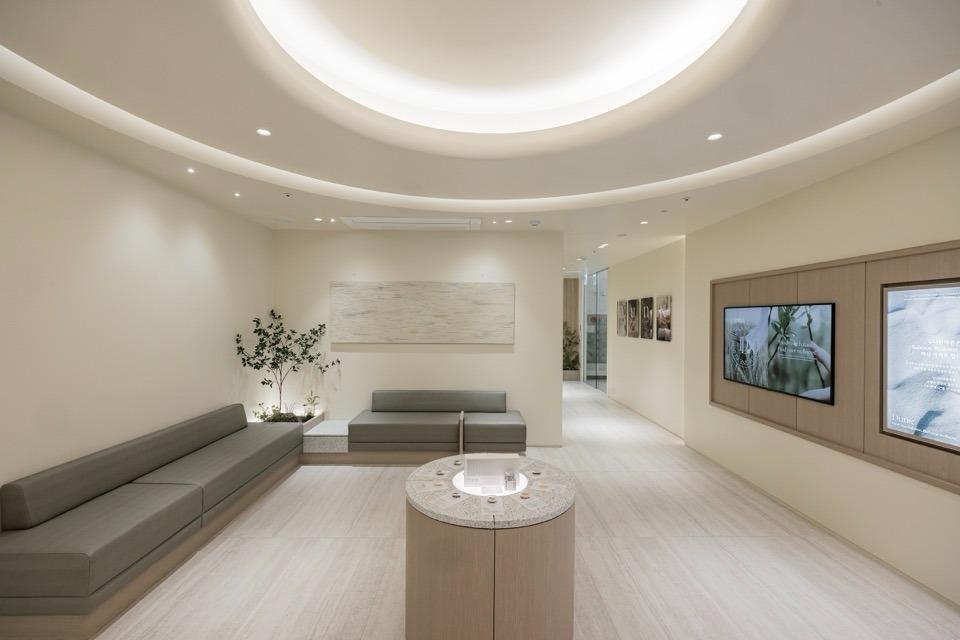
Duna korean medicine clinic - Seongsu, Korea: Acupuncture & Herbs
Seongsu
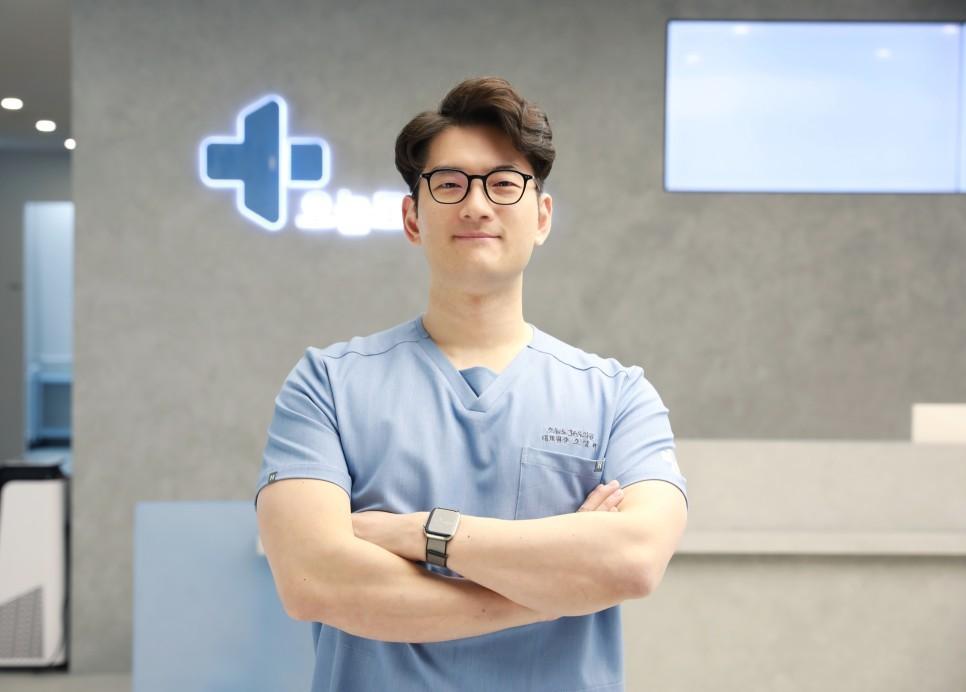
Everyday365 Clinic in Korea: Comprehensive Medical and Wellness Services including Emergency Care, Pain Management, and More
Paju