
Medical Tourism Blog
Body Botox in Korea: Calf and Trapezius Contouring, Recovery, and Travel Planning
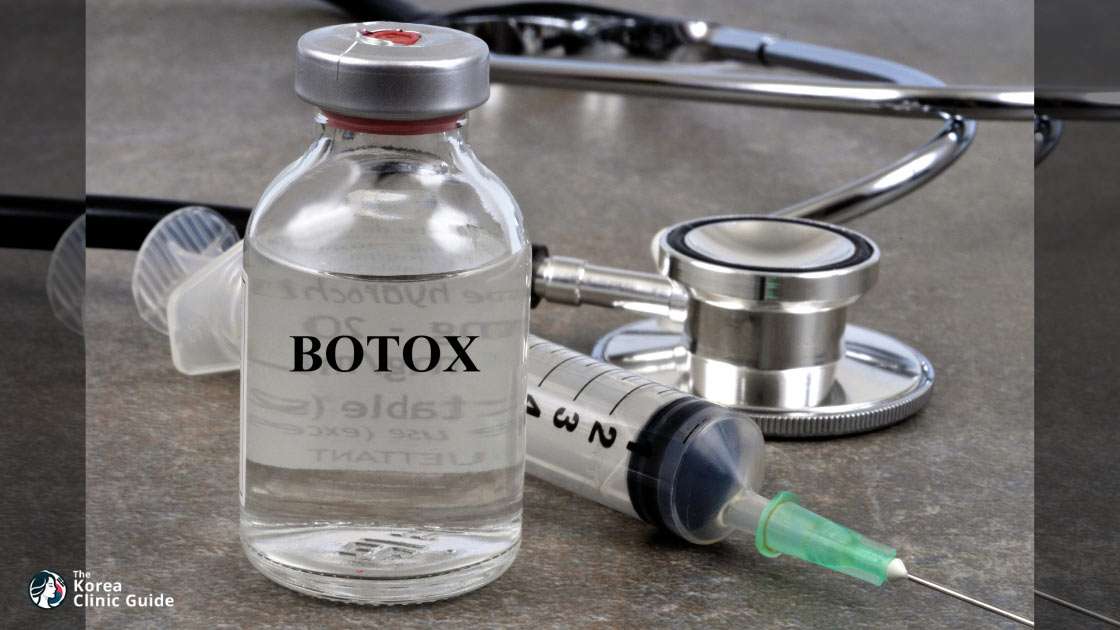
Table of contents
- Body Botox at a Glance
- What Is Body Botox?
- Who Is a Good Candidate for Body Botox?
- What Are the Different Types of Body Botox?
- Why Visit Korea for Body Botox?
- Key Information for International Patients
- Which Are the Best Clinics in Korea for Body Botox?
- How Much Does Body Botox Cost in Korea?
- Body Botox From Start to Finish
- Alternatives to Body Botox
- How Can I Prepare for Body Botox?
- Aftercare Advice
Considering treatment in Korea? Everything you need to know e.g. — how to avoid scams, visas, interpreters, recovery tips — in our Medical Tourism Master Guide. Plan with confidence in minutes, not weeks!
Last updated: September 2026
Body Botox at a Glance
- What it treats — Body Botox uses botulinum toxin injections to temporarily weaken a selected hypertrophic muscle—most commonly the upper trapezius or gastrocnemius—to gradually reduce muscle-driven prominence; it does not remove fat, tighten loose skin, treat cellulite, or cause weight loss.
- Typical cost in Korea — Prices are listed at ₩300,000–₩3,300,000 (about US$200–$2,400), varying by target muscle, toxin product, total dose, whether both sides are treated, and use of ultrasound or measurements.
- Results take time — Muscle weakening begins over days, but visible contour change should usually be evaluated at 8–12 weeks; small calf and trapezius studies have measured changes from roughly 1–3 months, while the longevity of repeated treatment remains uncertain.
- Best candidates — Suitable candidates are adults with confirmed muscle-dominant calf or upper-trapezius bulk who accept temporary contour change and possible loss of strength or endurance; it is not a good match when fullness is mainly fat, swelling, loose skin, lipedema, or skeletal shape.
- Function is the key tradeoff — Calf injections can reduce push-off strength, balance, running capacity, or endurance, while trapezius injections can cause neck or shoulder fatigue and affect lifting or overhead work; urgent assessment is needed for progressive weakness or breathing, swallowing, or speech problems.
- Korea travel plan — Treatment is normally an outpatient procedure without sedation, and light activity is usually possible the same day; although one treatment day is medically sufficient, international patients should plan 2–3 days in Korea and arrange result review remotely or at home rather than booking a short-trip touch-up.
- Korea-specific evidence — Korea has procedure-specific research for both major targets, including a 2024 randomized study of 20 patients showing significant calf-circumference reduction at 8 weeks; this supports local experience but does not prove Korea is safer or more effective than treatment elsewhere.
What Is Body Botox?
Body Botox uses injections of botulinum toxin into selected enlarged body muscles to temporarily reduce their activity and apparent bulk. It is intended to soften muscle-driven prominence, most often in the calves or upper shoulders, rather than reduce fat or tighten loose skin. It is a minimally invasive injectable treatment performed without surgery.
Who Is a Good Candidate for Body Botox?
- Muscle-dominant contour concern — Good candidates want to reduce prominence from confirmed upper-trapezius hypertrophy or muscular calves, rather than fat, loose skin, cellulite, or swelling.
- Realistic functional priorities — Suitable patients accept gradual, temporary contour change and understand that weakening a muscle can reduce strength or endurance.
- Stable adult anatomy — Adults with stable body weight, a defined target area, and no active skin problem at the injection site are better suited to meaningful assessment.
- Calf candidates — Calf Botox is most relevant when the gastrocnemius enlarges visibly during standing or rising onto the toes; the clinician should also assess asymmetry, gait, venous issues, and leg swelling.
- Trapezius candidates — Shoulder-line treatment suits patients with bulky upper trapezius who do not rely heavily on sustained shoulder elevation, overhead lifting, or neck-and-shoulder strength for work or sport.
Body Botox is unsuitable when fullness is mainly fat, skin laxity, edema, lipedema, skeletal shape, or an untreated medical condition. Do not have elective treatment during pregnancy or breastfeeding, with infection or inflammation at the injection site, or with a known allergy to the selected toxin product or its ingredients. Myasthenia gravis, Lambert–Eaton myasthenic syndrome, peripheral motor neuropathy, amyotrophic lateral sclerosis, and existing swallowing, speech, breathing, or significant respiratory problems require specialist assessment or exclusion. The injector must also consider prior toxin exposure, previous adverse reactions, posture, muscle symmetry, and the functional consequences of weakening the particular muscle.
What Are the Different Types of Body Botox?
“Body Botox” is a marketing umbrella term, not one standardized protocol. The strongest target-specific evidence concerns the calves and upper trapezius; evidence for other marketed body areas is substantially weaker.
- Trapezius / shoulder-line Botox — Multiple injections into the upper trapezius aim to reduce shoulder prominence and soften the neck-to-shoulder line. An ultrasound-guided split-shoulder study reported measurable differences through one year after a single treatment, but included participants with hypertrophy and myalgia, so it does not establish a routine one-year aesthetic result.
- Calf / gastrocnemius Botox — Injections are tailored to the medial and sometimes lateral gastrocnemius heads for muscular calf prominence or asymmetry. A Korean randomized study found a significant average circumference reduction at eight weeks in 20 patients, with no significant difference between the two studied dose groups.
- Other body-muscle targets — Arms and other areas are sometimes marketed for muscle slimming, but published anatomy-specific contouring evidence is limited. A facial Botox plan must not be simply scaled up for a larger body muscle.
Why Visit Korea for Body Botox?
Korea has published procedure-specific research on both gastrocnemius and trapezius contouring injections. That supports access to clinicians familiar with these target muscles, but it does not prove that treatment in Korea is safer or more effective than treatment elsewhere. Select a provider on the basis of anatomical assessment, documented product use, and a clear follow-up plan.
- Korean calf research — A 2024 Korean randomized trial measured calf circumference after gastrocnemius injections at eight weeks, providing directly relevant—though small-scale—evidence for muscular calf contouring in this study.
- Trapezius-focused clinical literature — Korean-led trapezius research has used imaging and ultrasound-guided approaches, including a small trial with follow-up after a single treatment through one year. Small samples and mixed patient populations remain important limitations.
- International-care infrastructure — Korea’s official Medical Korea platform provides information for overseas patients. Confirm directly whether the chosen clinic offers consultation and written aftercare support in a language you understand.
- Product accountability — Ask for the toxin brand, lot or batch number, expiry date, dilution, total dose, dose on each side, and injection map. Botulinum-toxin units are product-specific and not interchangeable by a fixed conversion ratio.
Key Information for International Patients
- Minimum stay — One treatment day is medically sufficient for an uncomplicated session without sedation. Plan 2–3 days in Korea for examination, injections, and time to address bruising, unexpected weakness, or travel questions.
- Repeat visits — Do not book a routine touch-up during a short trip. Contour change is assessed around 8–12 weeks, after the muscle response is clear; arrange remote review or assessment with a clinician at home.
- Flying — No high-quality evidence establishes a universal minimum delay before commercial flying after uncomplicated intramuscular toxin injections. Do not schedule treatment immediately before strenuous travel, isolated travel, or activities requiring dependable calf or shoulder strength.
- Itinerary impact — Light sightseeing is generally feasible the same day, but postpone steep hikes, sprinting, climbing, heavy luggage, maximal overhead lifting, and long backpack carrying until function is clearly normal.
- Records and remote follow-up — Leave with written treatment documentation and an emergency contact. Include the clinician’s name, product, batch or lot, expiry, dilution, total dose, dose by side, and injection-point map.
Travel note: Arrange travel insurance and identify a medical service near home before departure. Seek urgent care locally for progressive weakness, breathing, swallowing, or speech difficulty rather than waiting for an overseas clinic to respond.
Which Are the Best Clinics in Korea for Body Botox?
Listed below are some of the best clinics in Korea for body botox.
1. PangPang Clinic
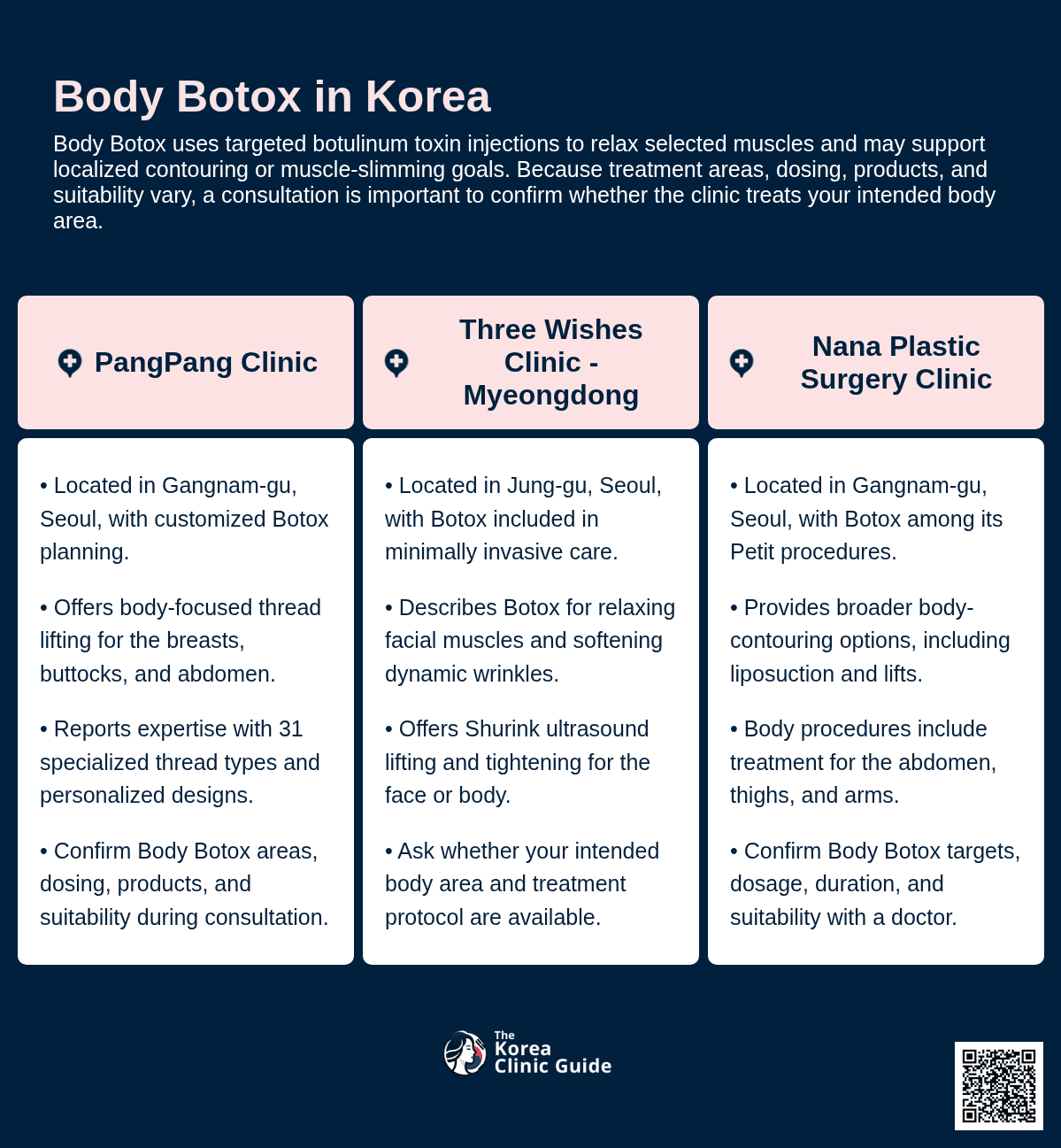
You may consider PangPang Clinic if you want a clinic with an established injectable offering alongside extensive expertise in body-focused thread lifting: its context notes customized Botox planning and thread-lifting options for areas including the breasts, buttocks, and abdomen. Specific Body Botox treatment areas, dosing, and suitability are not detailed, so these would need to be clarified during your consultation.
- URL: PangPang Clinic Website
- Location: Gangnam-gu, Seoul
- Relevant approach:
- Customized Botox treatments are described as part of the clinic’s aesthetic services.
- Thread lifting is offered for the breasts, buttocks, and abdominal area, providing a separate body-contouring and lifting option to discuss if relevant to your goals.
- Thread-lifting expertise:
- The clinic reports exclusive focus on thread lifting and the use of 31 specialized thread types for personalized planning.
- Its process includes doctor consultation, ultrasonic visual checks and pre-procedure design, with thread aftercare packages described for lifting treatments.
- The clinic states it established a Thread Lifting Research Institute and that its medical team participates in international beauty conferences through lectures and presentations.
2. Three Wishes Clinic - Myeongdong
You may consider Three Wishes Clinic - Myeongdong if you are looking for a clinic that offers Botox within a broader menu of minimally invasive aesthetic care. The supplied information describes Botox for facial dynamic wrinkles, while Body Botox-specific target areas, products, and treatment protocols are not listed; you should confirm whether your intended body area can be treated.
- URL: Three Wishes Clinic - Myeongdong Website
- Location: Jung-gu, Seoul
- Botox information:
- Botox injections are described as relaxing facial muscles to soften dynamic wrinkles, including crow’s feet and forehead lines.
- The clinic describes this as a treatment with minimal downtime.
- Related non-surgical services:
- Shurink ultrasound treatment is offered for lifting and tightening the face or body without needles or downtime.
- Laser hair removal is available for almost all body areas.
- Fat-dissolving injections are listed for localized contouring, with the examples provided focused on the chin, jowls, and jawline.
3. Nana Plastic Surgery Clinic
You may consider Nana Plastic Surgery Clinic if you want to discuss Botox in a clinic that also provides a broad range of body-contouring procedures. Botox is listed among its non-surgical “Petit” aesthetic options, but the provided information does not specify Body Botox areas, dosing, or expected duration, so a consultation would be needed to determine whether it matches your plans.
- URL: Nana Plastic Surgery Clinic Website
- Location: Gangnam-gu, Seoul
- Botox and non-surgical options:
- Botox is included among the clinic’s small non-surgical sculpting procedures.
- Other dermatology offerings include tightening treatments using laser or radiofrequency methods, slimming treatments, and laser therapies.
- Body-contouring services:
- Body procedures listed include liposuction for areas such as the abdomen, thighs, and arms; tummy tuck surgery; arm or thigh lifts; and Brazilian butt lift surgery.
- The clinic describes its aesthetic procedures as supported by extensive clinical data and diverse surgical experience.
How Much Does Body Botox Cost in Korea?
Body Botox is listed at ₩300,000–₩3,300,000 (approximately US$200–$2,400). Individual quotes vary because treatment plans differ in the muscle target, product and dose, and injection technique required.
| Procedure Price | Korean Won (₩) | USD ($) |
|---|---|---|
| Low Price | ₩300,000 | $200 |
| High Price | ₩3,300,000 | $2,400 |
Exchange rate as of 2026-09-06: 1 KRW = 0.000741 USD.
What Affects the Price?
- Target muscle and treated areas — Upper-trapezius treatment and gastrocnemius calf treatment require different anatomical assessment and injection plans. Calf contouring may involve the medial and lateral gastrocnemius heads and treatment on both legs, while trapezius treatment is planned by shoulder side and muscle pattern; treating more muscle areas requires more injection points and clinical time.
- Toxin product and total dose — Larger hypertrophic body muscles require a target-specific dose plan rather than a facial Botox protocol. The selected botulinum-toxin product and total dose affect consumable use; product units are not interchangeable across brands, so quoted doses must identify the specific product.
- Guidance and measurement requirements — An ultrasound-guided trapezius approach, or baseline and follow-up circumference, photography, or ultrasound measurements, adds equipment use and appointment time. These steps can support muscle targeting, symmetry assessment, and later contour evaluation.
Cost tip: Request an itemized quote stating what is included, including the exact toxin product, total dose, dose by side, planned target muscles, injection guidance or measurements, and follow-up arrangements.
The US$200–$2,400 conversion is approximate, based on the exchange rate dated 2026-09-06. Check the exchange rate again when budgeting.
Body Botox From Start to Finish
- Remote enquiry and screening — Send clear photographs at rest and, for calves, while standing on tiptoe if requested. Ask whether an English-language or virtual consultation is available, and disclose prior toxin treatment, medical conditions, medicines, allergies, pregnancy possibility, and sport or work demands.
- In-person assessment — The clinician examines whether the fullness is muscle-dominant. Calf assessment can include standing examination, symmetry, circumference, photographs, and ultrasound; trapezius assessment considers muscle thickness, posture, neck symptoms, scapular mechanics, and shoulder function.
- Plan and consent — Confirm the exact target muscle, product, dilution, dose per side, injection points, expected gradual result, functional tradeoffs, and the limited evidence base. Do not accept a fixed dose copied from another toxin brand because units cannot be converted reliably between products.
- Injection session — After skin cleansing, the injector places multiple fine-needle intramuscular injections. Trapezius protocols can use ultrasound guidance; calf placement is individualized between gastrocnemius heads. General anesthesia is not normally required, and the procedure is usually completed in one outpatient visit.
- Observation and discharge — A brief observation period follows. Expect possible pinpoint bleeding, redness, swelling, tenderness, or bruising, then collect the written treatment record and the clinic’s contact instructions.
- Early recovery — Resume low-intensity daily activity the same day when feeling well. Avoid direct pressure or deep massage over the treated muscle and delay demanding calf or shoulder activity for at least the first day.
- Result review and overseas follow-up — Weakening develops over days, while visible muscle-bulk change takes longer. Send standardized photographs and functional updates at about 8–12 weeks; published calf and trapezius studies recorded changes from roughly one to three months and followed outcomes to six months or longer in small cohorts.
Alternatives to Body Botox
The right alternative depends on what creates the visible fullness. Botox targets muscle bulk and carries a temporary strength tradeoff; fat-directed and skin-tightening procedures address different tissues, while surgery is more invasive but can provide a larger structural change.
Targeted Calf or Trapezius Botox
- Focused option — For patients whose goal is confined to one proven muscle target, consider dedicated trapezius Botox or calf reduction Botox planning rather than a broad “body Botox” package.
- Tradeoff — Results are gradual and temporary, and treatment can reduce push-off, lifting, posture, or endurance function when dosing or anatomy is poorly matched.
Liposuction
- Best anatomical fit — Full-body liposuction addresses localized subcutaneous fat, not a hypertrophic calf or trapezius muscle.
- Tradeoff — It is surgery with incisions, compression, a longer recovery period, and different risks, but it is more relevant when fullness remains soft and does not contract prominently with muscle use.
Fat-Dissolving Laser or Radiofrequency Contouring
- Best anatomical fit — Body fat-dissolving laser and BodyTite are fat-directed or tissue-tightening approaches, not treatments for muscle hypertrophy.
- Tradeoff — These options do not intentionally weaken a muscle, but will not reliably slim a contour caused principally by gastrocnemius or trapezius bulk.
How Can I Prepare for Body Botox?
- Medication and supplement review — Give the prescriber a full list of prescription medicines, over-the-counter products, vitamins, and supplements before booking. Specifically report anticoagulants, antiplatelet drugs, aminoglycoside antibiotics, muscle relaxants, sedatives, and previous botulinum-toxin treatments; do not stop prescribed anticoagulants or antiplatelet medicines without the prescriber who manages them.
- Medical disclosure — Report allergies, prior poor response or toxin-related reactions, neurologic disease, weakness, swallowing or breathing symptoms, recent surgery, pregnancy possibility, and breastfeeding.
- Skin condition — Postpone treatment for rash, sunburn, folliculitis, open skin, or infection over the calves, shoulders, or planned injection sites.
- Fasting and alcohol — Fasting is not normally needed when no sedation is planned. Avoid heavy alcohol for 24 hours before treatment to reduce avoidable bruising and dehydration concerns.
- Clothing and transport — Wear loose clothing that exposes the shoulders or calves. Arrange a simple route back to accommodation and avoid planning strenuous exercise, steep walking, climbing, or heavy-luggage handling immediately after the appointment.
- Travel schedule — Keep flights and major activities flexible for 2–3 days in Korea. Avoid booking the session immediately before a trekking itinerary, sporting event, physically demanding work, or solo onward travel.
Travel note: Bring a translated medication list and copies of relevant medical records. Request written documentation in English or another language that can be used by a clinician at home.
Confirm the treating doctor’s clinic-specific medicine, alcohol, exercise, and travel requirements; individualized instructions take precedence over general guidance.
Aftercare Advice
Protect function first: body Botox has little visible downtime, but the treated muscle can become weaker before contour reduction is apparent.
- Activity — Light walking and normal low-intensity activity are usually acceptable on the treatment day. Avoid strenuous exercise, sauna or steam rooms, hot yoga, and heavy alcohol for about 24 hours; this is a practical precaution, not a body-Botox-specific rule supported by high-quality evidence.
- Pressure and massage — Do not rub, deeply massage, use percussion devices on, aggressively stretch, or apply sustained direct pressure to the treated muscle on the treatment day unless the injector gives different instructions.
- Calf protection — Postpone sprinting, steep hiking, maximal calf raises, climbing, and other forceful push-off activities until gait, balance, and endurance are normal.
- Shoulder protection — Avoid maximal overhead lifting, very heavy backpacks, and tasks requiring sustained shoulder elevation when neck fatigue, shoulder weakness, or altered posture occurs.
- Expected effects and review — Tenderness, pinpoint bleeding, redness, swelling, and bruising usually settle over several days. Take standardized photographs and arrange contour review around 8–12 weeks rather than judging the result immediately.
- Urgent warning signs — Contact the clinic promptly for worsening pain, warmth, redness, drainage, fever, marked asymmetry, falls, walking difficulty, or inability to lift the arms normally. Seek emergency care for breathing, swallowing, or speech difficulty; double vision; eyelid drooping; facial weakness; or generalized or progressive weakness.
Follow the treating doctor’s instructions over this general guidance, and contact the clinic promptly when recovery appears abnormal.
Frequently Asked Questions
Related Blogs
Calf Hypertrophy Solutions in Korea: Calf Reduction Botox for Slimmer Legs
Discover how Korea leads in calf hypertrophy treatment with non-surgical Calf Reduction Botox. This minimally invasive procedure targets bulky calf muscles, offering slimming results with less downtime. Learn about the causes of calf hypertrophy, what to expect during treatment, costs, and why Korea is a top medical tourism destination for this innovative solution. Achieve natural, proportionate l
Updated: Nov 10, 2026

Facial Asymmetry Solutions in Korea: Masseter Botox, Facial Asymmetry Correction & Face Thread Lift
Explore how Korea leads in non-invasive facial asymmetry correction with treatments like Masseter Botox, Dermal Fillers, and Face Thread Lifts. This article highlights effective solutions for mild facial soft tissue imbalance, emphasizing Korea’s advanced clinics, affordable costs, and expert practitioners. Discover how these minimally invasive procedures can help achieve facial harmony, improve a
Updated: Nov 10, 2026

Cobblestone Chin Solutions: Chin Botox Procedures in Korea for Smoother Skin
Discover the benefits of Chin Botox in Korea for cobblestone chin treatment. This minimally invasive procedure targets overactive mentalis muscles to smooth uneven, pebbly chin skin often caused by aging or genetics. Korea's top clinics offer expert injections that diminish muscle-driven dimples, enhancing facial harmony and confidence. Experience affordable, high-quality medical tourism in Korea,
Updated: Nov 7, 2026
Effective Jaw Clenching Solutions: Masseter Botox & Bruxism Treatment in Korea
Discover effective treatments for jaw clenching (bruxism) in Korea, including Masseter Botox injections and custom night guards. Learn how Korea's advanced medical tourism system offers safe, affordable, and personalized solutions to relieve symptoms like jaw pain, headaches, and dental damage. Explore the step-by-step process and benefits of receiving bruxism treatment in Korea, a top destination
Updated: Nov 6, 2026
Clinics offering Body Botox

365mc Hospital: Korea's Leading Liposuction and Body Contouring Clinic with Innovative AI Technologies and Comprehensive Patient Care
Gyodae

THEPLUS Plastic Surgery Korea | Eye, Nose, Face & Body Surgery
Sinsa

Haru Clinic Korea | Fully-Customized Full-Face Non-Surgical Rejuvenation With Threads, Botox & Fillers
Sinsa

Made Young Plastic Surgery: Rejuvenating Aesthetic Excellence in Korea for Face Lifts, Contouring and More
Gangnam Station