Medical Tourism Blog
Vaginal Bleaching in Korea: Safety, Methods, Recovery and Travel Planning
Table of contents
- Vaginal Bleaching at a Glance
- What Is Vaginal Bleaching?
- Who Is a Good Candidate for Vaginal Bleaching?
- How Is Vaginal Bleaching Performed?
- Why Visit Korea for Vaginal Bleaching?
- Key Information for International Patients
- Which Are the Best Clinics in Korea for Vaginal Bleaching?
- How Much Does Vaginal Bleaching Cost in Korea?
- Vaginal Bleaching From Start to Finish
- Alternatives to Vaginal Bleaching
- How Can I Prepare for Vaginal Bleaching?
- Aftercare Advice
Considering treatment in Korea? Everything you need to know e.g. — how to avoid scams, visas, interpreters, recovery tips — in our Medical Tourism Master Guide. Plan with confidence in minutes, not weeks!
Last updated: September 2026
Vaginal Bleaching at a Glance
- External skin only — Despite the name, “vaginal bleaching” refers only to external vulvar, groin, perineal, mons pubis, or perianal skin; products and procedures must never be applied inside the vagina or on mucosal tissue.
- Korea cost — Listed pricing is ₩1,150,000–₩1,550,000 (about US$900–$1,100), with the final quote depending on the external area, method, test spot, diagnostic assessment, and follow-up included.
- Methods are not standardized — Options may include a clinician-supervised topical plan, very superficial external peel, or low-fluence pigment laser, but no validated protocol establishes the best product, settings, session count, or maintenance schedule for genital-area pigmentation.
- Results take weeks to judge — Mild stinging, redness, sensitivity, or temporary darkening may settle within days, but pigment change should not be assessed until inflammation resolves—often several weeks; burns or post-inflammatory discoloration can persist much longer.
- Screening comes first — Best candidates are adults with stable, diffuse external pigmentation and intact, symptom-free skin; new, asymmetric, raised, bleeding, ulcerated, multicolored, or changing spots require specialist assessment and sometimes biopsy before cosmetic treatment.
- Risk of worsening pigment — Sensitive vulvar skin can develop dermatitis, chemical burns, blistering, infection, scarring, uneven lightening, or darker post-inflammatory pigmentation, especially after aggressive peels, unverified products, or pigment lasers.
- Plan 3–5 days in Korea — Same-day discharge is typical for a consultation or test spot, but travelers having an in-office peel or laser should cautiously plan 3–5 days for an early review; Korea offers international-patient infrastructure, not proven superior pigment outcomes.
What Is Vaginal Bleaching?
Vaginal bleaching is a misleading term for cosmetic lightening of external vulvar or nearby anogenital skin, not the internal vagina. It aims to reduce the appearance of bothersome dark pigmentation, although natural color variation is common and results are unpredictable. It is non-surgical, using conservative topical care or, less commonly, a superficial peel or laser on selected external skin.
Who Is a Good Candidate for Vaginal Bleaching?
- Appropriate goal — Adults seeking a cosmetic change to stable, diffuse pigmentation on intact external vulvar, mons pubis, groin, perineal, or perianal skin after a medical examination.
- Suitable skin status — No current itching, burning, rash, cuts, folliculitis, herpes outbreak, unusual discharge, or infection.
- Realistic expectations — Candidates understand that normal genital color varies widely, no specific shade or symmetry can be guaranteed, and recurrence or uneven pigment change can occur.
- Assessment-first approach — Good candidates accept cause-directed care, observation, or no cosmetic treatment when friction, shaving, dermatitis, infection, or inflammation explains the darkening.
This commercial term is misleading: the vagina is internal, while treatment under consideration is limited to external skin. Never apply lightening products to the vaginal canal, cervix, clitoris, urethral opening, labia minora mucosa, or other mucosal tissue. New, asymmetric, raised, ulcerated, bleeding, multicolored, or changing pigmented lesions require assessment by a gynecologist, dermatologist, or vulvar specialist before cosmetic treatment; biopsy can be necessary because cosmetic fading must not delay diagnosis. Defer elective treatment during pregnancy, possible pregnancy, or attempts to conceive; breastfeeding, keloid tendency, diabetes, impaired healing, immunosuppression, and prior severe pigment reactions require individualized specialist review. Vulvar pain, burning, and itching also need diagnosis rather than cosmetic treatment, as these symptoms can reflect several vulvar conditions.
How Is Vaginal Bleaching Performed?
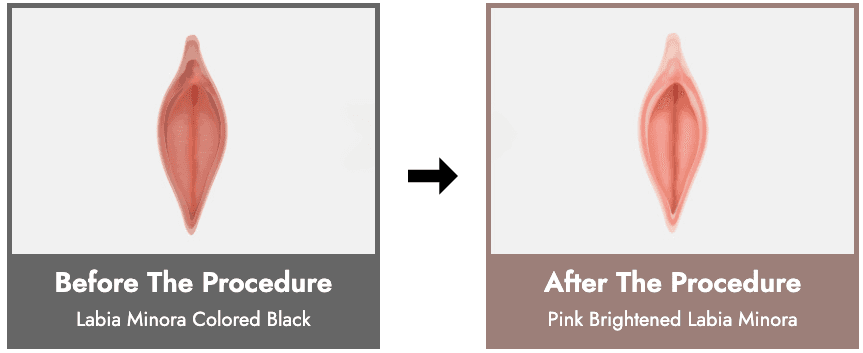
There is no standardized medical protocol for “vaginal bleaching.” The meaningful differences are the external target area, the cause of pigmentation, skin integrity, and the proposed method; evidence from facial pigmentation cannot simply be applied to genital skin.
- Cause-directed care — Stopping fragranced washes and abrasive exfoliation, reducing friction, changing irritating hair-removal practices, or treating dermatitis, folliculitis, or infection is often the lowest-risk approach.
- Clinician-supervised topical plan — Proposed ingredients can include hydroquinone, azelaic acid, kojic acid, alpha-hydroxy acids, tranexamic acid, niacinamide, arbutin, thiamidol, or retinoids. Evidence for these agents is largely from non-genital skin, and sensitive vulvar skin is susceptible to irritant and allergic contact dermatitis.
- Superficial external peel — A clinician may use limited exfoliation on selected, keratinized external skin. Deep peels, high acid concentrations, occlusion, and any application near mucosa raise the risk of burns, erosions, scarring, and worsening pigmentation.
- Pigment-targeting laser — Low-fluence laser treatment is sometimes marketed for selected external skin, but supporting evidence is limited and non-genital. Pigment lasers can trigger post-inflammatory hyperpigmentation or hypopigmentation, particularly in people with a prior pigmentary reaction.
- Not a lightening method — Intravaginal laser or radiofrequency “rejuvenation” does not treat external pigmentation and should not be sold as a substitute. ACOG distinguishes vaginal laser therapy from external skin concerns.
Why Visit Korea for Vaginal Bleaching?
Korea has established infrastructure for international medical visitors, which can make remote communication and treatment logistics more practical. It does not have proven superior safety, durability, or pigment outcomes for vulvar or anogenital lightening. Given the limited evidence, prioritize diagnostic expertise and complication planning over device branding or before-and-after images.
- International-patient system — Korea operates a registered medical-institution system for foreign patients, allowing travelers to check whether an institution is registered to serve international patients.
- Appropriate clinician selection — Seek a physician able to examine vulvar skin, recognize concerning lesions, and arrange biopsy or referral when indicated—not simply a cosmetic sales consultation.
- Evidence limitation — No robust trials establish an ideal topical concentration, peel depth, laser wavelength, fluence, number of sessions, or maintenance schedule for cosmetic lightening of vulvar, labial, perineal, or perianal skin. There is also no high-quality comparison showing better outcomes in Korea than elsewhere.
- Product transparency — Request the exact product name, ingredient list and concentration, or laser device and settings in writing. This matters because the FDA has warned that some illegal skin-lightening products contained mercury and/or undeclared or high levels of hydroquinone; “natural” or “intimate” labeling is not a safety assurance.
Key Information for International Patients
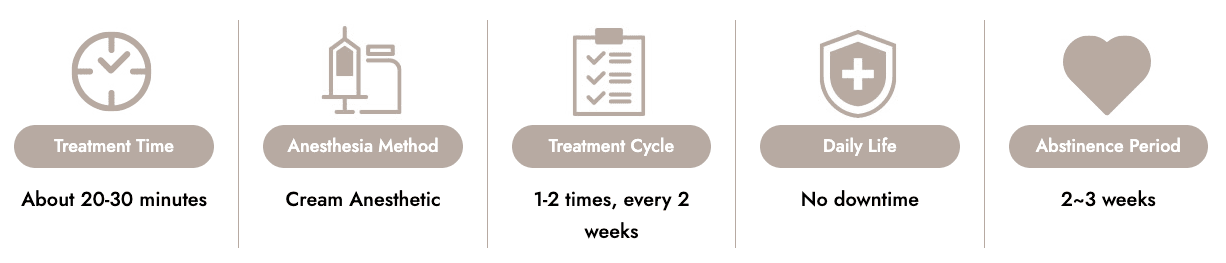
- Minimum stay — Same-day discharge is typical for an external-only consultation or test spot. For a superficial peel or pigment laser, plan 3–5 days in Korea for an early review; this is cautious travel planning, not an evidence-based mandatory stay.
- Repeat visits — No validated repeat-treatment interval exists. Do not book multiple sessions before the clinician sees how the skin heals and pigment settles.
- Flight timing — Do not take a long-haul flight with evolving blistering, open skin, fever, uncontrolled pain, suspected infection, or a need for urgent reassessment.
- Itinerary impact — A limited external procedure does not usually require hospital admission or general anesthesia. Still, avoid itineraries involving cycling, swimming, spa facilities, long walking days in tight clothing, or sexual activity while the treated skin is irritated.
- Remote follow-up — Obtain an English treatment record with the treated-area map, baseline photographs, ingredients and concentrations or laser settings, aftercare instructions, direct clinic contact, and a written escalation plan. A symptom check at 48–72 hours and healing assessment at about 2–6 weeks are practical, not validated, intervals.
Travel note: Arrange flexible flights and identify a local clinician at home before travel. Early irritation can settle within days, but burns, erosions, infection, and post-inflammatory pigment change can take weeks or longer to resolve.
Which Are the Best Clinics in Korea for Vaginal Bleaching?
Listed below are some of the best clinics in Korea for vaginal bleaching.
1. SH Clinic
For vaginal bleaching, SH Clinic offers care within a dedicated gynecology practice, where procedures are performed directly by an experienced, board-certified gynecologist. The clinic’s women’s-health focus may be relevant if you want vaginal-area aesthetic concerns considered alongside broader gynecologic care.
- URL: SH Clinic Website
- Location: Seocho-gu, Seoul
- Gynecology care:
- The clinic provides general gynecological care as well as vaginal rejuvenation options.
- Available gynecologic services include cervical and ovarian cancer screening, urinary incontinence treatment, and labiaplasty.
- Related vaginal treatments:
- Vaginal HIFU is offered as a non-surgical treatment intended to support vaginal-wall collagen remodeling and elasticity.
- Other listed options include vaginal fillers, stem-cell injections, vaginal tightening, and implant surgery.
- Clinician information:
- Surgeries and procedures are stated to be performed directly by a board-certified gynecologist.
- The gynecologist is described as having received a commendation from the Minister of Health and Welfare.
2. Bliss Clinic
For vaginal bleaching, Bliss Clinic may be a consideration if you want to discuss intimate-area appearance within a clinic that also provides women’s sexual-health services and preventive gynecologic checkups. The supplied information does not specify a vaginal-bleaching method, so you should confirm the treatment approach, suitability, and expected course during consultation.
- URL: Bliss Clinic Website
- Location: Gangnam-gu, Seoul
- Women’s health services:
- The clinic lists a sexual health service focused on women’s sexual well-being.
- Women’s health checkups use diagnostic systems for screening and early detection of female health concerns.
- Contraception and family-planning guidance are also available.
- Consultation: Online consultation is available for professional advice and support.
How Much Does Vaginal Bleaching Cost in Korea?
Vaginal Bleaching is listed at ₩1,150,000–₩1,550,000 (approximately US$900–$1,100). Individual quotes vary because this is not a standardized procedure: the external area, treatment method, and need for assessment or staged care differ.
| Procedure Price | Korean Won (₩) | USD ($) |
|---|---|---|
| Low Price | ₩1,150,000 | $900 |
| High Price | ₩1,550,000 | $1,100 |
Exchange rate as of 2026-09-06: 1 KRW = 0.000741 USD.
What Affects the Price?
- External treatment area and extent — Treating a small, clearly external area of keratinized or hair-bearing skin requires less treatment mapping, product or laser coverage, and operating time than addressing multiple areas such as the mons pubis, groin, perineum, or perianal skin. Internal vaginal or other mucosal treatment should not be included.
- Treatment method: topical plan, superficial peel, or pigment laser — A clinician-supervised topical plan uses different resources from an in-office superficial peel or pigment-targeting laser. A peel requires controlled application and skin-protection measures, while laser treatment requires device time, treatment settings, protective equipment, and procedure-room use.
- Test spot and pigment-risk assessment — A test spot may be appropriate for sensitive skin, darker skin tones, or a history of post-inflammatory pigment change. It adds a separate assessment and review period before broader treatment, helping the clinician check for excessive irritation, blistering, or pigment worsening.
- Diagnostic evaluation and follow-up needs — New, changing, asymmetrical, raised, ulcerated, bleeding, or multicolored pigmentation requires gynecologic, dermatologic, or vulvar-specialist assessment before cosmetic treatment; biopsy may be indicated. Follow-up for irritation, burns, infection, or pigment change also requires clinical review rather than routine cosmetic aftercare alone.
Cost tip: Request an itemized quote stating what is included, with the exact external treatment map, method or device, topical ingredients and concentration where relevant, test spot, consultation, follow-up, aftercare products, and any evaluation required before treatment.
The US$900–$1,100 conversion is approximate, based on the KRW figures and the exchange rate dated 2026-09-06. Check the exchange rate again when budgeting.
Vaginal Bleaching From Start to Finish
- Remote inquiry and consultation — Confirm that the clinic offers English-language or virtual consultation. Send history and photographs only through a secure clinical channel, and ask whether the proposed target is strictly external skin.
- Pre-travel screening — Disclose onset and progression of pigmentation, itch, pain, bleeding, discharge, pregnancy plans, hair removal, previous reactions to products or lasers, medical conditions, allergies, medicines, supplements, and all topical products. Ask for the proposed product concentration or device, settings, test-spot policy, expected risks, and complication plan in writing.
- In-person examination — The clinician inspects the exact area, confirms skin is intact and external, and checks for inflammatory disease, infection, or suspicious lesions. Diagnostic evaluation, referral, dermoscopy, or biopsy takes priority over cosmetic treatment when features are concerning.
- Test spot or treatment decision — Sensitive skin, darker skin tones, and a history of post-inflammatory hyperpigmentation support a cautious test spot and delayed assessment. Cancel or postpone treatment when there is active irritation, shaving injury, infection, or uncertainty about the diagnosis.
- External treatment — A limited topical application, superficial peel, or pigment laser is performed on the agreed external skin map. General anesthesia and overnight admission are not routine; if sedating medicine is used, arrange an adult escort and do not drive.
- Discharge and early monitoring — Leave with written aftercare, product or device details, photographs, and contact instructions. Report escalating pain, blistering, open skin, urinary difficulty, fever, pus, or rapidly spreading dark or light patches promptly.
- Healing review and overseas follow-up — Attend the planned early review before departing when possible. Continue remote follow-up after return home, and do not judge the color result until inflammation has fully settled, often several weeks after treatment.
Alternatives to Vaginal Bleaching
For an external cosmetic color concern, conservative and diagnosis-led options carry less risk than a peel or laser. Surgical procedures do not treat pigment, while intravaginal procedures do not address external skin color.
No Cosmetic Treatment
- Lowest-risk option — After an appropriate examination, accepting normal color variation avoids chemical burns, dermatitis, scarring, and unpredictable pigment changes.
Treat the Trigger
- Medical priority — Treat dermatitis, folliculitis, infection, inflammatory vulvar disease, or repetitive friction when these are causing symptoms or ongoing post-inflammatory hyperpigmentation.
Conservative External Pigmentation Care
- Tradeoff — A clinician-designed plan for clearly external skin can be less aggressive than a peel or laser, but supporting evidence remains largely non-genital and results are not assured. See pigmentation treatment for broader approaches.
Hair-Removal Change
- Inflammation reduction — Recurrent shaving bumps or waxing injury can maintain darkening. Brazilian laser hair removal is separate from pigment treatment and does not guarantee skin lightening.
External Labial Procedures
- Different target — Labia majora whitening and labia minora whitening are market terms for anatomically distinct external areas; neither should involve internal vaginal treatment.
Chemical Peel
- Higher irritation risk — Peeling is a general skin procedure, but genital skin requires a far more conservative assessment than facial skin and is not an interchangeable treatment site.
How Can I Prepare for Vaginal Bleaching?
- Confirm the anatomy and plan — Ask the clinician to identify the exact external area, diagnosis, product ingredients and concentration or laser settings, test-spot option, aftercare, and complication pathway. Decline any plan involving insertion or application inside the vagina.
- Disclose medicines and supplements — Provide every prescription medicine, over-the-counter product, supplement, anticoagulant, immunosuppressant, photosensitizing medicine, isotretinoin, and topical retinoid before treatment. Do not stop prescribed anticoagulants or other medicines unless the prescribing clinician directs it.
- Avoid new irritants — Do not introduce bleaching creams, fragranced intimate washes, deodorant sprays, scrubs, exfoliating tools, or unapproved active products before assessment. The FDA warning on unreliable skin-lightening products is especially relevant to imported or poorly labeled products.
- Protect the skin barrier — Arrive with no shaving rash, waxing injury, cuts, peeling skin, folliculitis, herpes outbreak, rash, infection, or unexplained discharge. Follow the clinic’s specific interval for shaving, waxing, and laser hair removal rather than assuming a standard waiting period.
- Pregnancy and breastfeeding — Postpone elective treatment during pregnancy, possible pregnancy, or attempts to conceive. Discuss breastfeeding and the exact proposed external product with the treating clinician and the patient’s own obstetric or pediatric clinician.
- Plan transport and accommodation — Fasting is not routine for a topical, peel, or laser procedure without sedation; follow facility instructions if sedation is planned. Book nearby accommodation, avoid driving after sedating medicine, and keep flights flexible for 3–5 days after an in-office peel or laser.
Travel note: Pack loose breathable underwear and avoid scheduling hot springs, saunas, swimming, cycling, or waxing around the appointment.
Confirm the treating clinic’s individualized requirements, which take precedence over this general guidance.
Aftercare Advice
Protect the treated external skin from friction, heat, chemicals, and premature re-treatment until it is fully comfortable and intact.
- Gentle cleansing — Use only clinician-approved bland aftercare and lukewarm water. Pat dry; do not rub, scrub, exfoliate, use fragranced washes, or apply non-prescribed lightening products.
- Friction and activity — Wear loose, breathable underwear and clothing. Avoid sexual activity, vigorous exercise, cycling, tight athletic clothing, waxing, shaving, hot tubs, swimming, and saunas until the skin is healed and the clinician clears resumption.
- Expected early response — Mild warmth, redness, stinging, sensitivity, or temporary darkening can occur. With a limited external topical treatment or superficial procedure, minor irritation can settle within days; do not assess pigment results while inflammation remains.
- Warning signs — Contact the clinic urgently for severe or increasing pain, expanding redness or swelling, blisters, open or oozing skin, foul odor, pus, fever, urinary difficulty, new sores, persistent burning, or rapidly expanding dark or light patches. Seek local in-person care when urgent assessment is needed.
- Follow-up and result timing — Send requested photographs through the secure clinic channel and attend the planned healing review. Allow several weeks after inflammation settles before judging color change; burns, infection, and post-inflammatory pigment change can take far longer.
Follow the treating doctor’s instructions over general advice, and contact the clinic promptly when anything appears wrong.
Frequently Asked Questions
Related Blogs
Viveve Laser in Korea: RF Treatment, Safety, Evidence and Travel Planning
Viveve is a non-incisional, cryogen-cooled monopolar RF treatment—not a laser—used in selected patients after gynecologic assessment, with limited evidence for vaginal-laxity symptoms and no established cure for incontinence. International patients considering treatment in Korea can review candidate criteria, MFDS device verification, outpatient recovery, 10-day intercourse and tampon restrictions
Updated: Sep 22, 2026
Adenomyosis in Korea: Diagnosis, Fertility Decisions, and Treatment Options
Adenomyosis care begins with gynecologic assessment, ultrasound or MRI, and treatment selection based on symptoms, anatomy, anemia, and fertility goals. Options include medication, LNG-IUS, HIFU, UAE, adenomyomectomy, or hysterectomy, with travel-stay guidance, recovery planning, warning signs, and follow-up information for international patients.
Updated: Sep 22, 2026
Uterine Fibroids Treatment in Korea: Options, Recovery, Fertility, and Travel Planning
Uterine fibroid treatment includes medication, myomectomy, uterine artery embolization, focused ultrasound or radiofrequency ablation, and hysterectomy based on symptoms, fibroid mapping, and fertility goals. The article outlines candidacy, imaging and travel planning in Korea, recovery timelines, preparation, follow-up, and urgent warning signs.
Updated: Sep 22, 2026
Vaginal Dryness in Korea: Evaluation, GSM Treatment, Travel Planning, and Aftercare
Vaginal dryness care begins with evaluation for menopause-related GSM, infection, skin conditions, pelvic-floor pain, and other causes, followed by lubricants, moisturizers, local estrogen when appropriate, or pelvic-floor support. In Korea, outpatient consultation typically takes 0–2 days with no routine recovery period, while ongoing local-estrogen prescribing and follow-up should be coordinated
Updated: Sep 22, 2026