
Medical Tourism Blog
Understanding Hair Loss Vs Hair Transplant in Korea: A Comprehensive Guide

Table of contents
- Hair Transplants
- Understanding the Causes of Hair Loss
- Exploring Hair Transplant Solutions in Korea
- Which Are the Best Clinics in Korea for Hair Loss Vs Hair Transplant?
- Comparing Hair Loss Treatment and Hair Transplant: Effectiveness and Costs in Korea
- Conclusion: Hair Loss vs. Hair Transplant in Korea
Considering treatment in Korea? Everything you need to know e.g. — how to avoid scams, visas, interpreters, recovery tips — in our Medical Tourism Master Guide. Plan with confidence in minutes, not weeks!
What if you could regain your hair—and your self-confidence—without leaving the vibrant city of Seoul? With Korea's cutting-edge hair transplant techniques and top-tier clinics, this dream is becoming a reality for many facing hair loss.
Hair Transplants

Hair transplantation is a surgical technique that removes hair follicles from one part of the body, called the 'donor site', to a bald or balding part of the body known as the 'recipient site'. Micro-grafting, the updated hair transplantation technique of today, transplants hair grafts containing one to two hairs.
Early hair transplants in the late 20th century were characterized by the unprofessional 'plug' look—a large chunk of hair transplanted growing form a single point. However, with advances in method and technology, the modern hair transplant process now creates very natural-looking results.
Hair Transplants in Korea
In recent years, Korea's prowess in aesthetic and cosmetic surgery extends to the field of hair transplants. According to the International Society of Hair Restoration Surgery, South Korea had risen to the fourth most popular country for hair transplantation procedures, following the United States, Brazil, and India.
Korean clinics specializing in hair transplants offer highly-skilled medical practitioners teamed with state-of-the-art equipment and facilities. Hair transplants in Korea employ the most advanced techniques, including Follicular Unit Extraction (FUE) and Follicular Unit Transplantation (FUT), offering effective and minimally invasive solutions to hair loss.
To sum up, hair loss can be a deeply personal and challenging issue to cope with. However, with modern advancements, there are now more effective solutions available than ever, such as hair transplant procedures. Particularly in Korea, the commitment to quality medical care and sophisticated techniques assures a high success rate and natural finish for those considering this option.
Understanding the Causes of Hair Loss

Before diving into the world of hair transplant solutions in Korea, it's crucial to comprehend the causes that lead to hair loss. Generally, we shed about 50-100 strands per day, which is a normal phenomenon. However, if the hair fall rate surpasses this range, it is significant to take a step back and reflect on the underlying cause.
Genetics
One of the most prevalent reasons for hair loss is genetics. This type of hair loss, often referred to as "Androgenetic Alopecia," could be inherited from either side of the family. It affects both men and women, though more common in men. In male pattern baldness, the hair usually begins to recede at the hairline in an 'M' pattern. While in women, hair thinning is observed throughout the scalp.
Hormonal Changes
Imbalances in the body's hormone levels can also lead to hair loss. Instances such as pregnancy, childbirth, or the onset of menopause can cause significant hormonal shifts, often resulting in temporary or permanent hair loss. Medical conditions such as PCOS (Polycystic Ovary Syndrome) can also cause hair to thin due to excessive androgen levels.
Nutritional Deficiencies
Poor nutrition, particularly deficiencies in essential vitamins and minerals such as Iron, Vitamin D, Vitamin E, and Biotin, can lead to hair loss. An improper diet or eating disorders can result in insufficient nutrient supply to the hair follicles, leading to hair thinning and ultimate hair loss.
Medical Conditions and Treatments
Certain medical conditions such as Alopecia Areata, an autoimmune disorder, and Scalp infections like ringworm can result in hair loss. Treatments for illnesses, such as cancer chemotherapy and radiation therapy, can also cause substantial hair loss.
Physical or Emotional Stress
Hair loss can also be a body's response to severe physical or emotional stress. Conditions such as sudden weight loss, high fever, death in the family, or even a divorce can trigger a type of hair loss termed Telogen Effluvium.
Understanding your hair loss cause is the first step before considering a hair transplant, especially in Korea, where the techniques are advanced and individual-based. Remember, the best approach to solving an issue is first acknowledging and understanding the root of the problem.
Exploring Hair Transplant Solutions in Korea
Korea has become a hotspot in the field of cosmetic and dermatological advances, which includes hair transplantation. If you are experiencing hair loss, it is beneficial to understand the hair transplant solutions available in Korea. They are well-known for their high standards of surgery and medical advancements, having some of the best trained and highly skilled surgeons globally.
Hair Transplant Methods in Korea

Korea offers a variety of hair transplantation methods, these include; Follicular Unit Transplantation (FUT), Follicular Unit Extraction (FUE), and Direct Hair Implantation (DHI).
Follicular Unit Transplantation (FUT)
FUT involves removing a strip of hair-bearing scalp from the donor area, usually at the back of the head. The strip is then divided into small grafts - each containing a few hairs. The grafts are transplanted into the bald or thinning areas. This method is less time-consuming and generally less expensive than FUE.
Follicular Unit Extraction (FUE)
FUE involves harvesting individual hair follicles from the patient's donor area (typically the back and sides of the head) and then transplanting them into the recipient area. With FUE, there will be no linear scar at the donor site, which makes it suitable for people who want to wear their hair short.
Direct Hair Implantation (DHI)
In DHI, the hair follicles are implanted one by one directly to the thinning area that needs to be covered. This guarantees maximum viability and natural-looking results.
Why Choose Korea for Hair Transplant
Choosing Korea for your hair transplant procedure has many benefits. Korean hair transplant clinics use the latest medical equipment and technology. They follow strict hygiene standards to ensure your safety, making their services excellent value for money.
Not only that, but Korea also has some of the world's best hair transplant surgeons. They are experts in the field, ensuring that every patient gets the best available treatment. Many clinics also offer comprehensive consultation services that help you understand your hair loss and the best treatment option for you.
Which Are the Best Clinics in Korea for Hair Loss Vs Hair Transplant?
Listed below are some of the best clinics in Korea for hair loss vs hair transplant.
1. Maxwell Hair Clinic
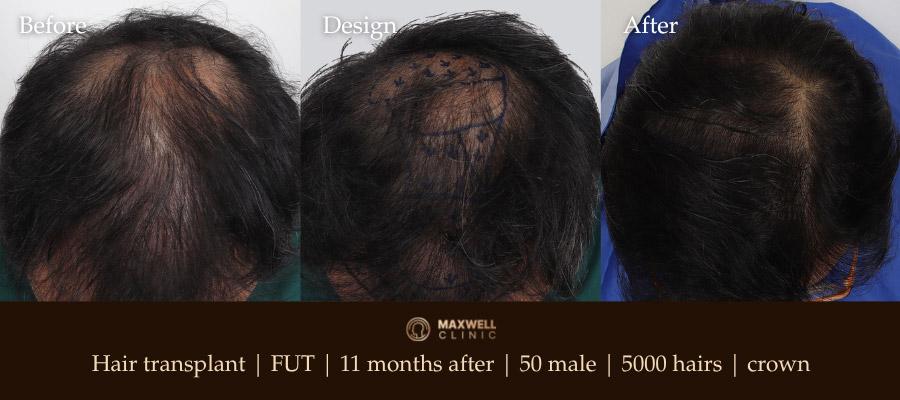
If you are weighing nonsurgical hair-loss care against a transplant, Maxwell Hair Clinic offers both individualized hair-loss treatments and FUT, FUE, or combined transplant planning based on your scalp elasticity, current density, and degree of loss. Its transplant approach emphasizes a natural-looking hairline through laser-guided design refined manually, with finer hairs placed toward the front and thicker graft groupings behind.
- URL: Maxwell Hair Clinic Website
- Location: Gangnam-gu, Seoul
- Transplant approach:
- FUE and FUT are available, including combined approaches when indicated by your assessment.
- Hairline and forehead proportions can be designed around your facial features; hairline correction is also offered for women.
- For larger areas of loss, FUT is described as an option for efficient coverage, while FUE is presented as a minimally invasive approach.
- Partial, minimal, and no-shave transplant options are available.
- Graft placement and recovery:
- The clinic describes gradation grafting, using finer hairs at the leading edge and thicker bundles farther back for a softer transition.
- Ultra-small 0.9–1.2 mm punches and double suturing are used with the aim of reducing visible scarring.
- The clinic states that shampooing may be possible the next day and return to daily activities within two days, depending on your recovery guidance.
- Growth factors and magnetic-field therapy are offered after transplantation to support graft growth.
- Hair-loss care and other services:
- Hair-loss treatment plans may incorporate chemical, nutritional, and physical approaches rather than superficial scalp care alone.
- Revision transplant surgery and laser treatment for scars from prior procedures are available.
- Consultation includes assessment of your present loss pattern and anticipated future progression, followed by aftercare guidance.
- International support includes online consultations and assistance with travel and accommodation arrangements.
- Experience:
- The clinic reports more than 60,000 hair transplants and over 500,000 treatment cases.
- Founder Dr. Noh Yoon Woo is described as an executive member of the Korean Society of Hair Restoration.
2. Seojin Plastic Surgery Clinic
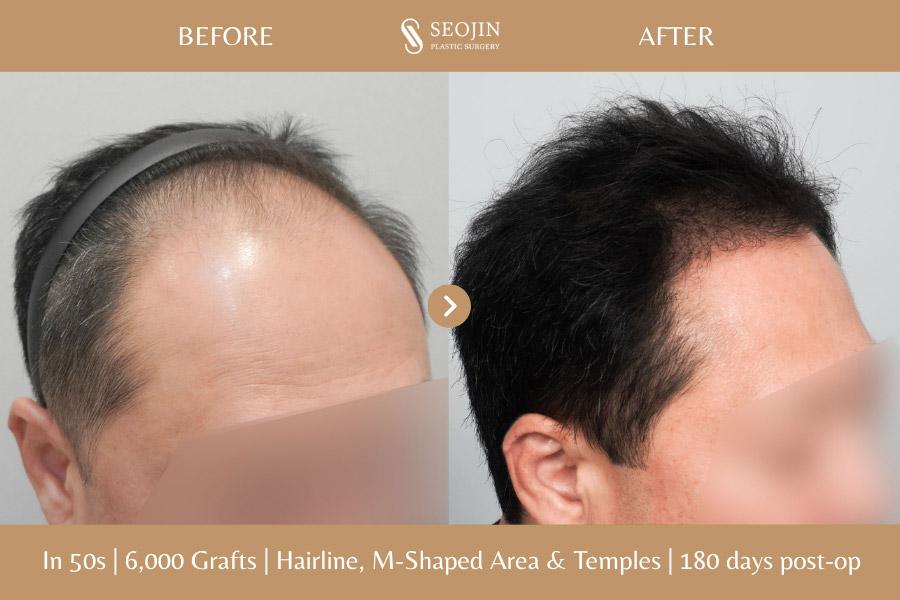
You may consider Seojin Plastic Surgery Clinic if you want a hair-loss plan that can distinguish medical care from transplantation and, when surgery is appropriate, have it managed end to end by Dr. Lee Hyungmin in a one-doctor setting. The clinic offers incision, non-incision, and mixed techniques, with customized hairline design and options for large-scale restoration.
- URL: Seojin Plastic Surgery Clinic Website
- Location: Gangnam-gu, Seoul
- Procedure options:
- Line-incision, no-incision, and mixed harvesting approaches are available.
- The clinic states it can perform large sessions of 6,000 to 10,000 hairs using combined incision and non-incision methods.
- Hairline gradation places fine, medium, and thicker hairs in sequence and considers your forehead, brow bones, temples, midface, and lower face.
- PRP can be transplanted with follicles using your own blood-derived plasma; the clinic notes this may be considered for crown work or when frequent follow-up is difficult.
- Graft handling and specialized areas:
- A cold follicle-separation room is used to preserve harvested follicles.
- The clinic highlights techniques intended to reduce graft “popping” during close-density placement.
- Beard and eyebrow transplants are available; eyebrow design can involve collaboration with a semi-permanent tattoo designer.
- Surgeon experience:
- Dr. Lee Hyungmin is described as providing consultation through postoperative care and having more than 16 years of experience.
- The source states that Dr. Lee has performed more than 2,100 hair-transplant surgeries and was selected among Korea’s Top 100 Good Doctors in 2022.
3. SH Clinic
If you are deciding between treating thinning hair without graft surgery and pursuing a transplant, SH Clinic offers both a stem-cell scalp injection approach intended to support existing follicles and FUT hair transplantation for areas of balding. Your choice can therefore center on whether your goal is to thicken existing strands without surgical grafting or to relocate healthy follicles for hairline design and denser coverage.
- URL: SH Clinic Website
- Location: Seocho-gu, Seoul
- Hair-loss and transplant options:
- Autologous stem-cell scalp injections are offered as a nonsurgical option intended to stimulate dormant follicles and thicken existing hair.
- Hair transplantation uses healthy follicles placed into thinning or balding areas, with attention to hairline design and graft density.
- The clinic describes advanced FUT techniques as its transplant approach, with an aim of natural-looking, lasting restoration and minimal scarring.
| Procedure Price | Korean Won (₩) | USD ($) |
|---|---|---|
| Low Price | ₩6,000,000 | $4400 |
| High Price | ₩15,000,000 | $10900 |
Exchange rate as of 2025-05-22: 1 KRW = 0.0007 USD
Please note that these prices are approximate guidelines and can vary significantly based on the clinic and your individual circumstances.
Comparing Hair Loss Treatment and Hair Transplant: Effectiveness and Costs in Korea

When it comes to hair restoration solutions in Korea, two prominent options come to mind: hair loss treatments and hair transplants. Both offer potential long-term solutions to combat hair loss, but they greatly differ in terms of cost, procedure, and effectiveness. Here, we will compare these two popular options, paying close attention to their effectiveness and costs in a Korean setting.
1. Hair Loss Treatment in Korea
Hair loss treatments generally comprise topical solutions, oral medications, or invasive procedures like platelet-rich plasma (PRP) injections. Such treatments work by either preventing further loss of hair or promoting the growth of new hair follicles.
Effectiveness
Hair loss treatments often deliver results over several weeks or months. While results vary considerably from patient to patient, consistent use often leads to notable improvements. It's worth noting that hair loss treatments work best for individuals in the early stages of hair thinning. However, these treatments entail continuance to maintain the benefits, and discontinuation could potentially lead to the resumption of hair loss.
Costs
In Korea, hair loss treatment costs typically vary range depending on the type of treatment. Topical solutions and oral medications have monthly costs and tend to be affordable. However, more aggressive treatments like PRP injections usually have a higher price tag and will likely range from $500 to $800 per session.
2. Hair Transplant in Korea
Hair transplantation is a surgical procedure where a hair surgeon moves hair follicles from one part of your body (usually the back or side of the head) to the balding or thinning area.
Effectiveness
When it comes to hair transplants in Korea, there's generally a high success rate. As this procedure redistributes hair follicles, it provides a more lasting solution compared to hair loss treatments. The implanted follicles grow, offering a natural appearance that's typically permanent. However, the overall result often hinges on the expertise of the surgeon performing the procedure.
Costs
The cost of hair transplant in Korea is considerably higher than hair loss treatment. It's a more complex procedure that requires a skilled surgeon and several hours of work. An average hair transplant procedure might cost anywhere from $4,000 to $15,000, depending on the number of grafts needed and the specific clinic.
Conclusion: Hair Loss vs. Hair Transplant in Korea

After an in-depth exploration of hair loss and hair transplant techniques in Korea, one thing remains quite evident. Korea's strides in medical aesthetics, coupled with its cultural focus on youth and beauty, has led to a boom in the hair transplant industry. The rate of hair loss in the Korean population has also been a significant factor to this increased interest and advancement in hair transplant techniques.
Hair loss, understood from a societal perspective in Korea, is not simply seen as a natural process of aging. Instead, it's viewed as an issue that can affect one's self-esteem, confidence, and social interactions. This view has driven many Koreans, particularly men who suffer pattern baldness, to seek remedies or treatments. This societal stance has, in turn, spurred advancements in hair transplant technologies, making Korea one of the global leaders in these procedures.
Hair transplant techniques employed in Korea, notably Follicular Unit Extraction (FUE) and the newer Direct Hair Implantation (DHI), are recognized to have high success rates. The use of robotic and AI-enhanced devices, such as the ARTAS iX, only enhance the precision and efficiency of these surgeries. These technologies largely mitigate risks and minimize the recovery period, contributing to Korea's reputation as an attractive destination for hair transplant tourism.
If we put hair loss and hair transplant side by side, it becomes clear that the latter is becoming an increasingly popular solution to the former in Korea. This is not only because of the effective and relatively risk-free procedures available but also due to the societal and cultural views about aesthetics, youth, and beauty.
While it's crucial to remember that hair loss can be attributed to various factors, including genetics, hormonal imbalances, and underlying health conditions, it's clear that hair transplant techniques in Korea present a viable solution. The key is to choose a reputable clinic with qualified surgeons who can guide you to the most suitable treatment for your individual case. Always ensure to undertake a thorough consultation and inform your healthcare provider of your detailed medical history before making the decision to undergo a hair transplant procedure.
In conclusion, the battle between hair loss and hair transplant in Korea leans towards the latter, with this solution providing a logical, effective, and significantly promising approach to reclaiming one's hair and, by extension, self-image and confidence.
Frequently Asked Questions
Related Blogs
Congenital Absent Sideburns Treatment with Sideburn Transplant in Korea: Effective Solutions
Discover how Korea leads in treating congenital absent sideburns with advanced sideburn hair transplant procedures like FUE and FUT. Learn about causes, surgical techniques, patient journeys, and costs in Korea versus global destinations. Experience natural, permanent results that boost confidence, all offered by Korea’s top medical tourism hubs renowned for cutting-edge technology and affordable
Updated: Nov 2, 2026
Temporal Point Recession Solutions: Hair Transplant Procedures in Korea for Effective Restoration
Discover effective solutions for temporal point recession in Korea. Learn about hair loss causes like male pattern baldness, and explore advanced procedures such as Follicular Unit Transplantation (FUT), Follicular Unit Extraction (FUE), and Direct Hair Implantation (DHI). Korea's top clinics offer expert care with natural results, utilizing cutting-edge micro-grafting techniques. Ideal for addres
Updated: Nov 2, 2026
Crown Balding Solutions: Effective Hair Transplant Procedures in Korea for Hair Restoration
Discover how Korea leads in hair transplantation for crown balding, specifically with advanced FUE procedures. This guide highlights crown (vertex) baldness treatment options with Korean clinics renowned for expertise, modern technology, and natural-looking results. Learn about the benefits of FUE versus FUT, recovery timelines, and why Korea is a top choice for medical tourists seeking effective
Updated: Nov 2, 2026
Tight Scalp Syndrome Treatment: Scalp Reduction Surgery Benefits in Korea
Discover how Korea leads in advanced scalp reduction surgery for treating tight scalp syndrome and hair loss. This comprehensive guide explains scalp laxity, surgical techniques like scalp expansion and tissue removal, and why Korea is a top destination for safe, innovative hair restoration procedures. Learn about costs, recovery, and why choosing Korea can optimize your results. If you’re conside
Updated: Nov 2, 2026
Clinics offering Hair Transplant
SH Clinic: Comprehensive Women's, Men's & Couples' Health Services in Korea
Sinsa

Seojin Plastic Surgery Clinic Korea: Pioneering Advanced Cosmetic Procedures for Personalized Aesthetic Transformation
Apgujeong

Maxwell Hair Clinic: Korea's Premier Destination for Advanced Hair Restoration and Transplant Services
Gangnam Station

Okay Plastic Surgery Clinic in Korea: Comprehensive Aesthetic Procedures with Sincerity and Care
Cheongdam