
Medical Tourism Blog
Forehead Reduction in Korea: Candidacy, Recovery, Risks and Travel Planning
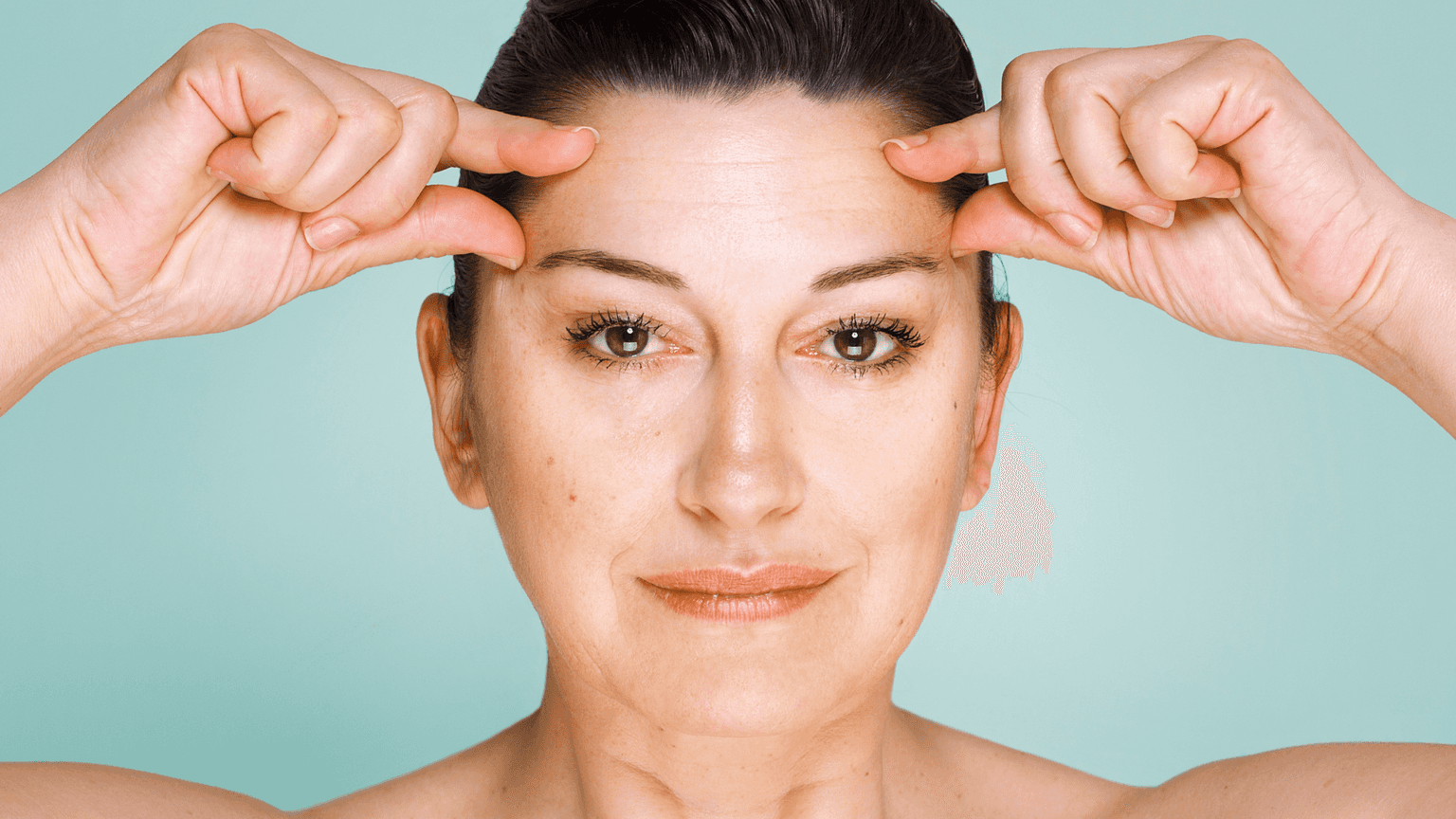
Table of contents
- Forehead Reduction at a Glance
- What Is Forehead Reduction?
- Who Is a Good Candidate for Forehead Reduction?
- How Is Forehead Reduction Performed?
- Why Visit Korea for Forehead Reduction?
- Key Information for International Patients
- Which Are the Best Clinics in Korea for Forehead Reduction Surgery?
- Forehead Reduction From Start to Finish
- Alternatives to Forehead Reduction
- How Can I Prepare for Forehead Reduction?
- Aftercare Advice
Considering treatment in Korea? Everything you need to know e.g. — how to avoid scams, visas, interpreters, recovery tips — in our Medical Tourism Master Guide. Plan with confidence in minutes, not weeks!
Last updated: September 2026
Forehead Reduction at a Glance
- What it does — Forehead reduction is an outpatient hairline-lowering operation that removes a strip of forehead skin and advances the hair-bearing scalp forward; pooled retrospective data found average lowering of about 1.6 cm.
- Best candidates — It suits people with a stable, dense frontal hairline and enough scalp laxity to advance safely, who accept a permanent hairline incision and the possibility of later scar camouflage or refinement.
- Immediate but maturing result — The hairline position changes immediately, but swelling, numbness, scar redness, and hairs growing through the incision evolve for months; the result is more meaningfully assessed around 6 months.
- Recovery timeline — Tightness, swelling, eyelid-area bruising, and altered forehead or scalp sensation are common early; sutures are often removed around day 7, desk work may be possible after 1 week, and strenuous activity is commonly restricted for about 2 weeks.
- Scar and hair-loss risk — A visible or widened hairline scar, temporary sensory changes, wound problems, and incision-line hair loss are possible; the 2026 evidence review estimated 5.9% overall complications but found inconsistent reporting across mostly retrospective studies.
- Korea travel plan — International patients should plan at least 7–10 days in South Korea for a wound review and likely day-7 suture removal, keep return flights flexible, and arrange an adult escort and overnight support after anesthesia.
- Korea-specific evidence — Korean publications describe scalp-advancement and combined brow-lift techniques, but no direct comparative evidence shows that forehead reduction outcomes are safer or better in Korea than in other countries.
What Is Forehead Reduction?
Forehead reduction is a hairline-lowering operation that removes a strip of forehead skin and advances the hair-bearing scalp forward. It shortens the visible forehead and reshapes the hairline for people seeking better facial proportion. It is a surgical procedure performed under anesthesia.
Who Is a Good Candidate for Forehead Reduction?
- Stable, high frontal hairline — Good candidates want to shorten the visible forehead by moving a dense, stable hair-bearing scalp forward rather than simply creating the appearance of density.
- Adequate scalp laxity — The scalp must glide forward enough to permit closure without excessive tension; this, not a requested number of centimetres, sets the safe degree of lowering.
- Realistic scar expectations — Candidates accept a permanent incision at the hairline, early numbness and swelling, and the possibility of later follicular-unit grafting or revision for contour, density, or scar camouflage.
- Healthy surgical profile — Non-nicotine users who can follow anesthesia, wound-care, and travel instructions are better positioned for uncomplicated healing.
An unstable or actively receding hairline, androgenetic alopecia, frontal fibrosing alopecia, or another hair-loss disorder needs specialist assessment first because scalp advancement does not stop progressive loss. Insufficient mobility raises closure tension and can contribute to widened scars, wound problems, or incision-line hair loss. Previous scalp surgery, scalp disease, existing thinning, and a history of abnormal scarring require individualized planning; such patients were often excluded from published cohorts. Uncontrolled diabetes or hypertension, bleeding disorders, active infection, pregnancy, unmanaged body-dysmorphic concerns, and medicines that cannot safely be coordinated around surgery are contraindications or reasons to defer treatment.
How Is Forehead Reduction Performed?
Forehead reduction removes a measured strip of forehead skin and advances the hair-bearing scalp. Technique is selected according to hairline shape, scalp mobility, brow position, temporal recession, prior surgery, and the need to limit tension.
- Trichophytic or irregular hairline incision — The surgeon places a deliberately irregular pretrichial incision at the intended hairline. A trichophytic design aims to allow hairs to grow through or in front of the scar, but it cannot guarantee an invisible scar.
- Scalp release and advancement — After excision of planned forehead skin, the scalp is released in one or more tissue planes and brought forward. Safe advancement depends on intraoperative mobility and closure tension.
- Fixation and layered closure — Some surgeons secure the advanced scalp with bone-tunnel sutures or fixation devices before closing the deeper layers and skin. These are technical choices, not proven universal tiers of superiority.
- Nerve-conscious multiplane technique — Published approaches describe preserving frontalis continuity and the supraorbital sensory nerves while mobilizing the scalp. Sensory changes remain common early in recovery despite careful technique.
- Combined brow lift — A pretrichial brow lift can be considered when brow ptosis accompanies a high hairline. Reports of combined hairline reshaping, temporal work, and brow lifting are primarily technique descriptions, not proof that combined surgery is safer or better than staging.
Why Visit Korea for Forehead Reduction?
Korean surgeons have published on scalp-advancement and combined upper-face approaches, including forehead narrowing with brow lifting. This demonstrates procedural experience, but it does not establish that Korea delivers safer or more effective outcomes than other countries. Choose a surgeon based on hair-loss assessment, scar planning, operative credentials, and a workable postoperative follow-up plan.
- Documented technical publications — Korean literature describes specific upper-face and scalp-advancement techniques, including combined forehead-narrowing and brow-lifting approaches, which can inform a consultation when both hairline height and brow position are concerns.
- Individualized hairline planning — A credible in-person assessment should examine scalp glide, frontal density, temporal recession, miniaturization, facial proportions, scar tendency, and previous scalp procedures before committing to an advancement.
- Evidence limits — The latest systematic review and meta-analysis found predominantly retrospective case series, substantial variation in complication reporting, and limited representation beyond female patients. There is no direct country-to-country evidence showing superior Korean outcomes.
Key Information for International Patients
- Minimum stay — Plan at least 7–10 days in South Korea after an uncomplicated standalone operation. This allows an early wound review and removal of commonly used non-dissolving sutures at about postoperative day 7.
- Flight timing — Do not reserve an inflexible long-haul flight before the surgeon examines the incision and clears travel. No forehead-reduction-specific study establishes a universal safe flying interval; bleeding, swelling, wound delay, or combined surgery can require a longer stay.
- First-night support — Arrange for a responsible adult to escort you after sedation or general anesthesia and remain overnight. Stay close to the treating facility until the initial review.
- Itinerary impact — Desk work can be feasible after roughly one week when comfort permits, but bruising can move toward the eyelids and numbness or scalp tightness can remain obvious. Avoid heavy lifting, straining, and manual work for about two weeks unless the surgeon clears earlier activity.
- Remote follow-up — Leave with an operative summary, anesthesia record, generic medication names, wound-care instructions, emergency contact details, and a written plan for suture issues after departure. Schedule photo or video follow-up and identify a qualified clinician at home for urgent assessment.
Travel note: Build flexibility into accommodation and return flights. Infection concern, rapidly increasing swelling, wound separation, or delayed healing should take priority over the planned departure date.
Which Are the Best Clinics in Korea for Forehead Reduction Surgery?
Listed below are some of the best clinics in Korea for forehead reduction surgery.
1. THEPLUS Plastic Surgery
At THEPLUS Plastic Surgery, you can expect a facial-aesthetics approach centered on proportion and harmony. The available information highlights expertise in facial contouring and rhinoplasty, which may be relevant when discussing how forehead proportions relate to your overall facial balance; it does not provide specific details of the clinic’s forehead-reduction technique.
- URL: THEPLUS Plastic Surgery Website
- Location: Gangnam-gu, Seoul
- Facial-balance approach:
- Dr. Kim is a board-certified plastic surgeon whose stated areas of expertise include rhinoplasty and facial contouring.
- The clinic describes an emphasis on balancing facial features while preserving natural characteristics.
- Facial contouring services listed include cheekbone, square-jaw, chin, and facial-implant procedures.
- Professional background:
- Dr. Kim has received research awards related to 3D implants and conducts annual educational sessions for other plastic surgeons.
- Dr. Jeong is identified as President of the Korean Society of Plastic Surgeons and has an international rhinoplasty education and conference role.
2. Made Young Plastic Surgery
At Made Young Plastic Surgery, you can expect forehead and brow lifting planned with a Full HD endoscopic system for detailed dissection around nerves, vessels, and muscles. The supplied information describes a lifting procedure for forehead, brow, glabella wrinkles, and drooping eyelids—not a hairline-advancement forehead-reduction procedure—using skin, periosteum, and muscle lifting with authentic Endotine fixation.
- URL: Made Young Plastic Surgery Website
- Location: Seocho-gu, Seoul
- Forehead lifting details:
- Full HD endoscopy is used for precise dissection of nerves, vessels, and muscles.
- The approach addresses forehead, brow, and glabella wrinkles as well as drooping eyelids.
- The description includes lifting the skin, periosteum, and muscle, with procerus muscle resection.
- The clinic states that it uses authentic Endotine products for fixation.
- Anesthesia and monitoring:
- Full-time board-certified anesthesiologists are on site.
- A 1:1 monitoring system assigns one anesthesiologist to continuous monitoring of one person during a procedure.
- The clinic describes a cross-check emergency-response system involving multiple anesthesiologists.
- CCTV coverage of procedures is listed as part of its transparency measures.
- Planning and aftercare:
- The medical team provides direct consultation and diagnosis before a procedure.
- A separate aftercare center and systematic post-procedure care are listed.
3. LABOM Plastic Surgery
At LABOM Plastic Surgery, you can expect hairline-advancement forehead reduction designed to reduce forehead height while refining an M-shaped, receding, or uneven hairline. Your hairline is mapped to your facial proportions, then the scalp is advanced and secured with sutures alone—without Endotine or other implanted fixation material—with an oblique incision intended to preserve follicles and remain concealed along the hairline.
- URL: LABOM Plastic Surgery Website
- Location: Gangnam-gu, Seoul
- Procedure details:
- The procedure is designed to reduce a large or widened forehead and address M-shaped, receding, or uneven hairlines without eyebrow or eyelid surgery.
- Your hairline design is customized to your facial proportions, with the stated aim of balanced, natural-looking proportions.
- The technique involves an oblique, follicle-preserving hairline incision, removal of excess forehead skin/scalp, and forward scalp advancement.
- Fixation is performed with sutures only; the clinic states that no Endotine or other implanted fixation device is used.
- LABOM reports more than 20 years of accumulated experience in forehead procedures.
- Recovery and anesthesia:
- The clinic states that surgery takes about one hour under individualized sedation anesthesia, with same-day discharge.
- Stitches are generally removed in 7–9 days.
- Return to daily activities is estimated at about 1–2 weeks.
- The clinic provides structured swelling, bruising, scar-management, and follow-up programs.
- Surgical planning and care:
- A plastic-surgery specialist directly performs each procedure, according to the supplied information.
- Pre-operative diagnosis and surgical design are individualized rather than standardized.
- The clinic describes continuous monitoring and a dedicated aftercare system for international patients.
Forehead Reduction From Start to Finish
- Remote inquiry and consultation — Send clear front, side, and hairline photographs if requested, together with medical history, hair-loss history, current medicines, allergies, prior scalp procedures, and goals. Confirm whether English-language or virtual consultation is available, but treat remote estimates as preliminary.
- In-person examination and design — The surgeon assesses forehead height, brow position, hair density and miniaturization, temporal recession, scalp laxity, scar history, and facial proportions. The proposed hairline is marked; safe movement is determined by scalp glide and tension rather than a fixed centimetre target.
- Preoperative clearance and travel coordination — Complete required tests and anesthesia review. Confirm your Korea stay, responsible overnight companion, early wound appointment, expected suture-removal date, and a flexible return-flight plan.
- Anesthesia and preparation — The team reviews consent, medicines, fasting status, and the final design. Hairline lowering is generally an outpatient operation performed under anesthesia chosen by the surgical and anesthesia teams.
- Hairline lowering surgery — The surgeon makes an irregular or trichophytic/pretrichial incision, removes planned forehead skin, releases the scalp, advances it forward, optionally uses fixation, and performs layered closure. Combined brow lifting or temporal work adds operative steps and recovery considerations.
- Same-day discharge — After recovery from anesthesia, leave with an adult escort, prescribed medicines, incision-care instructions, and emergency contact details. Do not drive, travel alone, or place traction or tight headwear over the incision.
- Early review and suture removal — Attend the scheduled wound check. Non-dissolving sutures are commonly removed around day 7; the team checks swelling, bruising, closure integrity, and early scar healing before clearing onward travel.
- Overseas follow-up and scar maturation — Send requested photographs after returning home and report concerns promptly. Hairline position is immediate, but a meaningful review of scar maturity and sensory recovery is closer to six months than the first few postoperative weeks.
Alternatives to Forehead Reduction
Surgery moves the hair-bearing scalp and gives an immediate change in hairline position, but it leaves a hairline scar and requires recovery. Non-surgical camouflage avoids forehead-skin excision but does not move the scalp; transplantation creates a new lower hairline gradually and depends on donor supply and ongoing hair-loss risk.
Hairline Hair Transplant
- Best use — Hair transplant can lower or reshape the hairline, refine temples, and camouflage a forehead-reduction scar without removing forehead skin.
- Tradeoff — Grafted hairs require months to grow visibly, and active hair loss or limited donor density can restrict the plan. It is often a stronger option than advancement for a receding or poorly defined frontal hairline.
Scalp Tissue Expansion
- Best use — Scalp tissue expansion is a staged reconstructive option for selected people with inadequate laxity or unusual scalp circumstances.
- Tradeoff — It requires expansion visits and substantially more time than a single-stage advancement.
Brow Lift
- Best use — A forehead lift addresses brow descent and upper-face aging when brow position, rather than forehead height, is the main concern.
- Tradeoff — It does not shorten the visible forehead by advancing the hairline.
Pigment Camouflage
- Best use — Scalp micropigmentation or hairline microblading can reduce contrast at a high or sparse hairline.
- Tradeoff — Pigment does not add hair or move the hairline, and color, fading, and scar suitability need assessment.
How Can I Prepare for Forehead Reduction?
- Medical disclosure — Provide the surgical team with every prescription medicine, over-the-counter painkiller, vitamin, supplement, herbal product, cannabis product, alcohol intake, nicotine exposure, allergy, bleeding history, and prior anesthesia reaction.
- Bleeding-risk medicines — Ask the operating surgeon and prescribing clinician how to manage anticoagulants, antiplatelets, aspirin, NSAIDs, and supplements that affect bleeding. Do not stop prescribed anticoagulants or antiplatelets independently; the timing to hold or restart them is individualized.
- Nicotine cessation — Stop smoking, vaping, and other nicotine exposure for the period specified by the surgeon. Nicotine compromises blood supply and wound healing, so disclose relapse rather than concealing it.
- Fasting and testing — Follow the clinic's exact fasting, laboratory testing, medication-on-the-morning-of-surgery, and hair/scalp-washing instructions. Do not eat or drink outside the anesthesia plan.
- Scalp and sun care — Report scalp irritation, dandruff flare, sores, infection, recent hair treatments, and sunburn before surgery. Avoid tanning or sunburn around the treatment area before travel.
- Surgery-day logistics — Wear loose, front-opening clothing. Arrange transport to accommodation, an adult companion for the first night, and accommodation near the clinic through the early review.
- Flexible travel plan — Schedule at least 7–10 postoperative days in Korea, leave room for a wound check and suture removal, and avoid non-refundable onward flights before clearance.
Travel note: Bring medicines in original labelled packaging and keep copies of prescriptions and relevant medical records available for the anesthesia team.
Confirm the treating clinic's individualized medication, fasting, nicotine, testing, and travel requirements; their instructions take precedence over general guidance.
Aftercare Advice
Protect the incision from tension, trauma, contamination, and ultraviolet exposure while the scalp and hairline heal.
- Elevation and swelling control — Keep the head elevated as directed and use cold compresses only in the manner approved by the surgical team. Swelling, tightness, bruising that can descend toward the eyelids, and numbness are expected early findings.
- Incision and hair care — Clean the incision, shower, and resume shampoo only when the surgeon approves. Do not apply topical products, scar products, dye, traction styles, or tight hats over the incision unless cleared; avoid soaking until instructed otherwise.
- Activity restriction — Avoid heavy lifting, straining, vigorous exercise, and manual work for about two weeks or until cleared. Protect the hairline from direct contact and accidental pulling.
- Sun protection — Once the incision is healed and the surgeon permits skincare, protect the scar with shade and broad-spectrum SPF 50. Ultraviolet exposure can prolong redness and pigment change.
- Warning signs — Contact the operating team urgently for rapidly enlarging or tense swelling, uncontrolled bleeding, fever, spreading redness, worsening pain, pus-like drainage, wound separation, persistent vomiting, breathing difficulty, chest pain, or a substantial new patch of hair loss. Seek local emergency care for severe or rapidly worsening symptoms.
- Follow-up and results — Attend suture removal if needed at about day 7 and send requested photographs after returning home. Hairline position changes immediately, but scar redness, altered sensation, and hairs growing through the incision evolve over months; assess the mature result around six months.
Follow the treating doctor's instructions over this general guidance, and contact the clinic promptly whenever the incision or recovery appears abnormal.
Frequently Asked Questions
Related Blogs
Renuvion in Korea: Methods, Recovery, Risks, and Travel Planning
Renuvion uses helium-plasma radiofrequency energy beneath the skin, alone or after liposuction, to address mild-to-moderate localized laxity; Dermal resurfacing treats surface wrinkles with an external ablative handpiece. The article covers candidacy, alternatives, preparation, recovery, risks, Korea travel planning, and the need for surgeon clearance before flying.
Updated: Oct 13, 2026
Temporal Lift in Korea: Methods, Recovery, Risks and Travel Planning
A temporal lift elevates the outer brow through temporal scalp incisions, using open, subcutaneous, endoscopic, or combined techniques chosen for brow position, hairline, and eyelid anatomy. The article covers candidate screening, Korea facility and surgeon verification, a 10–14-day stay, recovery restrictions, aftercare, warning signs, and alternatives such as forehead lift, blepharoplasty, and p
Updated: Oct 13, 2026
Premature aging face treatment in Korea: Face Lift options for younger-looking skin
Early onset facial laxity and wrinkles are rising among 30s–40s. Our Korea medical tourism guide explains rhytids and how a rhytidectomy (face lift) can refresh the lower face and neck. Explore options: Deep Plane Facelift, SMAS Facelift, Mini Facelift, Lower Facelift and Neck Lift, plus non-surgical adjuncts. Learn candidacy, recovery timelines, costs, certifications, and tips for planning surger
Updated: Oct 12, 2026
Brow Ptosis in Korea: Forehead Lift and Subbrow Lift Treatment Options
Thinking about Brow Ptosis surgery in Korea? This expert guide explains diagnosis, functional vs cosmetic concerns, and compares a Forehead Lift with a Subbrow Lift—indications, scars, recovery, and costs. It maps the South Korea medical tourism journey (planning, visas, surgery day, follow-ups), highlights surgeon credentials and safety, and shares real outcomes, risks, and patient stories so you
Updated: Oct 12, 2026
Clinics offering Forehead Reduction

THEPLUS Plastic Surgery Korea | Eye, Nose, Face & Body Surgery
Sinsa

Made Young Plastic Surgery: Rejuvenating Aesthetic Excellence in Korea for Face Lifts, Contouring and More
Gangnam Station

LABOM Plastic Surgery: Expertise in Non-Surgical Nose, Facial Lifting & Anti-Aging Surgeries in Korea
Apgujeong

Okay Plastic Surgery Clinic in Korea: Comprehensive Aesthetic Procedures with Sincerity and Care
Cheongdam